What Kind Of Tape Is Used To Tape A Medical Waste Box? Secure Waste Provides Expert Solutions For Taping Up Medical Waste
Choosing the right tape is essential when sealing a medical waste box. Secure Waste offers practical solutions for this purpose. Before we delve into the specifics of tape selection, we must discuss the proper method for packing a medical waste box and the types of items allowed to be placed inside.
How To Pack A Medical Waste Box
Choosing the Right Biohazard Waste Container: Select corrugated boxes or reusable containers when managing biohazard waste. For corrugated boxes, seal the bottom flaps with two-inch-wide clear packing tape and clearly label the top and bottom. Reusable containers are easier to use and require no special setup.
Lining the Box with a Proper Biohazard Bag: Use a red biohazard bag to line the container, allowing it to extend over the edges. Check state guidelines for bag thickness and weight. It’s vital to understand local regulations about what qualifies as biohazard waste. In Virginia, medications, loose needles, scalpel blades, and general trash should not go in the red bag; instead, use proper sharps containers.
Securing the Bag and Sealing the Container: After filling the biohazard bag, gather the edges, twist the top, and secure it with a knot or zip tie. Seal the container using auto-locking flaps for reusable containers or packing tape for corrugated boxes. Ensure the closed red bags are not visible to prevent issues during pickup.
Verifying the Markings: Label the biohazard box according to all regulations, including any required barcodes or details from the waste hauler. Following these guidelines ensures safe and efficient biohazard waste disposal.
What Goes In The Medical Waste Box Secure Waste Explains
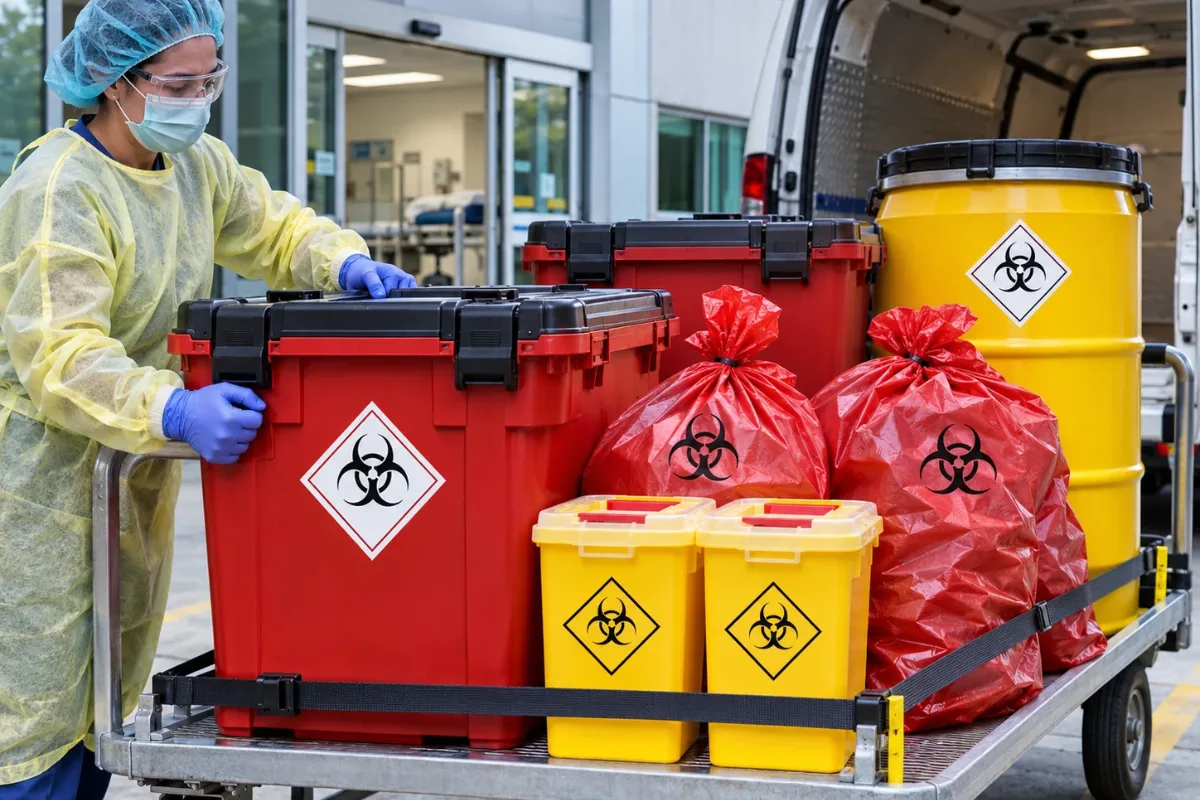
Proper disposal of medical waste is essential for safety and compliance in the healthcare sector. Red biohazard bags are critical for isolating infectious waste; however, the complex regulations can lead to confusion about what should go inside these bags.
Medical waste disposal contractors often encounter misclassified items in red biohazard bags. Sometimes, waste that could be discarded in regular trash ends up in these bags, while items requiring special handling, like sharps or hazardous waste, may be misplaced. Such errors can lead to frustration among healthcare owners and administrators, resulting in delays, increased costs, and potential penalties.
Items Suitable for Red Biohazard Bags
Red medical waste bags are designed for biohazardous waste that may carry bloodborne pathogens. According to OSHA’s Bloodborne Pathogens Standard, the following items should be disposed of in red bags:
- Blood, Blood Products, and Other Potentially Infectious Materials (OPIM): Any liquid waste that poses an infection risk.
- Materials Soaked or Caked with Blood or OPIM: Includes dressings, cotton balls, and specimen swabs.
- Used Paper Towels and Disposable Items: For cleaning spills involving blood or OPIM.
- Disposable Gloves or Gowns: Contaminated with hazardous material.
- Tubing Contaminated with Visible Blood or OPIM.
- Urine Specimen Cups Showing Visible Blood.
- Tissues and Small Pathology Waste.
- Used Culture Plates, Tubes, or Bottles.
Following these guidelines helps improve waste management, ensure compliance, and minimize risks associated with medical waste disposal.
What Tape And How To Tape A Medical Waste Box
Important Packaging Instructions:
To ensure the safe and proper handling of your materials, please adhere to the following guidelines:
- Markings Preservation: Avoid defacing markings on the fiberboard box, barrel, or tote exterior. The integrity of these markings is essential for identification and safety.
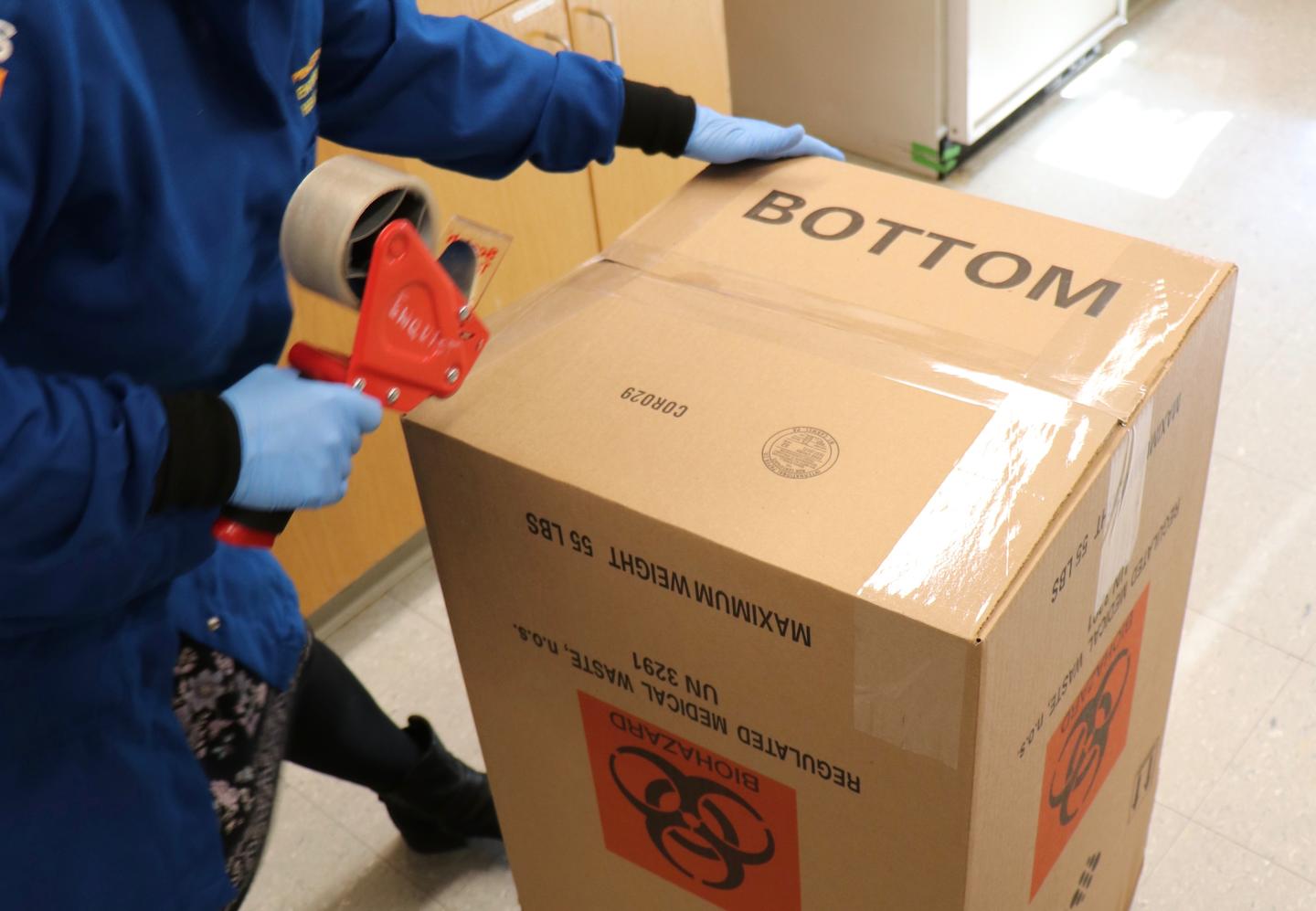
- Sealing the Package: Securely tape the bottom of the box using clear packaging tape that is at least two inches wide. For maximum security, using a minimum of three strips of tape to seal the center seam thoroughly is advisable. Don’t forget to tape the bottom seams securely. Please refrain from using duct tape, colored tape, or manila tape, as they do not meet our safety standards.
- Preparing the Box: Hold the box upright and fold the flaps. Line the box’s interior with a red biohazard bag to contain any materials safely. Full sharps containers must be securely closed and placed inside this liner. If you encounter any incidental liquids, please surround them with adequate absorbent material to prevent leaks.
- Filling the Bag: Secure the bag by tying an overhand knot when it is approximately three-quarters full. Do not overfill the bag, as this may compromise the safety and integrity of the contents. Once closed, the box must retain a perfectly square shape without bulges on the top or sides.
- Weight Limitations: Please be aware of the maximum weight limits:
- Medium box (4.3 cu.ft): 50 lbs
- Small box (1.9 cu.ft): 40 lbs
- Gray tote or red barrel: 65 lbs
- Finalizing the Closure: Carefully fold over the box’s flaps and seal the top with at least two inches of wide clear packaging tape. Again, using at least three strips to tape the center seam and the top side seams securely is advisable. Remember, duct tape, colored tape, and manila tape are prohibited.
- Generator Information: A designated area for generator information is on one side of the box. Please attach a vendor barcode label in the “Customer Label” box. Additionally, provide the necessary information (this can be written in the space marked “Generator Information Here” or, using a tote or barrel, written on a piece of paper or tape and attached to the top of the container) to ensure accurate processing.
Following these detailed instructions will help maintain a safe and efficient process for handling materials. We appreciate your cooperation!
Expert Medical Waste Management: With over 25 years of industry experience, Secure Waste is a trusted local leader in hazardous and biohazardous waste disposal across Maryland, Virginia, and Washington, D.C. Specializing in medical waste management, sharps needle disposal, and biohazard waste removal, the company ensures full compliance with federal, state, and local regulations while prioritizing environmental sustainability.
The company also offers additional services, including secure document shredding and sharps container sales, providing comprehensive solutions for healthcare facilities and businesses. Our cost-effective services help clients maintain regulatory compliance without unexpected costs.
With a commitment to customer satisfaction, Secure Waste offers tailored waste management plans that align with industry best practices. Their team of experts provides reliable, timely, and compliant services, making them the preferred choice for medical waste disposal. For a free waste quote or more information, visit www.securewaste.net