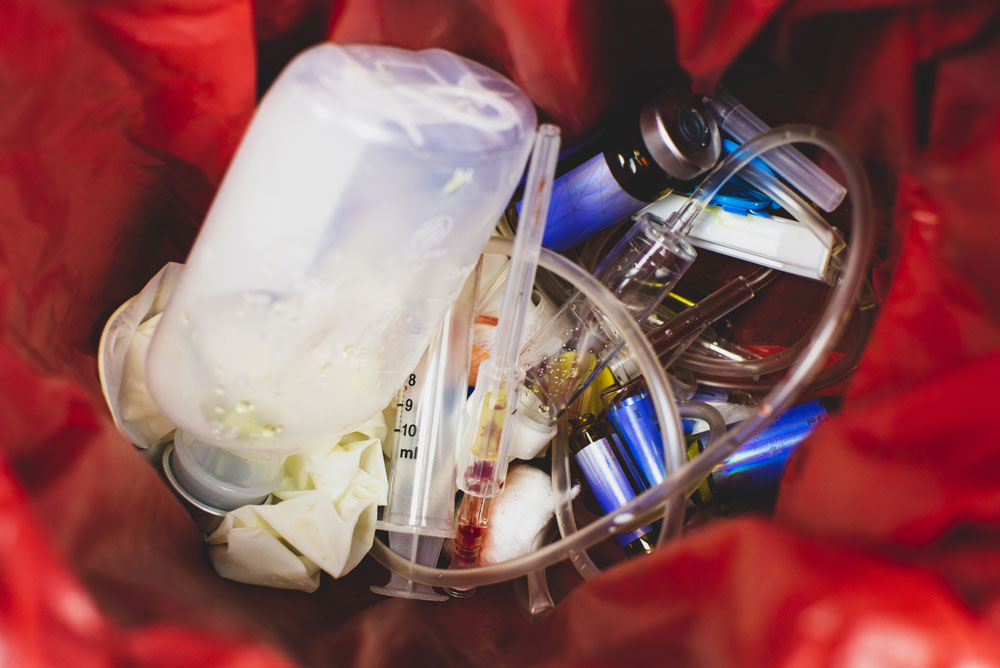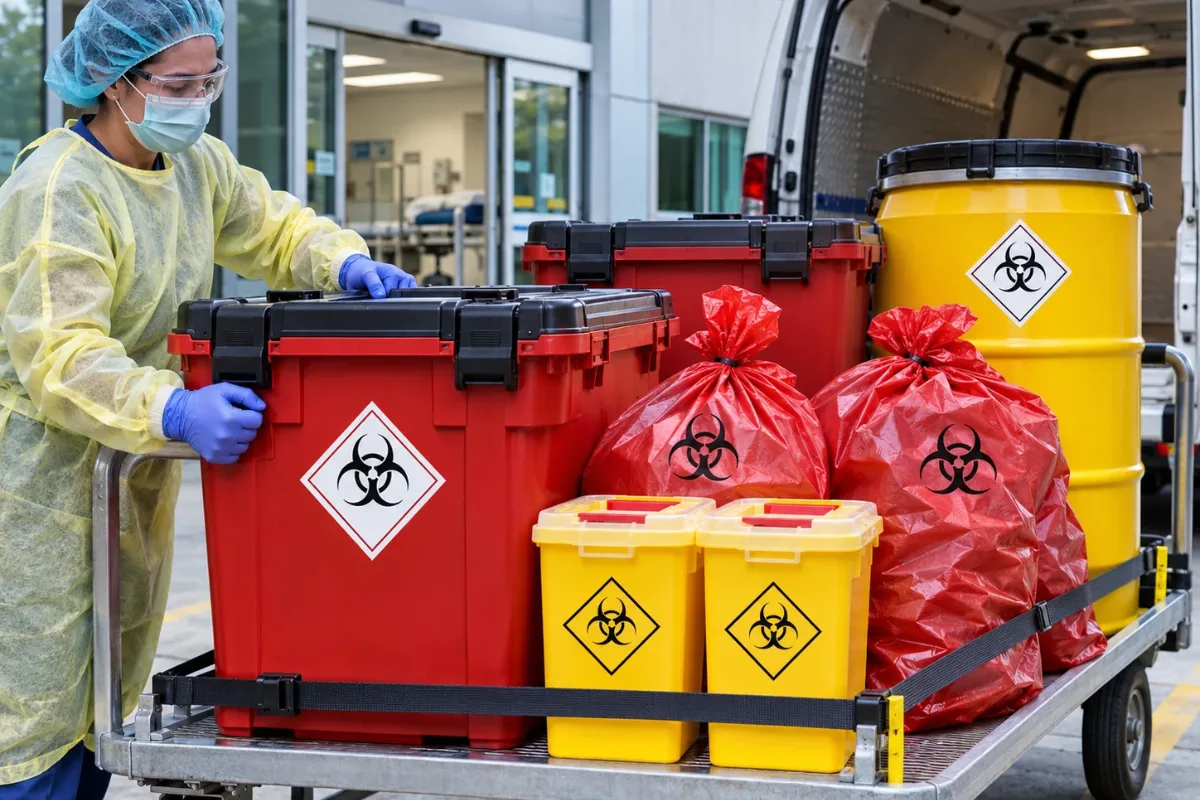
For healthcare facilities and waste management teams, preparing hazardous medical waste for collection involves more than putting it in a container and arranging transportation. Damaged packaging, missing labels, or poorly secured loads can create safety risks, delay collection, and lead to regulatory issues. To avoid these problems, staff must use suitable packaging, apply the correct hazard labels, and complete the required transportation documents. They also need clear procedures to identify different types of waste, choose the right containers, and make sure each package is properly sealed and ready for transport. This blog explores the key regulations and practical steps organizations need to follow to transport hazardous medical waste safely and meet applicable requirements.
Summary of Hazardous Medical Waste Transport
Safe hazardous medical waste transport depends on correct waste classification, compliant packaging, accurate labelling, and secure handling. DOT, EPA, OSHA, and state regulations establish requirements for containers, hazard markings, shipping papers, and workplace safety. Sharps, infectious liquids, pathological materials, solid infectious waste, and pharmaceuticals require packaging suited to their specific risks. Healthcare facilities must verify applicable rules, secure shipments properly, and work with qualified transporters to maintain compliance and protect workers, patients, and the environment.
Which Regulations Govern Hazardous Medical Waste Packaging and Transport?
DOT Hazardous Materials Regulations (49 CFR Parts 171–180)
The U.S. Department of Transportation (DOT) sets rules for medical waste that counts as a hazardous material [1]. These rules are in 49 CFR Parts 171 to 180. Depending on the type of waste and how it is shipped, you may need the correct shipping name, an ID number, hazard labels, package markings, shipping papers, and emergency-response information.
Category A infectious substances usually follow 49 CFR § 173.196, while Category B substances follow § 173.199. Regulated medical waste can fall under other rules too, such as § 173.197. Which rules apply depends on the material, how it is classified, the packaging used, and any exceptions that may be available.
EPA Hazardous Waste Regulations (40 CFR Parts 260–273)
The EPA regulates waste that meets the hazardous waste criteria under the Resource Conservation and Recovery Act (RCRA). Under 40 CFR § 262.30, hazardous waste shipments must be packed following the DOT’s packaging rules. Sections 262.31 and 262.32 [2] cover EPA marking and labeling rules, including identification and hazard information.
Some hazardous waste shipments may also need a manifest under § 262.20, depending on the situation. These rules are separate from DOT infectious-substance labels and OSHA workplace biohazard markings. The exact duties depend on the generator’s status, how the waste is classified, and any state rules that apply.
DOT Packaging Specifications and Performance Standards (49 CFR § 173.197)
Packaging for regulated hazardous materials must follow the DOT rules for that specific substance and shipment. Part 173 gives packaging instructions for each type of material, while Part 178 [3] lists the specifications and performance standards for certain packaging types. For regulated medical waste, 49 CFR § 173.197 sets the packaging rules.
Before sending the shipment, the shipper should check that the packaging type is allowed for that waste class and meets any performance or approval rules. It must also be safe for what is inside and closed in the required way. If specification packaging is needed, the markings and approvals must be checked too. A container used to collect waste inside a healthcare facility is not automatically approved for transport.
OSHA Bloodborne Pathogens Standard (29 CFR § 1910.1030)
OSHA’s Bloodborne Pathogens Standard [4] sets workplace safety steps for regulated waste that may hold blood or other infectious materials. Under § 1910.1030(d)(4)(iii), containers must close, resist leaks, and be marked as biohazards. These rules protect workers who handle or move waste at work. They do not replace DOT shipping rules for regulated hazardous materials.
State Medical Waste Transportation Regulations
State medical waste laws can add rules beyond federal transport requirements, such as transporter registration, approved containment systems, tracking documents, and approved treatment destinations. EPA explains in its official medical waste guidance [5] that medical waste is primarily regulated by state environmental and health departments, and requirements can vary considerably between states. Generators and transporters should check the rules for the waste’s origin, route, and destination before arranging a shipment.
How to Select Compliant Packaging for Different Types of Medical Waste
Sharps Waste Requires Puncture-Resistant Containers
Needles, scalpel blades, lancets, and contaminated broken glass need rigid, puncture-resistant containers. OSHA’s 29 CFR § 1910.1030(d)(4)(iii)(A) requires closable, leakproof, labeled or color-coded containers for workplace disposal, kept upright and replaced before overfilling. These are not DOT shipping rules, so a container approved for use at a healthcare facility is not automatically approved for transport.
Liquid Infectious Waste Needs Leak-Resistant Primary Containment
Blood specimens, liquid cultures, and other infectious liquids need a leak-resistant primary container that suits the liquid, closes securely, and leaves room so the seal is not strained. Transport may also need secondary packaging and absorbent material. 49 CFR § 173.196 (Category A) and § 173.199 (Category B) apply only to substances in those classes, so classify first.
Solid Infectious Waste Requires Strong, Secure Containment
Contaminated dressings, swabs, disposable gowns, and lab supplies need leak-resistant packaging that contains the waste and any liquid it releases. Choose it based on the waste’s moisture, structure, and transport classification, since a container for dry items may fail with soaked dressings. Following the correct steps for packing a medical waste box can help ensure waste is contained securely before collection and transport. 49 CFR § 173.197 sets packaging rules for qualifying regulated medical waste.
Pathological Waste Needs Packaging Suited to Biological Material
Human tissues, organs, and anatomical specimens need packaging that fits their size, moisture, and preservation method while preventing leaks and exposure. Larger or wetter specimens need more room and stronger containment. If formalin or another preservative is present, check its chemical hazards separately. The CDC’s infection-control recommendations for healthcare facilities [6] identify pathology and anatomy waste as categories requiring special handling and disposal precautions. State and local rules may impose additional requirements.
Pharmaceutical Waste Requires Compatibility With Drug Formulations
Expired medicines, partly used injectables, and discarded drugs need packaging matched to their makeup. Hazardous pharmaceutical waste, nonhazardous pharmaceuticals, and controlled substances each follow different rules. 40 CFR Part 266, Subpart P covers hazardous pharmaceutical waste at qualifying healthcare facilities and reverse distributors, within its scope and exceptions. Liquids, aerosols, and breakable containers need different containment, and cytotoxic drugs need extra controls.
What Information Must Appear on Hazardous Medical Waste Labels?
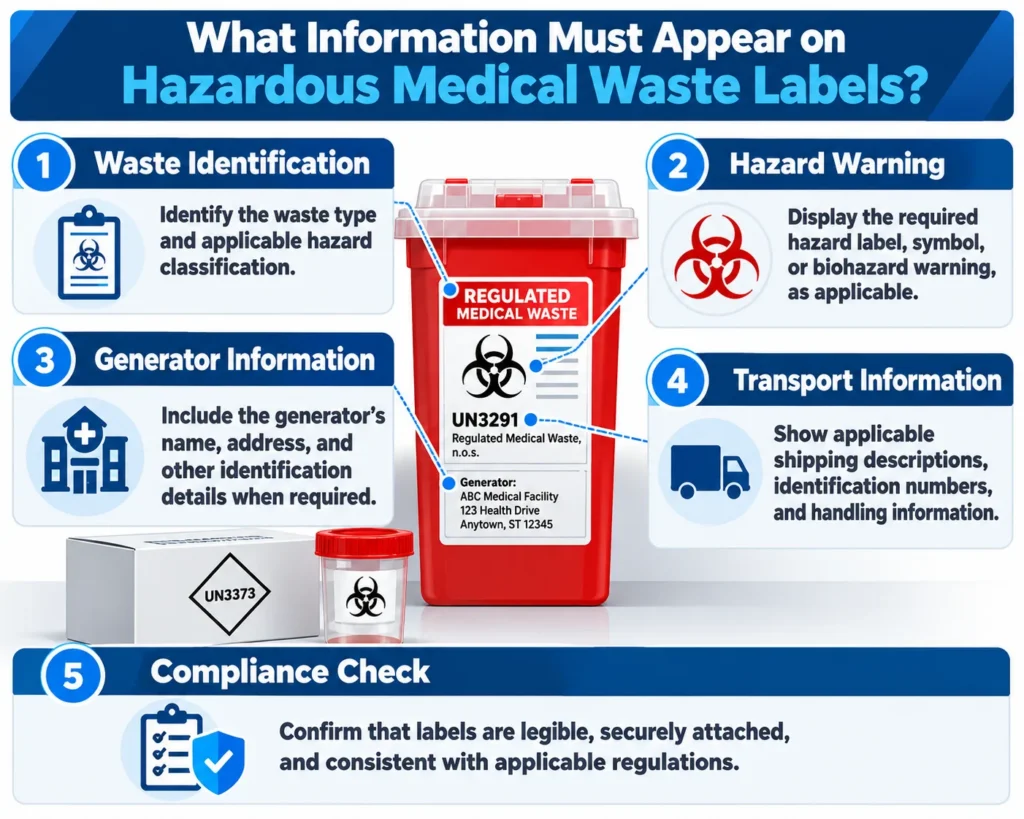
A good label tells people what the waste is and how to handle it safely. It should show the waste type, the right hazard warning, and generator details when rules require them. For shipments, it may also carry shipping descriptions and identification numbers. Make sure every label is clear, firmly attached, and matches the rules that apply.
Conclusion
Safe medical waste shipping should not slow down your practice. Secure Waste brings over 25 years of experience and reliable, DOT-compliant service to Maryland, Virginia, and Washington, D.C. We are licensed, bonded, and insured, with no long-term contracts. We keep every shipment on track, so you can focus on your patients.
Questions about your medical waste pickups?Contact Secure Waste today for a free assessment and clear, upfront pricing!
FAQ’s About Hazardous Medical Waste Transport
1. Is a red biohazard bag enough for transport?
Usually not. A bag helps hold and identify waste, but DOT generally expects it inside rigid, leak-resistant outer packaging, along with the required marks, shipping papers, and the right classification.
2. Can a facility ship its own medical waste?
Yes, if it follows every DOT rule, including hazmat training for any employee who prepares the shipment. Many facilities instead hire a licensed medical waste transporter to handle the process.
3. Who is responsible for packaging and labeling a medical waste shipment correctly?
The shipper, meaning the facility handing the waste to the carrier, must classify, package, mark, and label it. Carriers can refuse a shipment, but responsibility always starts with the shipper.
4. Do medical waste shipments need a shipping paper?
Yes, shipments generally need a shipping paper listing the shipping name, UN number, hazard class, quantity, and an emergency contact number. It travels with the load so carriers and responders know what is inside.
5. Can chemotherapy waste go in a regular red biohazard container?
Usually not. Trace chemotherapy waste often goes in yellow containers, while bulk or RCRA hazardous chemotherapy waste usually needs black ones. Color rules vary by state, so confirm with your provider.
Expert Medical Waste Management: With over 25 years of industry experience, Secure Waste is a trusted local leader in hazardous and biohazardous waste disposal across Maryland, Virginia, and Washington, D.C. Specializing in medical waste management, sharps needle disposal, and biohazard waste removal, the company ensures full compliance with federal, state, and local regulations while prioritizing environmental sustainability.
The company also offers additional services, including secure document shredding and sharps container sales, providing comprehensive solutions for healthcare facilities and businesses. Our cost-effective services help clients maintain regulatory compliance without unexpected costs.
With a commitment to customer satisfaction, Secure Waste offers tailored waste management plans that align with industry best practices. Their team of experts provides reliable, timely, and compliant services, making them the preferred choice for medical waste disposal. For a free waste quote or more information, visit www.securewaste.net