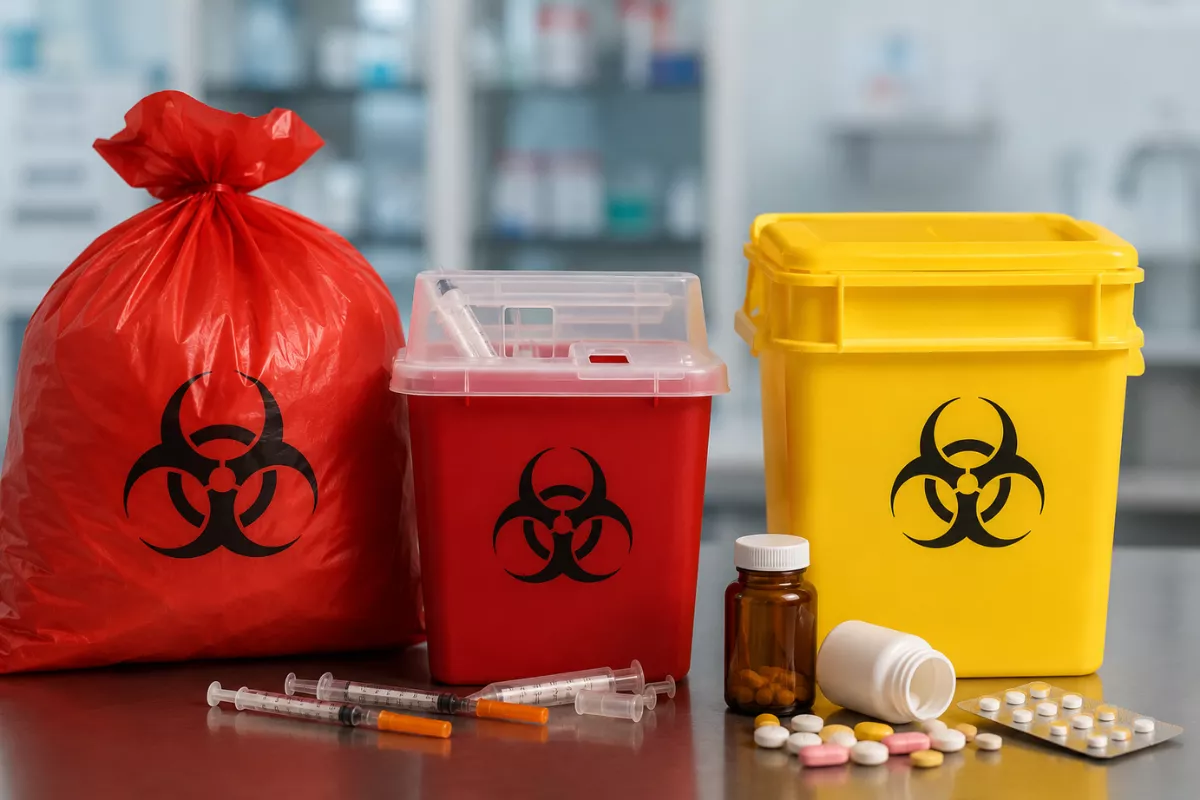
Medical facilities, laboratories, pharmacies, and many other workplaces generate different types of waste that cannot be disposed of in the same way as regular trash. Three of the most common categories are biohazard waste, sharps waste, and pharmaceutical waste. Although these waste streams may originate from similar environments, they present distinct risks to human health, worker safety, and the environment. Their improper segregation can increase the risk of injuries, disease transmission, regulatory violations, and environmental contamination. Therefore, understanding how these waste types differ is important for maintaining compliance and supporting safe disposal practices. In this guide, we’ll break down the key differences between biohazard waste, sharps, and pharmaceutical waste and explain how each should be handled.
Biohazard, Sharps, and Pharmaceutical Waste: Overview
Biohazard waste, sharps, and pharmaceutical waste each present distinct risks that require separate handling, segregation, and disposal procedures. Biohazard waste involves infectious materials, sharps pose puncture and exposure hazards, and pharmaceutical waste carries chemical and environmental risks. Proper identification, containment, treatment, and classification help reduce injuries, prevent contamination, support regulatory compliance, and improve workplace safety. Effective segregation practices ensure each waste stream follows the appropriate disposal pathway while minimizing operational and environmental risks.
Understanding Healthcare Waste Classification
Biohazard Waste
Often referred to as infectious waste, biohazard waste consists of materials known or suspected to contain pathogenic microorganisms that can cause disease in humans or animals. It is generated during activities involving patient care, laboratory testing, research, diagnosis, treatment, and specimen handling. These wastes are evaluated for whether they contain or are contaminated with blood, body fluids, cultures, or other potentially infectious materials.
Sharps
Sharps are objects capable of puncturing or cutting the skin, including needles, lancets, scalpels, and contaminated broken glass. They are generated during injections, blood collection, surgery, and laboratory work and pose both injury and infection hazards. According to the CDC’s Workbook for Designing, Implementing, and Evaluating a Sharps Injury Prevention Program, an estimated 385,000 needlestick and other sharps-related injuries occur annually among hospital-based healthcare personnel in the United States. This highlights why sharps are classified and managed separately from other healthcare waste streams.
Pharmaceutical Waste
The expired, unused, contaminated, or partially used medications generated during prescribing, dispensing, storage, and treatment activities are pharmaceutical waste. This waste stream may include tablets, capsules, injectable drugs, vaccines, IV medications, controlled substances, and hazardous pharmaceutical formulations. Unlike biohazard waste, pharmaceutical waste is classified based primarily on its chemical composition and potential environmental or toxicological impact.
| For healthcare facilities managing biohazard, sharps, or pharmaceutical waste, proper handling is essential. Our team provides tailored solutions that support compliance and safety. Explore Our Healthcare Waste Management Solutions |
Biohazard Waste vs. Sharps vs. Pharmaceutical Waste: Key Differences
| Comparison Factor | Biohazard Waste | Sharps | Pharmaceutical Waste |
|---|---|---|---|
| Exposure Route of Greatest Concern | Risks typically arise when infectious materials come into contact with the eyes, nose, mouth, damaged skin, or become airborne during certain procedures. | The greatest concern is a puncture injury, which can bypass the body’s natural protective barriers and create direct exposure. | Exposure can occur through skin contact, inhalation, accidental ingestion, or the release of pharmaceutical residues into surrounding environments. |
| Placed in rigid, puncture-resistant sharps containers that display a biohazard label when contaminated. | Collected in clearly labeled pharmaceutical waste containers, often separated by hazardous, non-hazardous, or controlled drug categories. | ||
| Facilities generally produce fewer sharps by volume, but every discarded item requires careful control due to its injury potential. | The volume of pharmaceutical waste can vary considerably depending on medication use, stock management practices, and product expiration rates. | ||
| Highest-Risk Waste Fraction | Among all materials in this category, concentrated laboratory cultures and infectious stocks pose the greatest containment challenge. | Retained fluid within hollow-bore needles significantly increases the likelihood of pathogen transfer following an injury. | Particular concern surrounds cytotoxic and cytostatic drugs because of their ability to interfere with cell growth and genetic material. |
| Processing methods are designed not only to disinfect the waste but also to physically destroy its ability to puncture. | Disposal methods are selected according to the drug’s chemical properties and may require specialized high-temperature treatment technologies. |
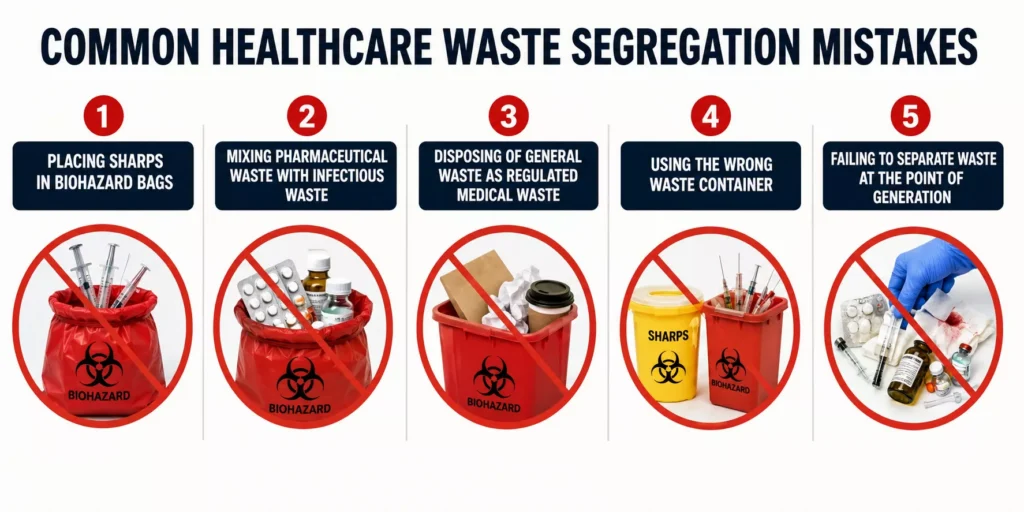
Common Healthcare Waste Segregation Mistakes
Proper waste segregation is one of the most critical steps in healthcare waste management, yet mistakes at the point of disposal remain common across clinical settings. Misclassifying biohazard, sharps, and pharmaceutical waste can increase injury risks, disrupt treatment processes, raise disposal costs, and result in regulatory non-compliance. Understanding these common segregation errors helps healthcare facilities improve safety, maintain compliance, and ensure each waste stream follows its appropriate handling and disposal pathway.
Conclusion
Managing healthcare waste effectively starts with understanding the unique risks associated with each waste stream. When biohazard waste, sharps, and pharmaceutical waste are handled correctly, healthcare facilities can create safer workplaces, strengthen compliance efforts, and reduce the chances of costly disposal mistakes. To make this process easier, Secure Waste provides tailored solutions for collecting, transporting, and disposing of these specialized waste streams. Their compliant programs help healthcare organizations maintain safe operations while supporting environmentally conscious waste management practices.
| Reduce disposal risks and stay ahead of changing healthcare waste regulations. Our experienced team provides customized waste management services designed to help healthcare facilities protect staff, patients, and the environment. |
FAQs About Biohazard Waste, Sharps, And Pharmaceutical Waste
1. Can a waste item belong to more than one category at the same time?
Yes. For example, a used syringe containing medication residue may meet both sharps and pharmaceutical waste criteria, requiring disposal according to the more stringent handling requirements.
2. Are home-generated medical wastes subject to the same disposal considerations?
Yes. Items such as used needles, lancets, and unused medications often require special disposal and should not be placed in regular household trash.
3. Can a pharmaceutical product become biohazard waste during patient care?
Yes. A medication container contaminated with blood or other potentially infectious materials may require additional handling considerations beyond standard pharmaceutical waste management.
4. Can a single improperly discarded sharp create a compliance issue?
Yes, even one misplaced sharp can increase injury risks and violate disposal protocols.
5. Which waste stream is most commonly associated with environmental contamination concerns?
Pharmaceutical waste is most closely associated with environmental risks due to chemically active drug compounds.
Expert Medical Waste Management: With over 25 years of industry experience, Secure Waste is a trusted local leader in hazardous and biohazardous waste disposal across Maryland, Virginia, and Washington, D.C. Specializing in medical waste management, sharps needle disposal, and biohazard waste removal, the company ensures full compliance with federal, state, and local regulations while prioritizing environmental sustainability.
The company also offers additional services, including secure document shredding and sharps container sales, providing comprehensive solutions for healthcare facilities and businesses. Our cost-effective services help clients maintain regulatory compliance without unexpected costs.
With a commitment to customer satisfaction, Secure Waste offers tailored waste management plans that align with industry best practices. Their team of experts provides reliable, timely, and compliant services, making them the preferred choice for medical waste disposal. For a free waste quote or more information, visit www.securewaste.net