
Urgent care clinics treat millions of patients annually. This results in a massive volume of regulated medical waste.
The waste consists of blood-soaked bandages, used syringes, contaminated gloves, IV tubing, specimen containers, gauze pads, used needles and sharps, and other materials that may carry infectious agents.
Managing this hazardous waste requires careful attention to detail. This is because state and federal regulatory agencies often conduct unannounced inspections to make sure your clinic follows required environmental and safety guidelines.
Failing a medical waste inspection does more than cause a headache. It disrupts your daily clinic operations, harms your community’s reputation, and results in severe financial penalties.
Hence, clinic managers need a proactive approach to waste management. Well, this guide breaks down exactly what auditors look for and how you can keep your facility compliant year-round.
Overview of Medical Waste Inspection PreparednessUrgent care clinics generate significant regulated medical waste and face strict oversight from regulatory agencies. Proactive preparation prevents costly fines, protects public health, and ensures operational continuity. Facilities must conduct regular internal audits to evaluate waste storage, staff behaviors, and documentation tracking. Proper segregation into designated sharps, red bags, and pharmaceutical containers is mandatory. Addressing common violations such as overfilled bins, improper bag tying, and missing destruction manifests keeps facilities compliant. Fostering a continuous culture of safety and partnering with certified disposal vendors ensures clinics remain ready for unannounced health and safety inspections. |
Why Is Preparing for Inspections Critical?
Regulatory agencies like the EPA, OSHA, and state and local health departments enforce strict rules regarding medical waste. Preparing for their unannounced visits protects your clinic on multiple fronts.
- Financial Protection: Inspectors regularly issue steep fines for violations. A single improperly labeled biohazard bin can easily cost a facility thousands of dollars. You want to keep that money in your operating budget, not hand it over to the state.
- Operational Continuity: Severe compliance failures can force a clinic to suspend operations until management resolves the issues.
- Brand Reputation: Patients expect clean, safe environments when they seek medical care. Public records of health and safety violations severely erode community trust, sending your patients to competitors down the street.
- Legal Protection: Failing medical waste regulatory inspections can expose your clinic to legal liabilities. Non-compliance with regulations may lead to lawsuits, regulatory investigations, or increased scrutiny from health authorities.
Conducting an Internal Audit Before Inspection
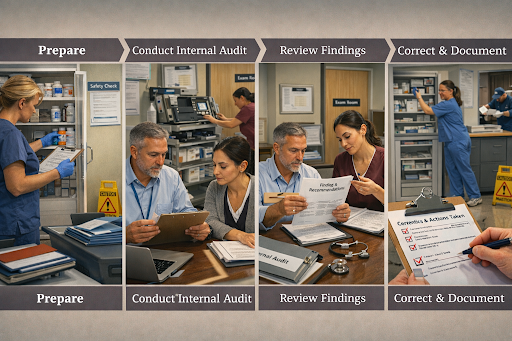
The absolute best way to survive a medical waste inspection is to find and fix your own mistakes first. Routine internal waste audits act as mock inspections, keeping your team sharp and your facility incredibly safe. You can even use a standard hospital waste inspection checklist and adapt it to your urgent care facility’s specific needs.
You should set a strict schedule to audit your clinic quarterly. During this audit, your designated compliance officer must walk the floor and evaluate every step of the waste lifecycle. Are your nurses tossing items into the closest bin to save a few seconds? You need to know the answer before an inspector finds out.
Review Documentation
Check that your team signs, dates, and files all medical waste manifests correctly. Ensure your employee training records remain entirely up to date. Inspectors will ask for this paperwork almost immediately.
Inspect Storage Areas
Could you verify that your designated waste storage room remains locked at all times? It must also be well-ventilated and completely free of pests. A messy storage closet is a massive red flag for any visiting auditor.
Observe Staff Behavior
Watch exactly how your nurses and technicians dispose of materials during their busy shifts. If you spot improper disposal practices, correct them immediately.
Proper Segregation and Labeling of Medical Waste
Inspectors pay close attention to how your staff separates different types of waste. Mixing regular trash with regulated medical waste artificially inflates your disposal costs and violates safety protocols. Placing hazardous materials in the wrong bins creates dangerous situations for waste haulers who empty them.
To stay on track, consider keeping a medical waste compliance checklist posted in disposal areas. Train your staff to recognize the following specific categories and use the correct containers every single time:
- Sharps: Place all needles, scalpels, and broken glass directly into rigid, puncture-resistant sharps containers.
- Red Bag Waste: Use red biohazard bags strictly for items saturated with blood or potentially infectious materials (OPIM). If it is just slightly spotted with blood, it likely belongs in the regular trash.
- Pharmaceutical Waste: Dispose of expired or unused medications in designated black or blue bins. The color depends specifically on whether the drugs are RCRA-hazardous.
- Trace Chemotherapy Waste: Route empty vials and contaminated PPE directly into yellow containers.
Every single container must feature clear labeling. Apply the universal biohazard symbol to all red bags and sharps containers. Ensure that your storage boxes prominently display the accumulation start date and the exact name of your facility.
Common Inspection Findings and How to Avoid Them
Inspectors repeatedly see the same mistakes at different facilities. Knowing these frequent pitfalls helps you eliminate them long before the auditor walks through your front doors.
Overfilled Sharps Containers
Staff members often force needles into containers that are already full. This bad habit dramatically increases the risk of accidental needle sticks.
The Fix: Replace your sharps containers as soon as they reach the designated fill line, which is usually three-quarters full. Never allow your staff to push waste down to create more room.
Improperly Tied Red Bags
A red bag tied with a simple dog-ear knot can easily leak during transport.
The Fix: Train your entire staff to use the “gooseneck” tying method. You twist the top of the bag, fold it over itself, and secure it tightly with heavy tape or a zip tie.
Missing or Incomplete Manifests
Inspectors will ask to see your cradle-to-grave documentation. Missing tracking documents mean you cannot prove that your waste reached a designated treatment facility safely.
The Fix: Digitize all of your records. Work with a certified waste management partner who provides a secure online portal for tracking and storing your destruction manifests.
To wrap up
Maintaining complete compliance with medical waste regulations demands commitment, consistency, and a reliable support system. At Secure Waste, we simplify this process for urgent care clinics so they can meet strict safety standards. Our reliable pickup services, expert medical waste disposal in Maryland, and accurate documentation keep your facility prepared. Partner with us to focus on delivering exceptional patient care while we handle your regulated medical waste efficiently.
FAQs
What agencies conduct medical waste inspections in urgent care clinics?
OSHA, the EPA, state environmental departments, and local health departments typically conduct inspections.
How often should a clinic conduct an internal waste audit?
Clinic managers should conduct internal regulated medical waste audits at least quarterly to ensure ongoing compliance.
When should a sharps container be replaced?
Staff must replace sharps containers when they reach the manufacturer’s fill line, which is typically three-quarters full.
What is the correct way to tie a biohazard red bag?
Staff should use the gooseneck method, which involves twisting the top, folding it over, and securing it with a zip tie or strong tape.
Expert Medical Waste Management: With over 25 years of industry experience, Secure Waste is a trusted local leader in hazardous and biohazardous waste disposal across Maryland, Virginia, and Washington, D.C. Specializing in medical waste management, sharps needle disposal, and biohazard waste removal, the company ensures full compliance with federal, state, and local regulations while prioritizing environmental sustainability.
The company also offers additional services, including secure document shredding and sharps container sales, providing comprehensive solutions for healthcare facilities and businesses. Our cost-effective services help clients maintain regulatory compliance without unexpected costs.
With a commitment to customer satisfaction, Secure Waste offers tailored waste management plans that align with industry best practices. Their team of experts provides reliable, timely, and compliant services, making them the preferred choice for medical waste disposal. For a free waste quote or more information, visit www.securewaste.net