Hospitals generate substantial volumes of healthcare waste daily, ranging from used syringes and contaminated dressings to surgical instruments and pathological materials. This raises critical questions, such as “How do hospitals dispose of healthcare waste?”
Among the various hospital waste disposal technologies available, autoclaving and incineration are the most widely adopted methods, particularly for managing infectious and hazardous medical waste. These processes are subject to strict national and international regulations to ensure compliance with health, safety, and environmental standards.
Here, we explore how hospitals utilize autoclaves and incinerators in the systematic treatment of medical waste, comparing their operational processes, effectiveness, regulatory frameworks, and environmental implications.
Healthcare Waste Management Summary
Safe healthcare waste disposal depends on selecting the right treatment method for each waste stream while maintaining compliance with strict health and environmental regulations. Autoclaving is commonly used for infectious, moisture-tolerant waste, whereas incineration is necessary for pathological, pharmaceutical, and hazardous materials. Effective segregation, staff training, documented procedures, and regulatory oversight help reduce infection risks, prevent environmental contamination, and support sustainable healthcare operations. Specialized disposal services further ensure safe management of biohazardous, chemotherapy, sharps, biomedical, and pathological waste.
Why Proper Disposal of Medical Waste is Crucial
Protecting Human Health
The World Health Organization (WHO) estimates that 15% of healthcare waste is hazardous, including materials contaminated with blood, bodily fluids, or radioactive substances. Improper handling can expose healthcare workers, waste handlers, and even the public to serious health risks such as HIV, hepatitis B and C, and antibiotic-resistant infections. Needle-stick injuries, particularly from incorrectly discarded sharps, remain a significant cause of occupational disease transmission in healthcare settings.
Preventing Environmental Contamination
Where does medical waste go after treatment? Understanding this is essential to assessing its environmental footprint. For example, low-quality medical waste incineration can release toxic substances like dioxins, furans, and heavy metals, polluting the air and increasing the risk of long-term health effects. Similarly, landfilling untreated infectious waste can lead to soil degradation and groundwater contamination, adversely affecting local ecosystems and water sources.
Ensuring Regulatory Compliance
Governments and international bodies impose strict regulations on hospital garbage management to ensure public and environmental safety. Agencies such as the U.S. Environmental Protection Agency (EPA), the Occupational Safety and Health Administration (OSHA), and the World Health Organization (WHO) provide detailed guidelines on segregation, treatment, storage, and disposal. Non-compliance can result in fines, legal action, reputational damage, and even loss of accreditation for healthcare facilities.
Supporting Sustainable Healthcare
Proper waste treatment, such as autoclaving for sterilization or high-temperature incineration for destruction, aligns with sustainability goals in healthcare. Environmentally sound disposal practices help reduce the carbon footprint of medical facilities, contribute to a circular economy, and reinforce public trust in the health system’s commitment to safety and responsibility.
Overview of Common Medical Waste Disposal Methods
Having established the critical importance of disposing of medical waste properly for health, safety, and environmental sustainability, it’s equally important to understand how this waste is managed in practice. Below is an overview of the most common disposal methods used by hospitals and healthcare facilities worldwide:
What is Autoclaving?
Autoclaving is a widely used method to dispose of medical waste through high-pressure saturated steam. Typically operating at 121–134°C (250–273°F) for 15–60 minutes, autoclaves effectively destroy all microorganisms, including bacteria, viruses, and spores. This process is especially suitable for infectious (biohazardous) waste such as sharps, laboratory cultures, and surgical instruments. Autoclaving is considered environmentally friendly, as it produces no harmful air emissions. The treated waste is often shredded and rendered non-infectious before disposal in landfills. This technique is regulated by bodies such as OSHA and the CDC.
Research in the Health Care Without Harm Climate-Smart Health Care Series under the Global Road Map for Health Care highlights that the treatment using an autoclave produced fewer greenhouse gas emissions and was less expensive to operate. Noting that steam-based treatment technologies effectively maintain healthcare waste treatment with less risk to the environment.
What is Incineration?
Incineration is a high-temperature thermal treatment process used to safely destroy hazardous medical waste, including pathological, pharmaceutical, and chemical waste. Operating at temperatures between 850°C to 1,100°C (1,562°F to 2,012°F), medical waste incinerators combust waste materials, reducing them to inert ash, gases, and heat. This method is highly effective for eliminating infectious agents and toxic substances that cannot be treated by autoclaving. While incineration ensures complete destruction, it can produce airborne pollutants such as dioxins and furans if not properly controlled. Modern incinerators include advanced air pollution control systems and are regulated under frameworks such as the EPA, the EU Waste Incineration Directive, and WHO guidelines.
Autoclave vs. Incineration: Key Differences
While both autoclaving and incineration are essential tools in medical waste management, their functional roles differ significantly. These are some of the most notable distinctions between them:
Waste Compatibility
Autoclaves, such as surgical tools, textiles, and microbiological materials, are designed primarily for moisture-tolerant waste. However, they are ineffective for treating chemical, pharmaceutical, or anatomical waste, which must be incinerated. And how do hospitals dispose of body parts? The answer is incineration, which excels in excels in handling diverse and high-risk waste streams, including cytotoxic drugs, body parts, and hazardous chemical materials that cannot be safely sterilized using steam.
On-Site vs. Off-Site Flexibility
Autoclave units are increasingly available in compact, mobile, or modular formats, allowing on-site waste treatment even in small to mid-sized hospitals. Due to its infrastructure demands and environmental permitting requirements, incineration is typically centralized in off-site, high-capacity treatment facilities, which necessitate secure waste transport and additional logistics.
Safety and Occupational Risk
Autoclaving poses lower occupational risk due to its closed-chamber system, which minimizes exposure to hazardous fumes or sharps. In contrast, incineration involves handling combustible and hazardous materials under high pressure and heat, necessitating specialized training, personal protective equipment (PPE), and robust incident response protocols.
Residual Waste Classification
Once sterilized and shredded, post-autoclave waste is typically reclassified as municipal solid waste (MSW), enabling less regulated and more cost-effective disposal. Conversely, incinerator ash, especially from hazardous hospital waste disposal, may still be considered toxic or hazardous waste and requires special handling and disposal under environmental law.
Global Regulations and Best Practices
International Guidelines
The World Health Organization (WHO) sets the global standard for healthcare waste management. Its guidelines emphasize risk-based waste segregation, safe treatment technologies, and environmentally sound disposal. The Basel Convention further regulates the transboundary movement of hazardous waste, ensuring responsible handling, especially in developing nations.
United States Regulations
In the United States, medical waste is regulated by both federal and state authorities. The Environmental Protection Agency (EPA) regulates incineration emissions under the Clean Air Act, while the Occupational Safety and Health Administration (OSHA) enforces workplace safety standards for handling infectious and sharp waste. State health departments may impose stricter local requirements, especially on-site treatment technologies.
European Union Framework
The EU enforces comprehensive policies under the Waste Framework Directive (2008/98/EC) and Industrial Emissions Directive (2010/75/EU). These mandate the use of Best Available Techniques (BAT) for waste treatment and require continuous emissions monitoring, detailed waste classification, and cradle-to-grave documentation.
Some of the highly recommended global best practices include:
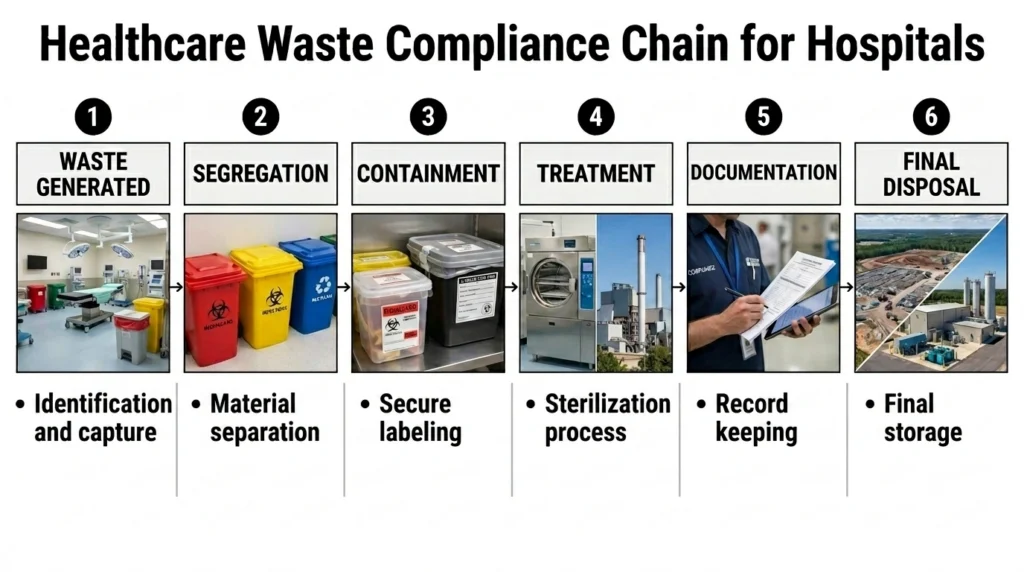
- Segregation at the source using color-coded bins
- Use of documented protocols and SOPs
- Staff training on waste handling and emergency response
- Regular audits and compliance checks
- Adoption of non-burning technologies and sustainability-focused systems
Secure Waste’s Medical Waste Disposal Services For Healthcare Facilities
Medical Waste Disposal
We manage regulated medical waste such as contaminated gloves, gauze, dressings, and non-sharp instruments. Our disposal methods, including autoclaving and medical waste incinerators, ensure safety and regulatory compliance while reducing environmental impact.
Biohazard Waste Disposal
When handling infectious materials, lab cultures, and contaminated personal protective equipment (PPE), we utilize specialized packaging and protocols to prevent cross-contamination and protect both healthcare workers and patients during biohazard waste management.
Chemotherapy Waste Disposal
We safely manage trace and bulk chemotherapy waste, including IV bags and contaminated gloves, in accordance with NIOSH and EPA guidelines, utilizing high-temperature incineration to neutralize cytotoxic substances.
Sharps Needle Management
Our OSHA-compliant sharps containers, scheduled pickups, and disposal processes prevent needlestick injuries and disease transmission through secure sterilization or incineration.
Biomedical and Hazardous Waste Disposal
Our biomedical waste disposal solutions cover infectious and non-infectious biomedical waste, toxic chemicals, solvents, and mercury-containing devices, ensuring proper classification, containment, and EPA-approved disposal methods.
Pathological Waste Disposal
We dispose of human tissues and organs using strict biohazard protocols and incineration, fully compliant with state and federal regulations. What happens to medical waste body parts? They are typically incinerated under fully compliant state and federal regulations.
Conclusion
Effective healthcare waste management depends on more than disposal; it requires systems that prevent contamination before waste leaves the facility. Hospitals that prioritize compliant segregation, handling, and treatment can better protect staff, patients, and the environment. Secure Waste provides secure disposal of expired, unused, and contaminated pharmaceuticals, including controlled substances, in accordance with DEA and EPA requirements. Our experts help healthcare facilities simplify compliance, reduce risk, and maintain safe, efficient waste management programs. So contact us to get end-to-end solutions and ease your waste management.
Frequently Asked Questions About the Hospital’s Waste Management
1. How do healthcare waste management facilities manage pharmaceutical waste that contains controlled substances?
Controlled substances are handled through secure collection, tracking, and disposal procedures that comply with DEA requirements.
2. How do medical waste management services provide the final treatment and destruction of medical waste?
Facilities receive manifests, tracking records, certificates of treatment, and supporting compliance documentation.
3. What documentation is required for healthcare waste disposal compliance?
Healthcare facilities typically maintain waste manifests, treatment records, pickup logs, training documentation, and disposal certificates to demonstrate regulatory compliance.
4. How are anatomical specimens managed in healthcare waste disposal?
Anatomical specimens are typically handled under strict biohazard procedures and treated through high-temperature incineration.
5. How are sharps managed during healthcare waste disposal?
Used needles, scalpels, and other sharps are collected in puncture-resistant containers before undergoing approved sterilization or incineration treatment.
6. What factors determine whether on-site or off-site treatment is used?
Waste volume, facility size, available equipment, regulatory requirements, infrastructure capacity, and waste type typically determine the treatment approach.
Expert Medical Waste Management: With over 25 years of industry experience, Secure Waste is a trusted local leader in hazardous and biohazardous waste disposal across Maryland, Virginia, and Washington, D.C. Specializing in medical waste management, sharps needle disposal, and biohazard waste removal, the company ensures full compliance with federal, state, and local regulations while prioritizing environmental sustainability.
The company also offers additional services, including secure document shredding and sharps container sales, providing comprehensive solutions for healthcare facilities and businesses. Our cost-effective services help clients maintain regulatory compliance without unexpected costs.
With a commitment to customer satisfaction, Secure Waste offers tailored waste management plans that align with industry best practices. Their team of experts provides reliable, timely, and compliant services, making them the preferred choice for medical waste disposal. For a free waste quote or more information, visit www.securewaste.net