10 Essential Rules for Safely Handling Hazardous Materials: Expert Hazardous Waste Solutions From Secure Waste
Secure Waste frequently receives inquiries regarding the safe handling of hazardous waste. As a leader and pioneer in the regulated waste management of hazardous materials, Secure Waste is eager to share our valuable experiences.
We have compiled a list of our top 10 essential tips for the proper handling of hazardous waste. Proudly serving Maryland, Virginia, and Washington, D.C., we are committed to ensuring that hazardous waste disposal and healthcare biohazard disposal are conducted safely and efficiently.
If you require expert assistance with hazardous waste disposal, don’t hesitate to call us today!
The effects of human exposure to chemicals and hazardous materials can significantly differ, ranging from minor skin irritations and respiratory problems to serious long-term health issues, such as chronic diseases and cancers.
It is essential to recognize the risks associated with hazardous substances in the workplace to foster a culture of safety in their handling, transportation, and storage, while adhering to all RCRA rules and regulations.
Although federal laws mandate that anyone managing these materials receive proper hazmat training, it is also crucial for companies to create an environment that not only complies with but surpasses these requirements, thereby ensuring the safe management of hazardous materials.
Encouraging employees to take an active role in creating and sustaining a secure work environment is vital. To achieve this goal, here are ten foundational rules that serve as best practices for preventing hazardous materials (HazMat) incidents.
What does it cost to dispose of hazardous waste? Secure Waste has the answer here.
Secure Waste Top 10 Rules For Dealing With Hazardous Waste
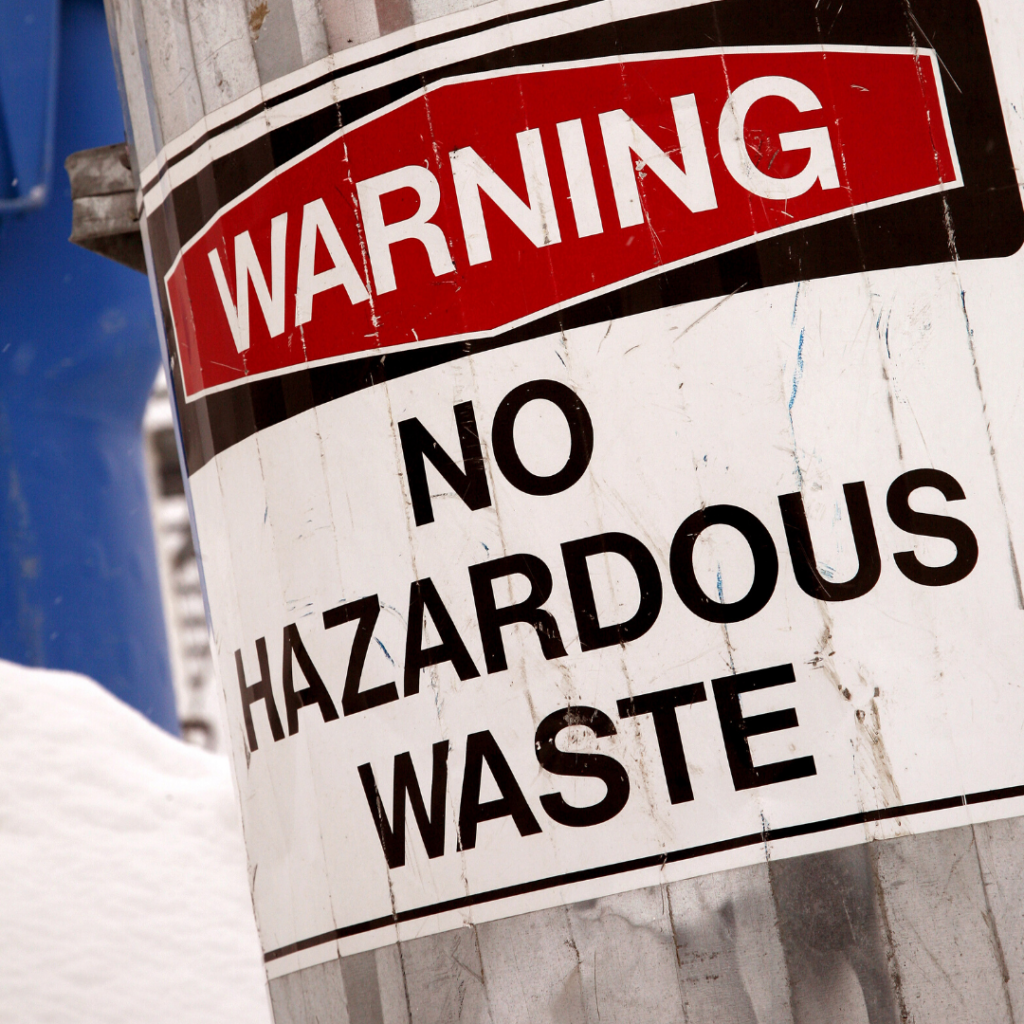
- Assess Workplace Risks: You can begin by doing a thorough inventory of all materials within your workplace. Identify and evaluate substances that pose hazards based on their chemical properties and the manner in which they are used in operations. A comprehensive risk assessment should include potential exposure routes and the conditions under which these materials can become dangerous, forming the basis for adequate safety measures.
- Provide Comprehensive Training: Equip employees with extensive training and resources regarding the hazardous materials present in your environment. This training should cover not just federal requirements but also industry-specific best practices. Please foster a learning culture where employees are encouraged to quickly familiarize themselves with updated safety protocols, best practices, and emergency response procedures, ensuring they are prepared in the event of an incident.
- Plan for Potential Hazards: Anticipate possible emergencies stemming from hazmat spills, chemical exposure, or other accidents by having clear arrangements and procedures in place. Employees must be well-informed about emergency protocols, including detailed evacuation routes, proper spill cleanup methods, and appropriate fire response actions. Ensure that emergency equipment, such as eyewash stations, safety showers, fire extinguishers, and first-aid kits, is easily accessible, regularly inspected, well-maintained, and tested to ensure its continued functionality. Provide training in first-aid skills, empowering employees to effectively assist colleagues who may experience an injury or chemical exposure.
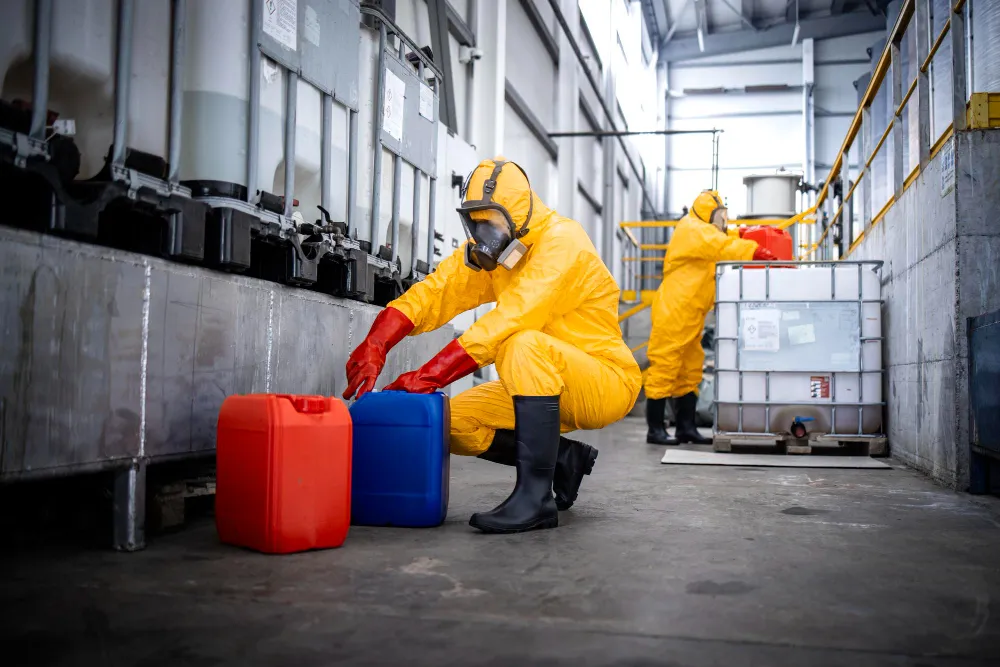
- Utilize Personal Protective Equipment (PPE): The appropriate selection and use of PPE are critical to employee safety. Conduct regular inspections of all PPE to ensure its integrity, and replace any outdated, damaged, or non-functioning gear immediately. Implement control measures, such as fume hoods and ventilation systems, and ensure they are regularly inspected and maintained to ensure optimal effectiveness.
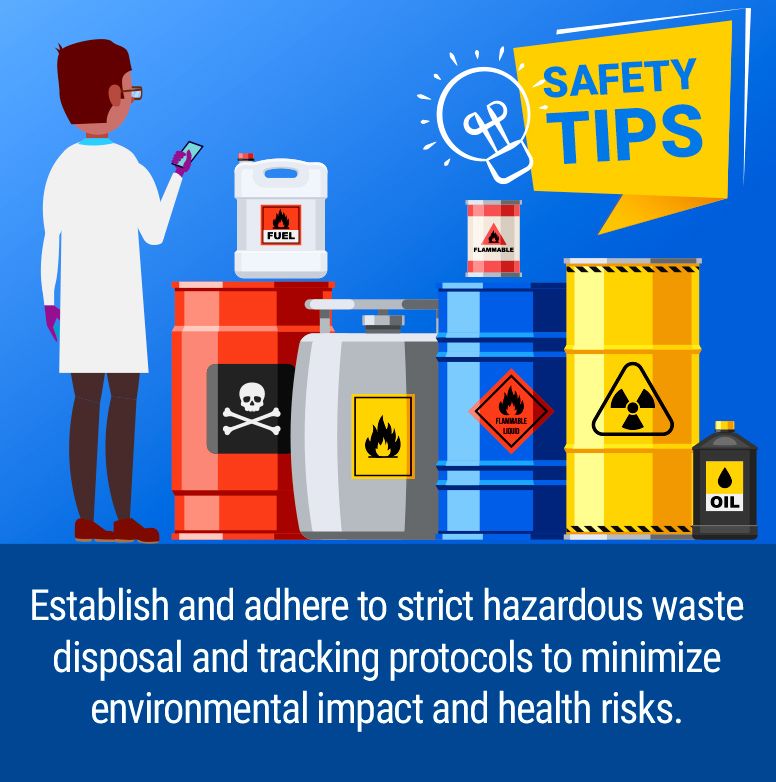
- Label Hazardous Materials Clearly: All containers of hazardous materials must be clearly labeled with the chemical’s name, hazard symbols, and specific handling instructions. Ensure that each chemical is stored in its appropriate container to avoid dangerous mix-ups or chemical reactions that could result from improper storage.
- Store Hazardous Materials Properly: Chemicals should be stored in well-ventilated, dry, and cool areas, following specific guidelines to keep incompatible materials separate and minimize risks. Please ensure that containers are always securely closed to prevent leaks or the escape of vapors. Maintain storage areas that are clean, organized, and clutter-free, as this can prevent trips and spills. Regular cleaning and maintenance of work surfaces is essential to minimize contamination or potential exposure risks.
- Use Materials for Intended Purposes Only: Always adhere to the intended uses and manufacturer guidelines for hazardous materials, avoiding any unapproved applications or improvisations that can lead to unsafe situations.
- Commit to Hygiene Practices: Establish strict hygiene protocols by prohibiting eating or drinking in areas where hazardous materials are handled. Employees should always wash their hands thoroughly with soap and water after using, transporting, or handling any chemicals to remove potential residues and avoid cross-contamination.
- Read Labels and Safety Data Sheets (SDS): Employees must meticulously read and understand labels to verify the nature and hazards of the substances they are working with. Safety Data Sheets, which provide critical information about emergency handling, necessary precautions, and first aid measures, must be easily accessible to all staff members to ensure they know how to respond appropriately in the event of a spill or chemical exposure.
- Report Concerns Promptly: Please be sure to encourage a proactive approach to hazard awareness by urging employees to promptly report any concerns related to damaged containers, suspected leaks, or spills without fear of reprisal. Cultivating a workplace mentality that values caution and transparency will significantly enhance safety and prevent potential incidents.
By instilling these essential practices in your workplace, you will significantly mitigate the risks associated with hazardous materials and foster a robust culture of safety that benefits everyone involved.
In Conclusion:
Secure Waste will save you money on biomedical waste disposal. We understand these hazards.
Staying informed and proactive is vital as new biological challenges arise. Together, we can prioritize health and safety, increase awareness, and promote responsible actions to create a healthier future for all!
We provide reliable, compliant, and environmentally friendly biomedical waste disposal solutions tailored to your facility’s specific needs.
**Disclaimer** This information is provided for reference purposes only and should not be considered as legal advice or factual information at the time of your reading. Regulations frequently change and can vary from state to state. We encourage you to contact your local regulatory authorities or Secure Waste directly for the most current information. Please note that Secure Waste is not liable, in part or in whole, for any information contained on this page or website.
Expert Medical Waste Management: With over 25 years of industry experience, Secure Waste is a trusted local leader in hazardous and biohazardous waste disposal across Maryland, Virginia, and Washington, D.C. Specializing in medical waste management, sharps needle disposal, and biohazard waste removal, the company ensures full compliance with federal, state, and local regulations while prioritizing environmental sustainability.
The company also offers additional services, including secure document shredding and sharps container sales, providing comprehensive solutions for healthcare facilities and businesses. Our cost-effective services help clients maintain regulatory compliance without unexpected costs.
With a commitment to customer satisfaction, Secure Waste offers tailored waste management plans that align with industry best practices. Their team of experts provides reliable, timely, and compliant services, making them the preferred choice for medical waste disposal. For a free waste quote or more information, visit www.securewaste.net