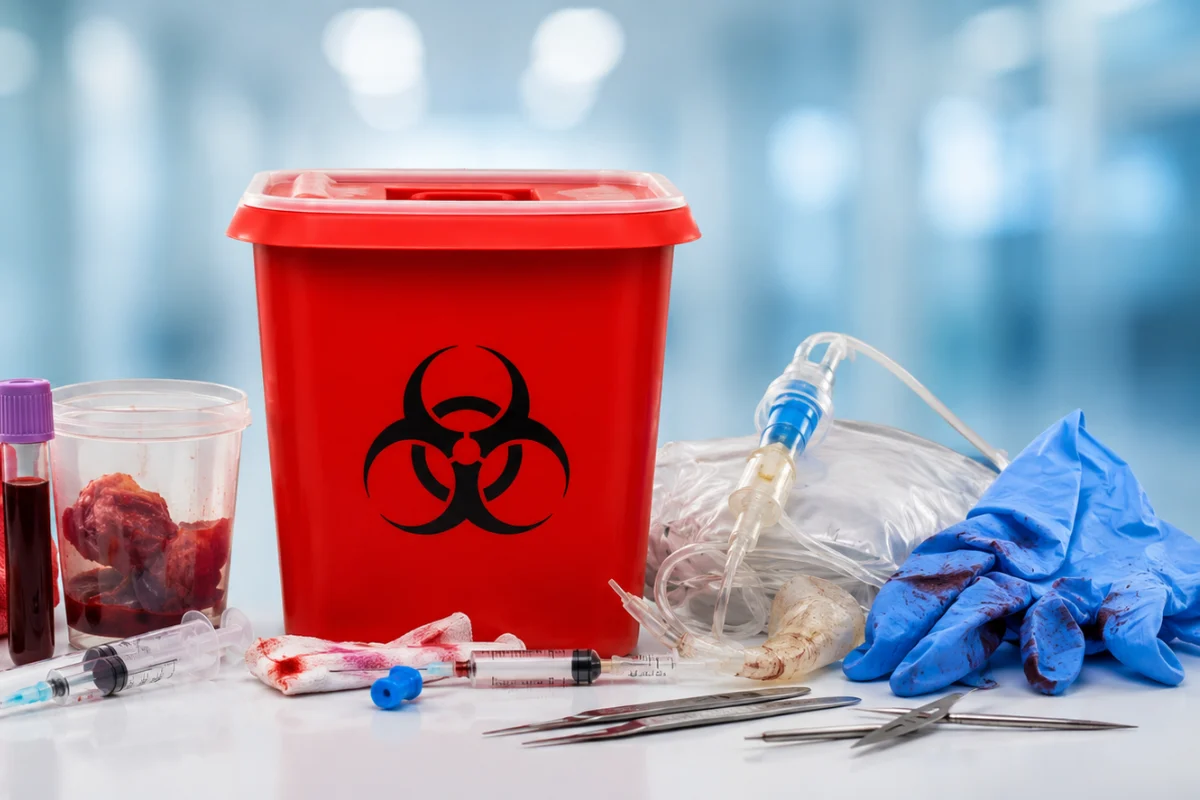
What qualifies as regulated medical waste under federal law is a critical compliance question for healthcare providers, laboratories, research facilities, and other organizations that generate potentially infectious waste. This is because misclassifying waste can increase exposure risks for staff, create transportation and disposal violations, and drive unnecessary handling costs. It can also lead to avoidable environmental and public health concerns when potentially hazardous materials are not managed correctly.
Under U.S. regulatory standards, regulated medical waste refers to specific waste streams that may contain blood, other potentially infectious materials, or sharps capable of causing injury and disease transmission. Because not all healthcare waste meets this threshold, accurate classification is essential at the point of generation. This article explains the types of waste classified as regulated medical waste under federal law and why proper identification matters for safe, compliant disposal.
Medical Waste Classification Summary
Regulated medical waste under federal law includes infectious cultures and laboratory stocks, isolation waste from highly contagious patient care, sharps, pathological and anatomical waste, and blood, blood products, and other potentially infectious materials. OSHA, DOT, and EPA set core safety, transport, and disposal standards, while states oversee daily compliance. Correct segregation, secure storage, validated treatment, and proper transport reduce exposure risks, prevent violations, control disposal costs, and protect the environment.
What Is Regulated Medical Waste Under Federal Laws
Regulated Medical Waste (RMW) refers to a specific subset of healthcare waste contaminated with blood, bodily fluids, or other potentially infectious materials that pose a biological or injury risk.
In the United States, three federal agencies establish the baseline safety standards:
- OSHA: Protects healthcare workers from on-site exposure to bloodborne pathogens and sharp injuries.
- DOT: Enforces secure highway transport standards, regulating RMW as a Hazard Class 6 (Infectious Substance) material.
- EPA: Regulates the environmental impact of disposal, specifically focusing on treatment technology approvals and incinerator emissions.
The State Component: While federal agencies dictate workplace safety and transit, day-to-day RMW management, definitions, and storage limits are primarily governed and enforced by individual state environmental and health departments.
Primary Categories of Regulated Medical Waste
Under U.S. federal law, Regulated Medical Waste (RMW) is strictly defined by overlapping OSHA, DOT, and CDC/EPA regulations based on its risk of spreading infection or causing puncture injuries. To be classified as infectious under U.S. safety standards, the waste must contain pathogens, a valid vector, and it must be capable of transmitting a disease. These materials are heavily regulated during off-site shipment under DOT Hazard Class 6 protocols.
Cultures and Laboratory Stocks
- Cultures: Microorganisms (like bacteria, viruses, fungi, or parasites) intentionally grown in a laboratory setting using a nutrient medium (such as agar petri dishes or liquid broths) for diagnostic, research, or scientific purposes.
- Stocks: Stored, highly concentrated populations of pure microorganisms maintained for ongoing testing, quality control, reference standards, or the production of biologicals like vaccines.
Contaminated culture dishes, flasks, and mixing tools hold concentrated pathogens, making them immediate biohazards. Consequently, OSHA regulates its on-site safety, while DOT protocols mandate strict Category A/B shipping controls under 49 CFR § 173.134 to prevent hazardous transit leaks.
Isolation Waste
Isolation waste includes disposable materials generated while caring for patients placed under transmission-based precautions for highly infectious diseases. Common examples include contaminated gloves, gowns, masks, dressings, disposable linens, and other patient-care items that may have come into contact with infectious body fluids or secretions. Because these materials can increase the risk of disease transmission, healthcare facilities must segregate, contain, and dispose of them according to applicable federal guidance and state medical waste regulations.
Sharps Waste
Sharps waste includes items capable of cutting or puncturing skin, such as needles, syringes, scalpels, lancets, and contaminated broken glass. Because they pose a mechanical hazard alongside a biological one, improperly disposed sharps can easily pierce standard garbage bags, risking accidental needle-sticks for waste workers. Consequently, federal mandates require immediate isolation in rigid, puncture-resistant biohazard containers to prevent disease transmission.
- OSHA Point-of-Use Isolation: Staff must immediately discard sharps at the point of use without bending, breaking, or recapping needles as dictated by the OSHA Bloodborne Pathogens Standard (29 CFR 1910.1030).
- Rigid Containment: Containers must be puncture-resistant, leakproof, closable, and labeled biohazard or bright red.
- DOT Transit Controls (49 CFR 173.197): Regulated as Hazard Class 6; containers must be upright, sealed, and replaced at the 75% fill line.
Pathological and Anatomical Waste Under Federal Laws
While often grouped, regulatory bodies and waste management protocols recognize a subtle distinction between the two:
- Pathological Waste: Typically refers to microscopic or smaller macroscopic biological specimens, such as biopsy materials, surgical specimens, and tissues sent to a laboratory for evaluation, testing, or disease diagnosis.
- Anatomical Waste: Refers explicitly to larger, recognizable human or animal body parts, limbs, organs, and products of conception (e.g., placentas) resulting from trauma, surgery, or autopsies.
Because of its high moisture content and biological nature, federal agencies enforce specialized protocols for pathological and anatomical waste:
- OSHA Point-of-Generation: Requires immediate isolation in leakproof, puncture-resistant containers using double-bagging or absorbent liners to completely prevent fluid leakage.
- DOT Transit (49 CFR § 173.197): Mandates rigid inner packagings secured inside specialized outer bulk containers. High-moisture tissues must include sufficient absorbent material to capture the entire fluid volume during transit breaches.
- Disposal Mandate: Unlike standard autoclaved waste, pathological waste is legally destined for direct incineration. This ensures complete pathogen neutralization and reduces dense tissues to inert ash.
Blood, Blood Products, and OPIM
Under the OSHA Bloodborne Pathogens Standard (29 CFR 1910.1030), blood waste is categorized into two physical states:
- Free-Flowing Liquids: Bulk volumes of liquid or semi-liquid blood, serum, plasma, platelets, suction canister fluids from surgeries, and discarded blood transfusion bags.
- Saturated Solids: Contaminated items (like gauze, bandages, or PPE) that are thoroughly soaked or caked with wet or dry blood.
Under OSHA’s “saturation rule,” solid items are regulated only if they drip or flake blood. OPIM includes internal fluids but excludes sweat, tears, or saliva unless visibly bloody. For transit, liquid blood is a Class 6 infectious substance requiring rigid, absorbent packaging and mandatory autoclaving or disinfection before safe landfill disposal.
Waste That Is Often Mistaken for Regulated Medical Waste
Medical facilities routinely waste thousands of dollars by tossing regular trash into red biohazard bags. Under federal law, items are only classified as regulated medical waste if they pose a genuine biological risk.
The most common non-hazardous items mistaken for medical waste include:
- Lightly soiled items: Gauze, Band-Aids, or tissues with minor, dried blood smudges that cannot drip when compressed.
- Routine PPE: Clean or slightly used gloves, gowns, and masks worn during standard, non-isolation patient examinations.
- Unused sharps: Packaged, unsoiled needles or syringes that were never exposed to patient fluids.
Disposing of these everyday materials as biohazards artificially inflates facility compliance costs and creates unnecessary environmental strain.
How Healthcare Facilities Manage Regulated Medical Waste
Healthcare facilities manage regulated medical waste through a strict three-step lifecycle to guarantee legal compliance and safety:
- Segregation: Staff separates medical waste at the point of generation, depositing biohazards into red bags or rigid sharps containers to prevent cross-contamination with municipal trash.
- Storage and Containment: Collected waste is consolidated in designated, secure biohazard storage areas that control temperature, minimize odors, and prevent unauthorized public access.
- Treatment and Transportation: Facilities contract with licensed vendors who transport the waste using DOT Hazard Class 6 protocols. The waste undergoes validated autoclaving (steam sterilization) or chemical disinfection to neutralize pathogens before safe landfill disposal, while pathological waste is sent directly to incineration.
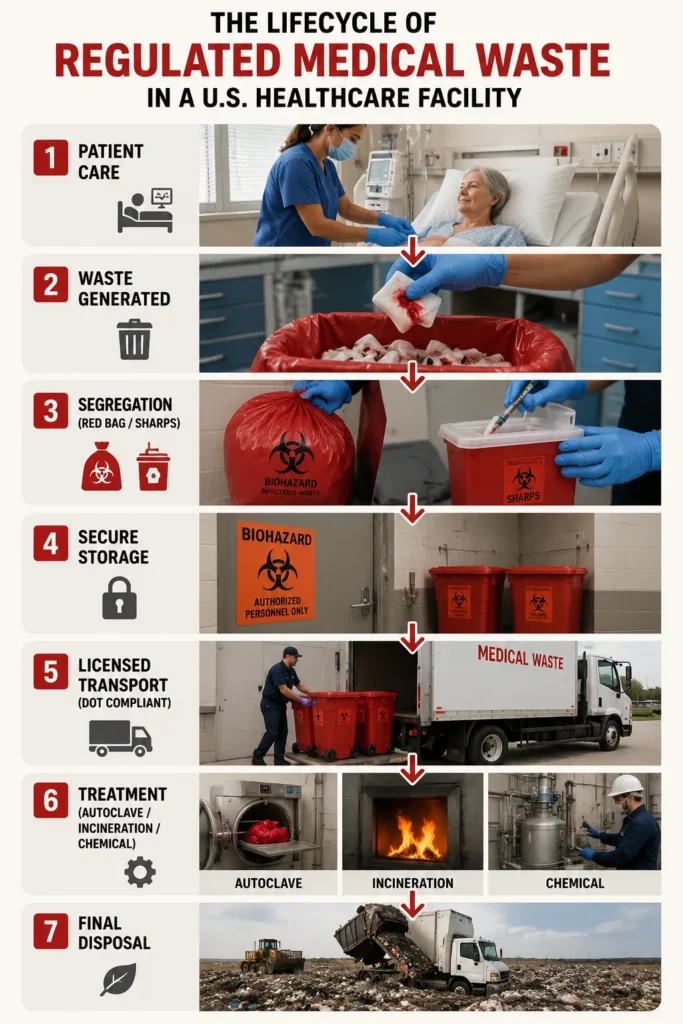
The Lifecycle of Regulated Medical Waste in a U.S. Healthcare Facility
This infographic illustrates the complete journey of regulated medical waste from the point it is generated during patient care to its segregation, secure storage, compliant transportation, treatment, and final disposal in accordance with U.S. regulations.
Conclusion
Mastering medical waste compliance isn’t just about avoiding fines; it’s about protecting your frontline team and community. Don’t leave your facility’s safety to chance. Partner with Secure Waste today for reliable, fully compliant disposal solutions that streamline your operations. Contact our medical waste experts now to protect your workplace and budget.
Frequently Asked Questions About Regulated Medical Waste
1. Does federal law provide a single nationwide definition of regulated medical waste?
No. Federal agencies establish safety and transportation requirements, but individual states define regulated medical waste and enforce day-to-day management, storage, and disposal requirements.
2. Who is responsible for ensuring medical waste compliance in a healthcare facility?
Healthcare facilities are ultimately responsible for proper waste segregation, employee training, documentation, and selecting licensed medical waste transporters and treatment providers that meet applicable regulations.
3. How often should regulated medical waste be collected from a healthcare facility?
Collection frequency depends on state regulations, storage conditions, waste volume, and facility operations. Many facilities schedule routine pickups to maintain compliance and minimize storage risks.
4. What records should healthcare facilities keep for regulated medical waste?
Facilities should maintain waste manifests, transporter records, treatment documentation, employee training records, and other compliance documents required by federal and state regulations.
5. Can regulated medical waste be treated on-site instead of being transported?
Yes. Some healthcare facilities use approved on-site treatment systems, such as autoclaves, before disposal, provided they comply with applicable federal guidance and state regulations.
6. Can regulated medical waste be recycled after treatment?
Some treated materials may become eligible for disposal as municipal waste, but recycling depends on state regulations, treatment methods, and the material’s ability to meet safety requirements.
7. How can healthcare facilities reduce regulated medical waste disposal costs?
Facilities can lower costs by improving waste segregation practices, preventing over classification of general waste, educating employees, and conducting regular waste audits to identify disposal inefficiencies.
Expert Medical Waste Management: With over 25 years of industry experience, Secure Waste is a trusted local leader in hazardous and biohazardous waste disposal across Maryland, Virginia, and Washington, D.C. Specializing in medical waste management, sharps needle disposal, and biohazard waste removal, the company ensures full compliance with federal, state, and local regulations while prioritizing environmental sustainability.
The company also offers additional services, including secure document shredding and sharps container sales, providing comprehensive solutions for healthcare facilities and businesses. Our cost-effective services help clients maintain regulatory compliance without unexpected costs.
With a commitment to customer satisfaction, Secure Waste offers tailored waste management plans that align with industry best practices. Their team of experts provides reliable, timely, and compliant services, making them the preferred choice for medical waste disposal. For a free waste quote or more information, visit www.securewaste.net