
Sharps Management & Sharps Needle Safety Controls | Bloodborne Pathogen Preventions
Healthcare organizations must adhere to the stringent guidelines established by the Occupational Safety and Health Administration (OSHA) under the Bloodborne Pathogens Standard.
This regulation places a critical responsibility on employers to protect their workers from exposure to blood and other potentially infectious materials, which can pose serious health risks.
A well-implemented sharps management program is not only a fundamental component of regulatory compliance but also plays a vital role in enhancing workplace safety and preventing needle-stick injuries.
Welcome to Secure Waste, a premier Biohazard waste management company proudly servicing the DMV area—Maryland, Virginia, and Washington D.C. With over 30 years of specialized experience in the meticulous disposal of biohazard waste and effective sharps management, we are dedicated to delivering exceptional, tailored services that meet the unique needs of each healthcare facility.
Our team of experts is equipped with the knowledge and skills to ensure that your healthcare facility not only meets OSHA compliance requirements but also fosters a safe working environment for healthcare workers and patients alike.
We offer comprehensive solutions for the secure collection, transportation, and disposal of sharps and biohazardous materials, all while adhering to environmental regulations.
Please reach out to us today to learn more about our services and how we can help you implement safe sharps management practices. At Secure Waste, your safety is our top priority, and we are committed to providing reliable support to ensure a compliant and secure environment for everyone in your facility.

Sharps Management & Needle Safety Controls
Occupational exposure to bloodborne pathogens caused by needlesticks and sharp injuries remains a severe and persistent hazard in healthcare environments. Each year, approximately 385,000 needlestick and sharps-related injuries occur among healthcare personnel in the United States.
These incidents are not minor workplace mishaps—they can be traumatic, life-altering events that expose workers to infectious diseases and long-term health complications.
Percutaneous injuries, meaning injuries that penetrate the skin, pose the highest risk of infection. Contaminated sharps such as disposable syringes, suture needles, scalpels, and other medical instruments can transmit dangerous bloodborne pathogens.
The most recognized include Human Immunodeficiency Virus (HIV), Hepatitis B (HBV), and Hepatitis C (HCV). However, more than 20 pathogens have been documented as occupationally transmitted in healthcare and laboratory settings.
How to Help Reduce the Risk of Exposure
To minimize injury risk, OSHA and the National Institute for Occupational Safety and Health (NIOSH) recommend applying the Hierarchy of Controls framework. This structured approach prioritizes safety interventions from most effective to least adequate. Healthcare facilities that use this hierarchy consistently can significantly reduce occupational exposure.
1. Elimination
Elimination involves physically removing the hazard. This may require modifying workflows or discontinuing the use of specific tools or procedures that create unnecessary risk. When possible, eliminating sharps from a process entirely is the most effective way to protect.
2. Substitution
Substitution replaces a hazardous device or process with a safer alternative. For example, transitioning to safety-engineered needles or needle-free systems can reduce injury risk. Substitutions must be evaluated carefully to ensure they do not introduce new hazards. Prevention Through Design principles, recommended by the Centers for Disease Control and Prevention (CDC), can help identify safer product options during procurement decisions.
3. Engineering Controls
Engineering controls are designed to isolate or remove hazards from workers. These controls modify equipment, create physical barriers, or redesign workflows to reduce exposure risks. Engineering solutions are most effective when integrated directly into equipment design rather than retrofitted later.
Although engineering controls may require higher upfront investment, they often reduce long-term operational costs, especially when protecting multiple employees. Additionally, they can improve workflow efficiency and minimize liability exposure.
Key considerations for engineering controls in sharps management include:
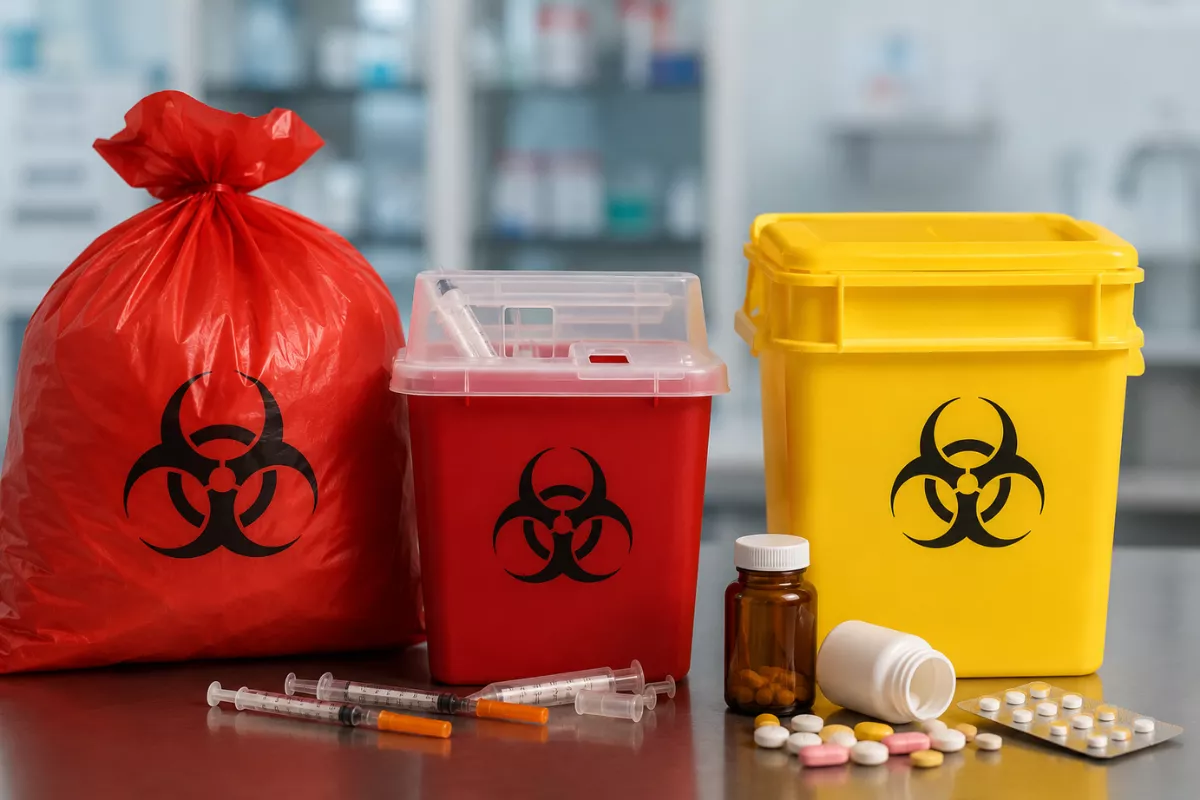
- Sharps container requirements under OSHA. Containers must be closable, puncture-resistant, leakproof on the sides and bottom, properly labeled or color-coded, easily accessible, maintained upright, and replaced before overfilling.
- Sharps container placement. NIOSH recommends installing fixed containers in healthcare facilities at a height of 52 to 56 inches from the floor to improve accessibility and reduce awkward positioning.
- Sharps container design. Containers should allow for an easy vertical drop of sharps to prevent hand entry or manipulation. Transparent or semi-transparent walls help staff monitor fill levels and avoid overflow.
Proper container placement and design reduce the likelihood of accidental contact, recapping attempts, and overflow injuries.
4. Administrative Controls
Administrative controls focus on modifying workplace policies and behaviors. These may include staff training programs, exposure control plans, incident reporting procedures, shift rotation adjustments, and safe handling protocols.
While necessary, administrative controls require continuous reinforcement, monitoring, and leadership support. Without consistent oversight, compliance can weaken over time.
5. Personal Protective Equipment (PPE)
Personal protective equipment serves as the final line of defense. Gloves, gowns, face shields, and protective eyewear help minimize exposure to blood and infectious materials. PPE programs must include hazard assessments, proper selection, employee training, routine inspection, and replacement of damaged equipment.
Like administrative controls, PPE requires ongoing diligence and proper use to remain effective.
Sharps Management in Modern Healthcare Settings
Sharps safety is no longer limited to hospital inpatient units. Outpatient clinics, laboratories, ambulatory surgical centers, and home healthcare environments all present exposure risks. As healthcare continues to expand beyond traditional facilities, safe sharps disposal solutions must adapt accordingly.
Training clinical and hospital-based employees on proper disposal protocols, safe handling practices, and exposure response procedures significantly reduces risk. Incorporating sharps safety into onboarding programs and annual competency reviews ensures sustained awareness.
Additionally, organizations should conduct periodic audits of sharps container placement, fill levels, and compliance with OSHA standards. Data from incident reporting systems can help identify trends and areas requiring additional intervention.
Why Sharps Management Matters
Effective sharps management protects more than individual employees. It safeguards:
- Healthcare workers from life-altering infections
- Patients from secondary exposure risks
- Organizations from regulatory penalties and litigation
- Communities are affected by improperly discarded medical waste
When exposure prevention strategies are implemented correctly, the risk of bloodborne pathogen transmission decreases substantially. A proactive approach to engineering controls, training, and oversight creates a safer work environment while reinforcing a culture of accountability and compliance.
Conclusion
Secure Waste will save you money on biomedical waste disposal. We understand these hazards. Secure Waste helps healthcare teams reduce sharps-related risk by supporting safer handling habits, better container practices, and compliance-focused training that keeps your staff protected. Secure Waste also helps facilities stay aligned with workplace safety expectations while building a cleaner, safer environment for patients, providers, and visitors. Staying informed and proactive is vital as new biological challenges arise. Together, we can prioritize health and safety, increase awareness, and promote responsible actions to create a healthier future for all! Secure Waste supports facilities across Maryland, Virginia & Washington, D.C. We provide reliable, compliant, and environmentally friendly biomedical waste disposal solutions tailored to your facility’s specific needs. Please feel free to contact us today to request a complimentary “waste assessment or to obtain a quote online.” https://www.securewaste.net/biohazard-waste-quote/
Disclaimer: This information is provided for reference purposes only and should not be considered as legal advice or factual information at the time of your reading. Regulations frequently change and can vary from state to state. We encourage you to contact your local regulatory authorities or Secure Waste directly for the most current information. Please note that Secure Waste is not liable, in part or in whole, for any information contained on this page or website.
Expert Medical Waste Management: With over 25 years of industry experience, Secure Waste is a trusted local leader in hazardous and biohazardous waste disposal across Maryland, Virginia, and Washington, D.C. Specializing in medical waste management, sharps needle disposal, and biohazard waste removal, the company ensures full compliance with federal, state, and local regulations while prioritizing environmental sustainability.
The company also offers additional services, including secure document shredding and sharps container sales, providing comprehensive solutions for healthcare facilities and businesses. Our cost-effective services help clients maintain regulatory compliance without unexpected costs.
With a commitment to customer satisfaction, Secure Waste offers tailored waste management plans that align with industry best practices. Their team of experts provides reliable, timely, and compliant services, making them the preferred choice for medical waste disposal. For a free waste quote or more information, visit www.securewaste.net