
What Is SBAR And Why It’s Important To You: SBAR Explained By Secure Waste In This Ultimate Guide
Secure Waste is a prominent local leader in the management and disposal of healthcare waste, actively engaged in all facets of the healthcare industry.
Our expertise encompasses not only the management of Regulated medical waste but also the development of best practices that enhance overall safety and efficiency.
We work closely with healthcare providers to ensure adherence to OSHA regulations, maintain effective compliance with OSHA standards, and fully align with the comprehensive guidelines set forth by the CDC and DOT.
Beyond regulatory compliance, we are deeply committed to fostering a culture of continuous education and professional development among our team members, including the use of SDS Safety Data Sheets.
We provide them with access to the latest knowledge and training in healthcare waste management. A key example of our educational initiatives is the implementation of the SBAR framework—an acronym for Situation, Background, Assessment, and Recommendation.
This essential healthcare communication tool emphasizes the critical importance of clear and concise information sharing within the industry, ultimately leading to improved patient outcomes and operational efficiency.
By integrating this framework into our training programs, we empower our team to enhance their communication skills and ensure that crucial information is conveyed accurately and promptly. Let’s delve deeper into this concept and its applications in our daily operations.

SBAR is a communication framework that enhances clarity and efficiency in conveying important information, particularly in healthcare settings. This guide provides a detailed breakdown of the SBAR model, outlining its components and offering practical steps for effective implementation. By following this structured approach, individuals can improve teamwork and patient safety by ensuring that critical information is communicated clearly and concisely.
SBAR Explained In Detail By Secure Waste Solutions
SBAR (Situation, Background, Assessment, Recommendation) is an invaluable communication framework that has gained widespread acceptance in healthcare settings, aiming to ensure that vital patient information is conveyed with both precision and clarity.
This model becomes especially critical during patient handoffs or in high-pressure situations, where effective communication is paramount to safeguarding patient safety and minimizing the risk of misunderstandings among healthcare professionals.
SBAR serves as a structured mnemonic that systematically organizes thoughts, facilitating a thorough communication of a patient’s current status, pressing clinical issues, pertinent historical context, professional assessments, and specific recommended actions.
Where And When Did SBAR Become Popular?
Secure Waste explains that SBAR is a vital communication acronym in the medical field, standing for Situation, Background, Assessment, and Recommendation.
The U.S. military originally developed this structured method for effective communication in nuclear submarines. Over time, it has been implemented in various sectors, including aviation and emergency response teams, before finding its significant role in healthcare.
In 2002, Kaiser Permanente adapted SBAR for its rapid response teams to address issues and enhance patient safety. The organization found that SBAR effectively facilitated the sharing of critical patient information, thereby minimizing the risk of errors.
The adoption of SBAR gained further validation in 2013 when the Joint Commission endorsed it as the standard communication tool for nursing professionals.
The significance of SBAR in healthcare lies in its structured approach, which allows healthcare providers to convey essential patient information clearly and concisely.
This method not only promotes efficient communication but also improves the accuracy of information sharing, which is crucial in delivering high-quality patient care.
The Four Components of SBAR
- Situation: This component requires a clear and succinct portrayal of the current clinical scenario. For instance, one might express, “Mr. Rogers, an elderly male patient in Room 406, is exhibiting substantial difficulty breathing, as evidenced by his reliance on accessory muscles, a noticeably pursed-lip breathing pattern, and a rapid respiratory rate of 42 breaths per minute, indicating acute respiratory distress. His recent medical records show no prior complaints, but there has been a sudden change in his ability to maintain adequate oxygenation.”
- Background: This section presents critical historical details that illuminate the current situation. It encompasses the patient’s comprehensive medical history, previous treatments, and any recent fluctuations in their condition. An example might read, “Mr. Rogers has a well-documented history of Chronic Obstructive Pulmonary Disease (COPD), with two hospitalizations in the past year due to severe exacerbations, each requiring intensive bronchodilator therapy. His vital signs currently illustrate a concerning drop in oxygen saturation to 88%, a significant deviation from his usual baseline of approximately 95%, reflecting a troubling deterioration in his respiratory function. Additionally, he is a former smoker with a 40-pack-year history and has been non-compliant with his prescribed inhaler regimen.”
- Assessment: In this section, the healthcare professional articulates an evaluation of the situation, synthesizing clinical judgment derived from experience and training. For instance, one might assess, “In light of Mr. Rogers’ acute respiratory distress and his extensive medical history, it is probable that he is either developing pneumonia, particularly given recent reports of cough and sputum production, or experiencing a significant exacerbation of his COPD due to environmental triggers. This condition necessitates immediate medical intervention to avert further deterioration and a potential respiratory failure.”
- Recommendation: The final component delineates the proposed actions to address the situation, including specific interventions and a clear identification of any urgent steps required. For example, one could assert, “I recommend that the attending physician be promptly alerted to assess Mr. Rogers’ condition as a priority. Additionally, arranging for a chest X-ray would be prudent to investigate potential pneumonia or other complications, and administering supplemental oxygen should be prioritized to stabilize his saturation levels. Continued monitoring of his vital signs and lung sounds will be essential in dictating further treatment options.”
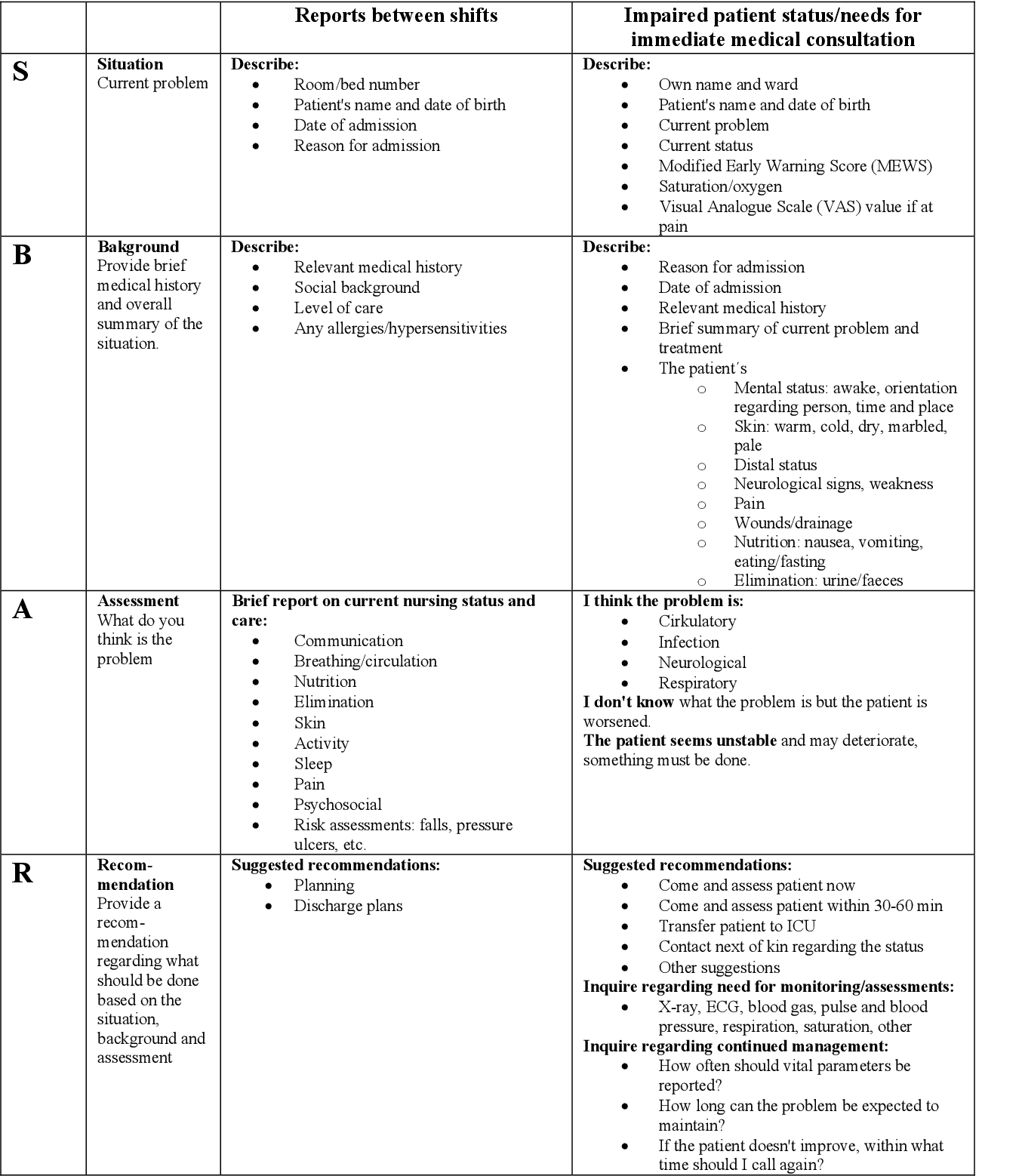
The SBAR Worksheet is a tool designed for the efficient transfer of critical information in healthcare settings. It provides a structured framework that facilitates clear communication among team members, ensuring that essential data is conveyed accurately and promptly. By utilizing SBAR—Situation, Background, Assessment, and Recommendation—healthcare professionals can enhance collaboration and improve patient outcomes through effective information sharing.
Why SBAR is Used
Standardizes Communication: By establishing a universal language, the SBAR (Situation, Background, Assessment, Recommendation) framework significantly enhances the efficiency and effectiveness of information exchange among all members of the healthcare team.
This structured communication approach not only expedites organized dialogues but also plays a crucial role in improving patient care outcomes.
Through the consistent application of SBAR, healthcare professionals can effectively mitigate the risk of miscommunication, ensuring that vital patient information, such as changes in vital signs or critical lab results, is never overlooked, particularly during high-stakes transitions in care, like patient handoffs or discharge planning.
The Joint Commission, a key organization in healthcare accreditation, strongly advocates for the implementation of SBAR as a best practice among healthcare practitioners, describing it as “a powerful tool that improves the effectiveness of communication between individuals.”
This endorsement highlights SBAR’s capacity to convey comprehensive and pertinent messages in a succinct and impactful manner, allowing teams to respond swiftly and accurately to patient needs.
The ability to deliver a complete and coherent picture through this communication method enhances overall accuracy and clarity.
As a result, doctors, nurses, and allied health professionals can communicate precise information regarding a patient’s condition, treatment plans, and tailored recommendations with greater effectiveness.
This fosters an environment of collaboration and mutual understanding, ultimately enhancing team dynamics and contributing positively to patient safety and outcomes.
Additionally, regular training and practice in SBAR can bolster team confidence, as explained by the National Library of Medicine, and competence in communicating critical information, further reducing the likelihood of errors in patient care.

SBAR – Secure Waste Solutions is designed for a wide range of users who prioritize effective waste management and environmental safety. This approach is particularly beneficial for healthcare facilities, educational institutions, manufacturing companies, and other organizations that handle hazardous or sensitive waste. By implementing SBAR, these entities can streamline communication, enhance safety protocols, and ensure compliance with regulatory standards, ultimately contributing to a safer environment and improved operational efficiency.
Should you be using SBAR?
The Agency for Healthcare Research and Quality (AHRQ) wholeheartedly supports the SBAR communication framework, which has proven to be invaluable across various healthcare interactions by significantly improving clarity and efficiency. Specifically, the use of the SBAR method is highly encouraged for:
- Administrators connecting with physicians to ensure essential information is shared effectively.
- Nurses collaborating with their peers to build strong, effective teamwork.
- Nurses coordinating with technicians to create seamless operational workflows.
- Nurses updating physicians on critical patient statuses.
- Nursing assistants share vital details with nurses to enhance patient care continuity.
- Physicians engaging in discussions with colleagues to foster informed clinical decision-making.
- Pharmacy staff communicating with nurses and physicians to clarify medication-related issues.
- Residents confidently presenting findings to attending physicians, supporting thorough patient assessments.
While the AHRQ highlights specific roles for SBAR implementation, it’s essential to appreciate that this structured communication tool is advantageous for all healthcare professionals.
By adopting this approach, we can foster a culture of open communication, ultimately leading to enhanced patient outcomes and a more collaborative healthcare environment. Let’s work together to strengthen our communication and make a positive impact on patient care!

When Healthcare Workers Should Use SBAR
SBAR is an invaluable communication tool that significantly enhances interaction among healthcare professionals by providing a structured framework for sharing critical patient information. Its utility shines in a variety of scenarios, including:
- Collaborating seamlessly within the medical team to effectively address patient concerns.
- Facilitating meaningful dialogues with physicians, nurses, physical therapists, and other healthcare providers.
- Supporting urgent conversations during emergencies, where swift access to information can be a matter of life and death.
- Guiding both in-person discussions and on-call consultations regarding a patient’s ongoing care.
- Articulating concerns clearly or escalating issues professionally related to patient welfare.
- Promoting efficient transitions during shift changes or handoffs among healthcare personnel, ensuring continuity of care.
- Aiding in comprehensive safety and emergency briefings that equip teams to respond adeptly in crises.
While the benefits of SBAR are substantial, it’s crucial to recognize its limitations.
For instance, the method may prove ineffective if the user is unfamiliar with its structure or if it conflicts with HIPAA regulations that safeguard patient confidentiality. Additionally, there may be instances where professionals feel pressured, which can hinder their ability to effectively express recommendations.
By mastering the art of utilizing SBAR in the right contexts, we can significantly enhance communication and foster collaboration, ultimately leading to improved patient care and outcomes. Embracing this tool will empower us to elevate the quality of healthcare we deliver!
In Conclusion With SBAR:
Secure Waste will save you money on Regulated waste disposal. We understand these hazards.
Staying informed and proactive is vital for the use of SBAR. Together, we can prioritize health and safety, increase awareness, and promote responsible actions to create a healthier future for all!
We provide reliable, compliant, and environmentally friendly healthcare waste disposal solutions tailored to your facility’s specific needs.
**Disclaimer** This information is provided for reference purposes only and should not be considered as legal advice or factual information at the time of your reading. Regulations frequently change and can vary from state to state. We encourage you to contact your local regulatory authorities or Secure Waste directly for the most current information. Please note that Secure Waste is not liable, in part or in whole, for any information contained on this page or website.
Expert Medical Waste Management: With over 25 years of industry experience, Secure Waste is a trusted local leader in hazardous and biohazardous waste disposal across Maryland, Virginia, and Washington, D.C. Specializing in medical waste management, sharps needle disposal, and biohazard waste removal, the company ensures full compliance with federal, state, and local regulations while prioritizing environmental sustainability.
The company also offers additional services, including secure document shredding and sharps container sales, providing comprehensive solutions for healthcare facilities and businesses. Our cost-effective services help clients maintain regulatory compliance without unexpected costs.
With a commitment to customer satisfaction, Secure Waste offers tailored waste management plans that align with industry best practices. Their team of experts provides reliable, timely, and compliant services, making them the preferred choice for medical waste disposal. For a free waste quote or more information, visit www.securewaste.net