
Examples Of SBAR In The Healthcare Environment
SBAR (Situation, Background, Assessment, Recommendation) is a structured communication tool widely used in healthcare settings to facilitate precise, timely, and safe transfer of critical information among professionals.
This method is particularly beneficial in high-pressure scenarios that demand swift communication, such as alerting a physician about a patient’s condition, transferring patient care during shift changes, or transitioning a patient’s care from one setting to another.
SBAR: Why It’s Important in Healthcare Step-By-Step Guide From Secure Waste More Here
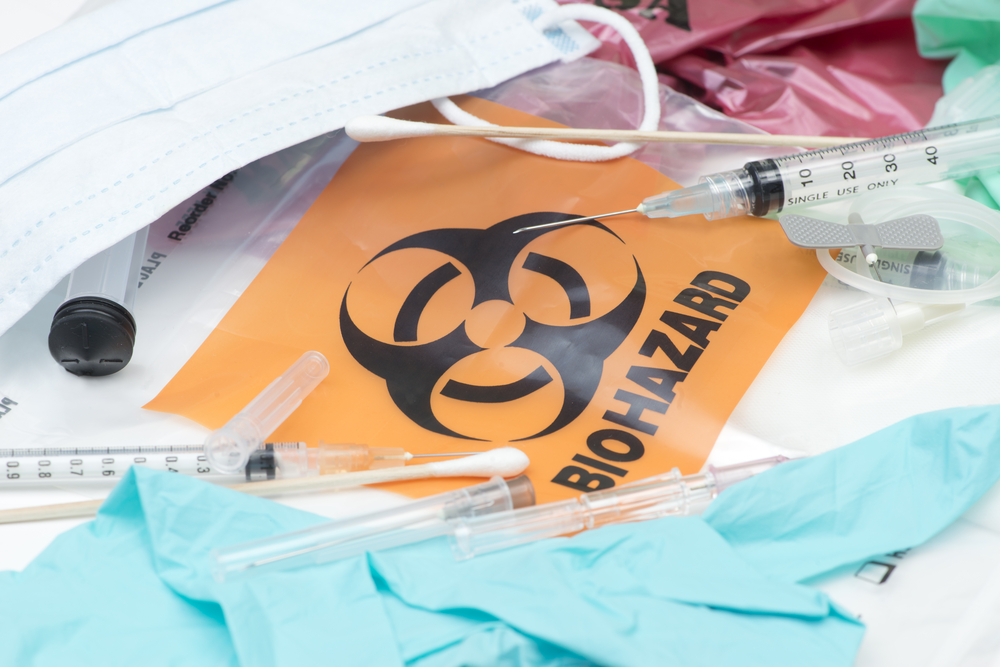
Welcome to Secure Waste, your trusted partner in healthcare waste management, proudly serving the MD-DC-VA area for over 30 years. As an industry leader, we specialize in providing local healthcare providers with superior medical waste and sharps disposal solutions.
Our commitment goes beyond just regulated waste disposal; we strive to support our partners in navigating essential compliance regulations such as OSHA and HIPAA.
Additionally, we offer valuable training on key topics such as SBAR communication to enhance your team’s safety and efficiency.
Contact us today for more information or to request a free quote at 877-633-7328. Your health and safety are our top priorities!

Enhanced Examples of SBAR in Healthcare:
- Acute Patient Change (Cardiovascular Incident)
- Situation: “Dr. Jones, this is [Nurse Name] calling from the telemetry unit regarding Mrs. Smith in room 522. I am reaching out because she is experiencing a significant increase in dyspnea, exhibiting labored breathing, and has voiced concerns about acute chest pain.”
- Background: “Mrs. Smith is a 75-year-old female who underwent a left hip replacement surgery just yesterday. Post-operatively, she was stable until three hours ago when she began expressing discomfort. Currently, her vital signs show a pulse rate of 195 beats per minute, blood pressure is 129/77 mmHg, and her oxygen saturation has dropped to 86% despite being on supplemental oxygen.”
- Assessment: “Given her rapid deterioration and symptoms, I am concerned about potential pulmonary embolism or an acute myocardial event necessitating immediate intervention.”
- Recommendation: “I strongly recommend you evaluate her urgently. I am currently administering supplemental oxygen at 26L/min via a non-rebreather mask. Do you concur with this plan, or would you like to suggest another course of action?”
- Medication/Transfusion Reaction
- Situation: “Mr. Roberts is experiencing what appears to be a potential transfusion reaction in the Hematology department. He is breathless, and his heart rate has escalated to 150 beats per minute.”
- Background: “Mr. Roberts was admitted at 9 AM for the administration of four units of red blood cells due to severe anemia. The second unit was initiated 30 minutes ago, and he has developed severe dyspnea and chills within the last 20 minutes.”
- Assessment: “Currently, his pulse is recorded at 120 beats per minute, and blood pressure falls at 164/66 mmHg. He is exhibiting signs consistent with either transfusion-related acute lung injury or circulatory overload.”
- Recommendation: “I have halted the transfusion and initiated oxygen therapy at 15L/min. I urgently request your immediate assessment and guidance on further management strategies.”
- Pediatric Abdominal Pain
- Situation: “Dr. Kipple, this is [Nurse Name] from the Emergency Room. I am contacting you about 7-year-old Kayla Fountain, who is in distress.”
- Background: “She was brought in this morning due to escalating abdominal pain that has intensified since admission and is now rated as 8/10 on the pain scale. The discomfort is sharply localized to the right lower quadrant, and she is running a fever of 101.4°F. Her history reveals no prior abdominal surgeries or significant medical issues.”
- Assessment: “Upon examination, she appears pale and fatigued, is febrile with a temperature of 101°F, and is experiencing persistent, spasmodic abdominal pain accompanied by episodes of vomiting and a slight distension of the abdomen.”
- Recommendation: “I recommend initiating IV fluids at a maintenance rate and conducting an abdominal ultrasound to evaluate for the possibility of appendicitis or other complications.”
- Post-Operative Hypotension
- Situation: “I urgently need to discuss a post-operative patient who has experienced a sudden episode of hypotension following a routine hip replacement procedure.”
- Background: “She is a 75-year-old female with a history of controlled hypertension who was stable post-surgery and recovering in the PACU. However, her blood pressure has unexpectedly decreased to 95/50 mmHg, and she is exhibiting signs of distress.”
- Assessment: “She is reporting dizziness, has an elevated heart rate of 110 bpm, and is presenting with cool, clammy skin. Additionally, her urine output has noticeably decreased to 15 mL over the past two hours.”
- Recommendation: “I recommend administering a rapid fluid bolus of 500 mL of normal saline and performing an immediate assessment to rule out internal bleeding or hypovolemia, considering her surgical history.”
Key Components of an SBAR Call
- Situation: Clearly state your identity, location, the name of the patient you are reporting on, and the immediate concern necessitating your call.
- Background: Provide relevant medical history, the patient’s admission diagnosis, current mental state, vital signs, and any recent interventions pertinent to the current situation.
- Assessment: Share your professional interpretation of the issue (e.g., “I suspect it is…”, “I am worried about…”).
- Recommendation: Clearly outline the actions you believe should be taken (e.g., “Please see the patient,” “Order specific tests,” “Adjust medications accordingly”).
This enhanced structure provides greater depth and clarity, ensuring effective communication and patient safety during critical interactions in healthcare settings.
SBAR (Situation, Background, Assessment, Recommendation) is a structured communication tool widely used in healthcare settings to facilitate precise, timely, and safe transfer of critical information among professionals.
This method is particularly beneficial in high-pressure situations that require swift communication, such as alerting a physician to a patient’s condition, transferring patient care during shift changes, or transitioning a patient’s care from one setting to another.
Enhanced Examples of SBAR in Healthcare:
- Acute Patient Change (Cardiovascular Incident)
- Situation: “Dr. Jones, this is [Nurse Name] calling from the telemetry unit regarding Mrs. Smith in room 522. I am reaching out because she is experiencing a significant increase in dyspnea, exhibiting labored breathing, and has voiced concerns about acute chest pain.”
- Background: “Mrs. Smith is a 75-year-old female who underwent a left hip replacement surgery just yesterday. Post-operatively, she was stable until three hours ago when she began expressing discomfort. Currently, her vital signs show a pulse rate of 195 beats per minute, blood pressure is 129/77 mmHg, and her oxygen saturation has dropped to 86% despite being on supplemental oxygen.”
- Assessment: “Given her rapid deterioration and symptoms, I am concerned about potential pulmonary embolism or an acute myocardial event necessitating immediate intervention.”
- Recommendation: “I strongly recommend you evaluate her urgently. I am currently administering supplemental oxygen at 26L/min via a non-rebreather mask. Do you concur with this plan, or would you like to suggest another course of action?”
- Medication/Transfusion Reaction
- Situation: “Mr. Roberts is experiencing what appears to be a potential transfusion reaction in the Hematology department. He is breathless, and his heart rate has escalated to 150 beats per minute.”
- Background: “Mr. Roberts was admitted at 9 AM for the administration of four units of red blood cells due to severe anemia. The second unit was initiated 30 minutes ago, and he has developed severe dyspnea and chills within the last 20 minutes.”
- Assessment: “Currently, his pulse is recorded at 120 beats per minute, and blood pressure falls at 164/66 mmHg. He is exhibiting signs consistent with either transfusion-related acute lung injury or circulatory overload.”
- Recommendation: “I have halted the transfusion and initiated oxygen therapy at 15L/min. I urgently request your immediate assessment and guidance on further management strategies.”
3. Pediatric Abdominal Pain - Situation: “Dr. Kipple, this is [Nurse Name] from the Emergency Room. I am contacting you about 7-year-old Kayla Fountain, who is in distress.”
- Background: “She was brought in this morning due to escalating abdominal pain that has intensified since admission and is now rated as 8/10 on the pain scale. The discomfort is sharply localized to the right lower quadrant, and she is running a fever of 101.4°F. Her history reveals no prior abdominal surgeries or significant medical issues.”
- Assessment: “Upon examination, she appears pale and fatigued, is febrile with a temperature of 101°F, and is experiencing persistent, spasmodic abdominal pain accompanied by episodes of vomiting and a slight distension of the abdomen.”
- Recommendation: “I recommend initiating IV fluids at a maintenance rate and conducting an abdominal ultrasound to evaluate for the possibility of appendicitis or other complications.”
- Post-Operative Hypotension
- Situation: “I urgently need to discuss a post-operative patient who has experienced a sudden episode of hypotension following a routine hip replacement procedure.”
- Background: “She is a 75-year-old female with a history of controlled hypertension who was stable post-surgery and recovering in the PACU. However, her blood pressure has unexpectedly decreased to 95/50 mmHg, and she is exhibiting signs of distress.”
- Assessment: “She is reporting dizziness, has an elevated heart rate of 110 bpm, and is presenting with cool, clammy skin. Additionally, her urine output has noticeably decreased to 15 mL over the past two hours.”
- Recommendation: “I recommend administering a rapid fluid bolus of 500 mL of normal saline and performing an immediate assessment to rule out internal bleeding or hypovolemia, considering her surgical history.”
Key Components of an SBAR Call
- Situation: Clearly state your identity, location, the name of the patient you are reporting on, and the immediate concern necessitating your call.
- Background: Provide relevant medical history, the patient’s admission diagnosis, current mental state, vital signs, and any recent interventions pertinent to the current situation.
- Assessment: Share your professional interpretation of the issue (e.g., “I suspect it is…”, “I am worried about…”).
- Recommendation: Clearly outline the actions you believe should be taken (e.g., “Please see the patient,” “Order specific tests,” “Adjust medications accordingly”).
This enhanced structure provides greater depth and clarity, ensuring effective communication and patient safety during critical interactions in healthcare settings.

Expert Medical Waste Management: With over 25 years of industry experience, Secure Waste is a trusted local leader in hazardous and biohazardous waste disposal across Maryland, Virginia, and Washington, D.C. Specializing in medical waste management, sharps needle disposal, and biohazard waste removal, the company ensures full compliance with federal, state, and local regulations while prioritizing environmental sustainability.
The company also offers additional services, including secure document shredding and sharps container sales, providing comprehensive solutions for healthcare facilities and businesses. Our cost-effective services help clients maintain regulatory compliance without unexpected costs.
With a commitment to customer satisfaction, Secure Waste offers tailored waste management plans that align with industry best practices. Their team of experts provides reliable, timely, and compliant services, making them the preferred choice for medical waste disposal. For a free waste quote or more information, visit www.securewaste.net