Benefits Of Proper Medical Waste Segregation
A safe healthcare environment starts long before treatment begins. One of the most critical yet frequently overlooked components of facility safety is proper medical waste segregation. When healthcare facilities separate regulated medical waste from general waste using designated containers, they protect staff, reduce risk, improve compliance, and control disposal costs.
For healthcare providers throughout Maryland, Virginia & Washington, D.C., proper segregation is not just best practice—it is essential to maintaining operational stability and regulatory compliance.
Maintain Regulatory Compliance
State and federal regulations often require segregation of medical waste. Improper disposal can lead to fines, enforcement actions, or operational disruptions. A structured segregation program ensures that regulated waste is appropriately identified, packaged, labeled, and transported in accordance with applicable laws.
Healthcare organizations must review state-specific regulations when developing waste programs. Because rules frequently change and vary by jurisdiction, working with an experienced biomedical waste provider like Secure Waste ensures your segregation protocols remain compliant and defensible.
Compliance is not optional. A proactive segregation system protects both your facility and your reputation.
Reduce Waste Management Costs
Not all waste generated in healthcare settings is regulated medical waste. In fact, approximately 85 percent of healthcare waste is general municipal waste that requires minimal regulatory oversight.
When facilities fail to segregate waste streams properly, they often overpay by disposing of non-regulated waste as regulated waste. This inflates disposal costs unnecessarily.
Proper segregation allows organizations to:
Track volumes of regulated versus general waste-
• Reduce overclassification of waste
• Optimize service frequency
• Lower overall disposal expenses
Secure Waste works with facilities to conduct waste assessments that identify opportunities for cost savings through improved segregation practices.
Mitigate Environmental Impact
Improper segregation can create environmental hazards. Pharmaceutical waste flushed down drains may contaminate surface or drinking water. Hazardous materials incorrectly placed in general waste streams can create long-term ecological damage.
Correct segregation ensures:
- Pharmaceuticals are directed toward appropriate incineration pathways
• Hazardous materials are handled according to environmental regulations
• Sharps and infectious waste are safely treated before disposal
Environmental responsibility is increasingly important for healthcare systems. Segregation is one of the simplest yet most impactful sustainability measures a facility can implement.
Improve Workplace Safety
Safety is one of the most important benefits of proper waste segregation. Front-line healthcare workers, environmental services staff, and waste handlers all rely on correct disposal practices to avoid injury.
For example, a needle discarded in a regular trash container can cause a needlestick injury, exposing workers to bloodborne pathogens. Using puncture-resistant sharps containers significantly reduces this risk.
Healthcare employers should train staff in accordance with the Occupational Safety and Health Administration’s Bloodborne Pathogens Standard. Education ensures employees understand both job-specific risks and proper disposal procedures.
Safer environments reduce workplace stress and burnout. When staff feel protected, morale improves—and retention often follows.
Understanding the Waste Segregation Process
Segregation programs are typically organized by container color and waste type.
Red Bags and Sharps Containers
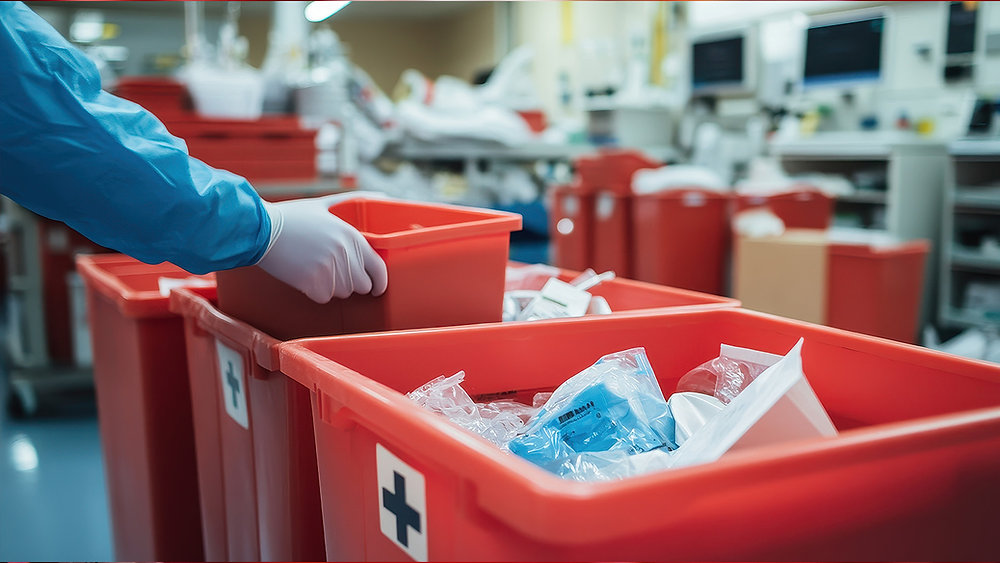
Red bags are designated for non-sharp regulated medical waste such as blood-saturated gauze, bandages, and other potentially infectious materials.
Sharps containers are puncture-resistant containers used for needles, blades, and other sharp instruments contaminated with blood or other potentially infectious materials.
Improperly placing sharps, hazardous chemicals, or electronic waste in red bags can pose safety hazards and result in compliance violations.
Yellow Containers
Yellow containers are used for trace chemotherapy waste. This includes items that have come into contact with chemotherapeutic agents but do not contain bulk hazardous material.
Blue Lid Containers
Blue lid containers are commonly used for non-hazardous pharmaceutical waste. The U.S. Environmental Protection Agency recommends segregating these pharmaceuticals for incineration rather than flushing them down drains or placing them in general trash.
Black Containers
Black containers are reserved for hazardous waste, including dangerous pharmaceuticals. These wastes may be listed or exhibit hazardous characteristics such as ignitability, corrosivity, reactivity, or toxicity.
It’s essential to understand container designation. Employees must be trained not only on what to dispose of, but exactly where it belongs.
Why Partnering with Secure Waste Matters
Waste segregation can become complicated, especially as regulations evolve. Secure Waste provides:
- Facility-specific waste segregation guidance
• Staff training support
• Waste audits and compliance evaluations
• Reliable, compliant biomedical waste disposal services
Healthcare facilities across Maryland, Virginia & Washington, D.C., rely on Secure Waste to simplify waste management while protecting staff and patients.
Adequate segregation is more than an operational requirement. It is a foundation for compliance, safety, financial efficiency, and environmental responsibility.
Conclusion:
Secure Waste will save you money on biomedical waste disposal. We understand these hazards. Staying informed and proactive is vital as new biological challenges arise. Together, we can prioritize health and safety, increase awareness, and promote responsible actions to create a healthier future for all! We provide reliable, compliant, and environmentally friendly biomedical waste disposal solutions tailored to your facility’s specific needs.
Please feel free to contact us today to request a complimentary “waste assessment or to obtain a quote online.”
https://www.securewaste.net/biohazard-waste-quote/
Disclaimer: This information is provided for reference purposes only and should not be considered as legal advice or factual information at the time of your reading. Regulations frequently change and can vary from state to state. We encourage you to contact your local regulatory authorities or Secure Waste directly for the most current information. Please note that Secure Waste is not liable, in part or in whole, for any information contained on this page or website.
Expert Medical Waste Management: With over 25 years of industry experience, Secure Waste is a trusted local leader in hazardous and biohazardous waste disposal across Maryland, Virginia, and Washington, D.C. Specializing in medical waste management, sharps needle disposal, and biohazard waste removal, the company ensures full compliance with federal, state, and local regulations while prioritizing environmental sustainability.
The company also offers additional services, including secure document shredding and sharps container sales, providing comprehensive solutions for healthcare facilities and businesses. Our cost-effective services help clients maintain regulatory compliance without unexpected costs.
With a commitment to customer satisfaction, Secure Waste offers tailored waste management plans that align with industry best practices. Their team of experts provides reliable, timely, and compliant services, making them the preferred choice for medical waste disposal. For a free waste quote or more information, visit www.securewaste.net