It’s easy to assume that everything discarded in a healthcare facility is considered medical waste, but that’s a common misconception. According to the World Health Organization, approximately 85% of healthcare waste is non-hazardous, meaning only a small portion requires the specialized handling associated with regulated medical waste. As a result, treating every waste stream the same can increase disposal costs, place unnecessary demands on treatment systems, and create avoidable compliance challenges. So, it becomes critical to differentiate between general healthcare waste and medical waste for safe, efficient, and compliant waste management.
Well, to understand it better, the following guide breaks down how healthcare waste is classified, what actually qualifies as medical waste, and why making the right distinction matters for every healthcare facility.
Overview: Not All Healthcare Waste Is Medical Waste
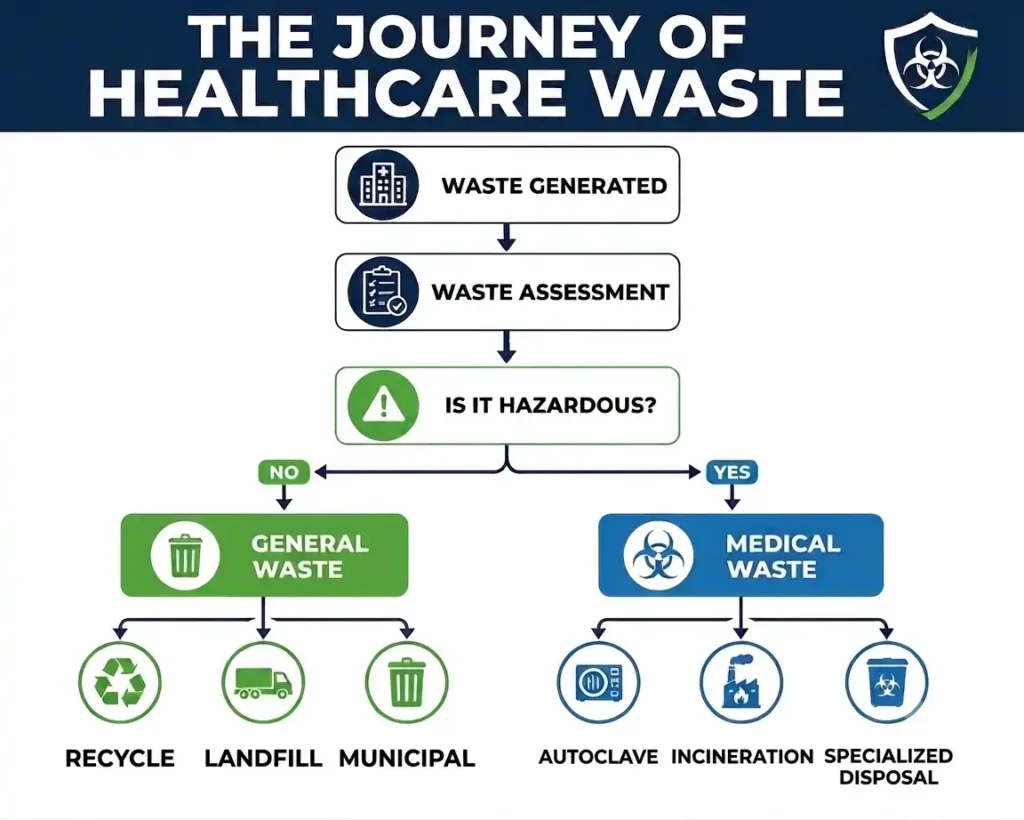
Healthcare facilities generate a wide range of waste, but only a portion requires regulated medical waste handling. Waste classification is based on its hazard characteristics, contamination level, and potential health risk rather than on where it is generated. Accurate segregation helps prevent unnecessary treatment, supports regulatory compliance, protects specialized waste management systems, and ensures each waste stream follows the appropriate handling, containment, and disposal pathway according to its level of risk.
Why Isn’t All Healthcare Waste Considered Medical Waste?
Healthcare waste is the broad umbrella term for all waste generated by healthcare activities, while medical or regulated medical waste is a narrower subset within it. That distinction exists because hospitals and clinics produce everything from food scraps, office paper, and packaging to sharps, contaminated dressings, chemicals, and radioactive materials, and these do not all carry the same level of risk.
Why does the distinction matter?
Distinguishing medical waste from overall healthcare waste is vital because it:
- Avoids Unnecessary Specialized Treatment: General waste and uncontaminated packaging pose little to no infection risk. Classifying it as medical waste would require unnecessarily high-cost treatment methods, despite these measures offering no additional safety benefit.
- Reduces environmental impact: When non-hazardous waste is incorrectly classified as medical waste, more material undergoes energy-intensive treatment or incineration, which can increase emissions of pollutants such as dioxins and furans if not properly controlled.
- Controls waste management costs: Hazardous healthcare waste requires specialized collection, transportation, treatment, and documentation. Proper segregation ensures these higher-cost processes are reserved only for waste that genuinely poses a health risk, improving overall healthcare waste management efficiency.
- Keeps healthcare facilities compliant: Every type of healthcare waste has its own disposal requirements. Proper segregation helps ensure each waste stream is managed according to the right regulations, reducing the risk of fines, violations, or improper handling.
- Prevents contamination of otherwise safe waste streams: Mixing infectious waste with ordinary waste can contaminate the entire batch, increasing the volume of waste that must be treated as hazardous and reducing opportunities for recycling or recovery.
What Qualifies as Medical Waste?
A material qualifies as medical waste when it poses a potential risk of infection, injury, or exposure to hazardous substances, requiring specialized handling, treatment, and disposal. It can be better described when contamination presents a credible risk of disease transmission. This assessment is based on factors such as microbial load, pathogen viability, route of exposure, and the susceptibility of exposed individuals. Alongside, regulatory agencies and healthcare guidelines generally classify medical waste based on specific risk factors, including:
- OSHA’s Bloodborne Pathogens Standard identifies blood and other potentially infectious materials (OPIM) as substances that require appropriate handling.
- Infectious microorganisms capable of disease transmission.
- Human anatomical or pathological waste.
- Hazardous pharmaceutical or cytotoxic waste.
Common Categories of Medical Waste
Here are the broader categories based on which medical waste is classified:
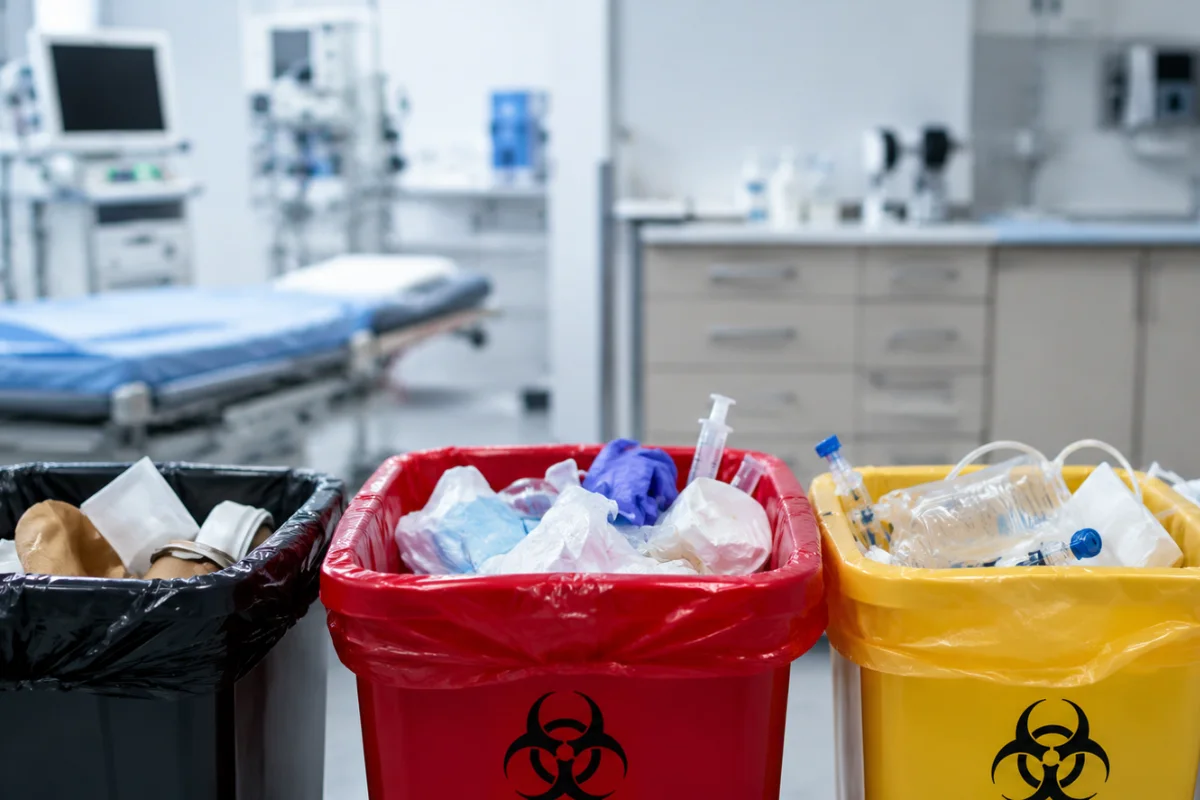
Blood and Other Potentially Infectious Materials (OPIM): Items contaminated with blood or other bodily fluids, such as used dressings, laboratory samples, and contaminated PPE, that may carry bloodborne pathogens.
Infectious Waste: Waste exposed to harmful microorganisms, including laboratory cultures, isolation waste, and contaminated swabs that could spread infection.
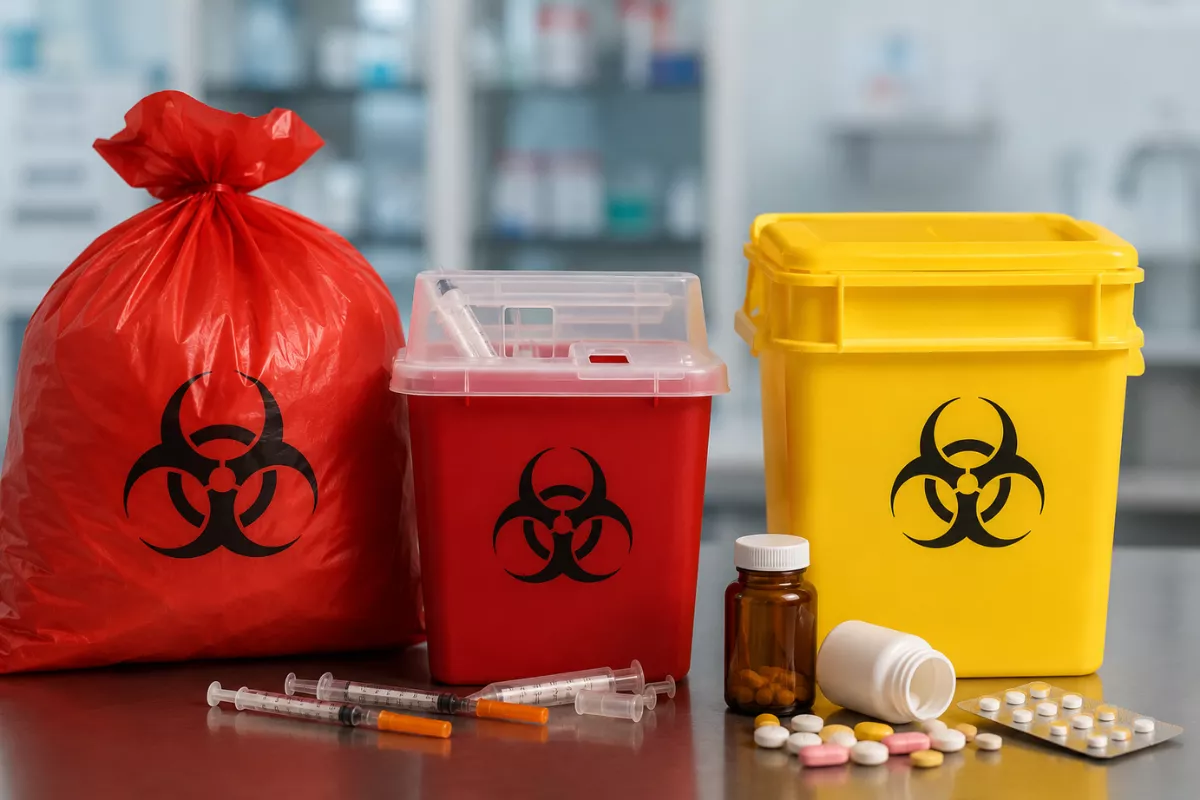
Sharps Waste: Needles, syringes, scalpels, lancets, and other sharp items that can cause injuries and increase the risk of infection.
Pathological Waste: Human tissues, organs, body parts, and other anatomical materials removed during medical procedures.
Pharmaceutical and Cytotoxic Waste: Expired, unused, or chemotherapy-related medications that require careful disposal because of their hazardous properties.
Chemical and Radioactive Waste: Healthcare chemicals, laboratory reagents, and radioactive materials that need specialized handling to prevent harm to people and the environment.
How Healthcare Waste Is Identified as Medical Waste
Understanding why not all healthcare waste is classified as medical waste starts with the waste assessment process. The infographic below illustrates how each waste stream is evaluated and managed accordingly.
Conclusion
Understanding that not all waste generated in a healthcare facility is considered medical waste is essential for building a safe, compliant, and efficient waste management system. Hence, if your facility needs support in accurately identifying which healthcare waste requires regulated medical waste handling, Secure Waste is here to help. With over two decades of industry experience, our team ensures every waste category is managed efficiently and in compliance with applicable regulatory requirements.
So, contact Secure Waste to help your facility identify, manage, and dispose of regulated healthcare waste safely.
FAQs About Healthcare Waste and Medical Waste Classification
1. What are non-medical wastes in healthcare facilities?
Office paper, food waste, cardboard, and other non-hazardous materials are widely generated non-medical wastes in healthcare facilities.
2. Can the same item have different waste classifications?
Yes, its classification depends on its condition and whether it has been contaminated.
3. Are unused medical supplies considered medical waste?
No, unused and uncontaminated supplies are managed according to their material type and applicable regulations.
4. Can non-clinical areas generate regulated waste?
Yes, if the waste becomes contaminated or meets regulatory criteria, it requires specialized management.
5. Are recyclable healthcare materials always medical waste?
No, clean and uncontaminated recyclables can be managed through approved recycling programs when properly segregated.
Expert Medical Waste Management: With over 25 years of industry experience, Secure Waste is a trusted local leader in hazardous and biohazardous waste disposal across Maryland, Virginia, and Washington, D.C. Specializing in medical waste management, sharps needle disposal, and biohazard waste removal, the company ensures full compliance with federal, state, and local regulations while prioritizing environmental sustainability.
The company also offers additional services, including secure document shredding and sharps container sales, providing comprehensive solutions for healthcare facilities and businesses. Our cost-effective services help clients maintain regulatory compliance without unexpected costs.
With a commitment to customer satisfaction, Secure Waste offers tailored waste management plans that align with industry best practices. Their team of experts provides reliable, timely, and compliant services, making them the preferred choice for medical waste disposal. For a free waste quote or more information, visit www.securewaste.net