
How Healthcare Can Fight Plastic Pollution
Keeping Our Oceans Clean From Plastics And Healthcare Waste: A Secure Waste Mission
Plastic pollution has become one of the most urgent environmental threats facing the world today. Oceans are absorbing millions of tons of plastic waste every year, and the impact on marine ecosystems is devastating. Healthcare, like many other industries, contributes significantly to this growing issue because of the widespread use of single-use plastics in patient care, packaging, storage, and disposal. While plastic plays a crucial role in maintaining hygiene and preventing contamination, its long-term consequences cannot be overlooked.
Healthcare organizations now have both a responsibility and an opportunity to take meaningful steps toward reducing plastic waste and protecting ocean environments. Secure Waste is committed to helping facilities transition into more environmentally conscious operations, guiding them toward sustainable systems that benefit patients, staff, and the planet. Secure Waste is a local leader in Healthcare waste management and sustainability.
Understanding the Growing Plastic Crisis
Approximately nine million tons of plastic enter the ocean each year. These plastics come from landfills, litter, inadequately managed waste systems, and industrial operations. Strong ocean currents carry this waste across vast distances until it blankets shorelines, floats across the surface, sinks to the seabed, and infiltrates marine ecosystems worldwide. Without significant intervention, experts estimate that by 2025, the amount of plastic entering the ocean will double. To put this into perspective, this future scenario is equivalent to depositing ten fully packed bags of plastic waste along every single foot of coastline around the world.
Plastic is lightweight, versatile, and inexpensive, which makes it popular in every industry. However, these same characteristics enable it to persist in the environment for centuries. Plastic items do not break down naturally; instead, they fragment into smaller and smaller pieces known as microplastics. These tiny particles spread into the water, sand, and air, becoming nearly impossible to remove. Due to this, environmental scientists estimate that many types of plastic persist in marine environments for over 450 years.
For ocean wildlife, this is catastrophic. According to the National Oceanic and Atmospheric Administration, plastic waste kills approximately 100,000 marine mammals each year, as well as millions of birds and fish. Animals frequently mistake bright plastic fragments for food or become entangled in larger debris. Seabirds like albatross consume plastic pieces until their stomachs are filled with indigestible materials. Sea lions often get trapped in plastic rings and ropes. Whales ingest so much plastic that it interferes with their digestive systems, weakening them until they cannot survive. Even plankton, the foundation of ocean life, absorbs microplastics, creating a chain reaction that affects entire marine food webs.
Ocean pollution does not remain confined to the ocean; it also affects the surrounding land and air. As plastics break down into microplastics, they enter waterways, soil, and even the air we breathe. Researchers have detected microplastics in drinking water, agricultural fields, and human lungs. This is not just an environmental problem; it is a global health issue.
How Healthcare Contributes and Why It Must Lead the Change
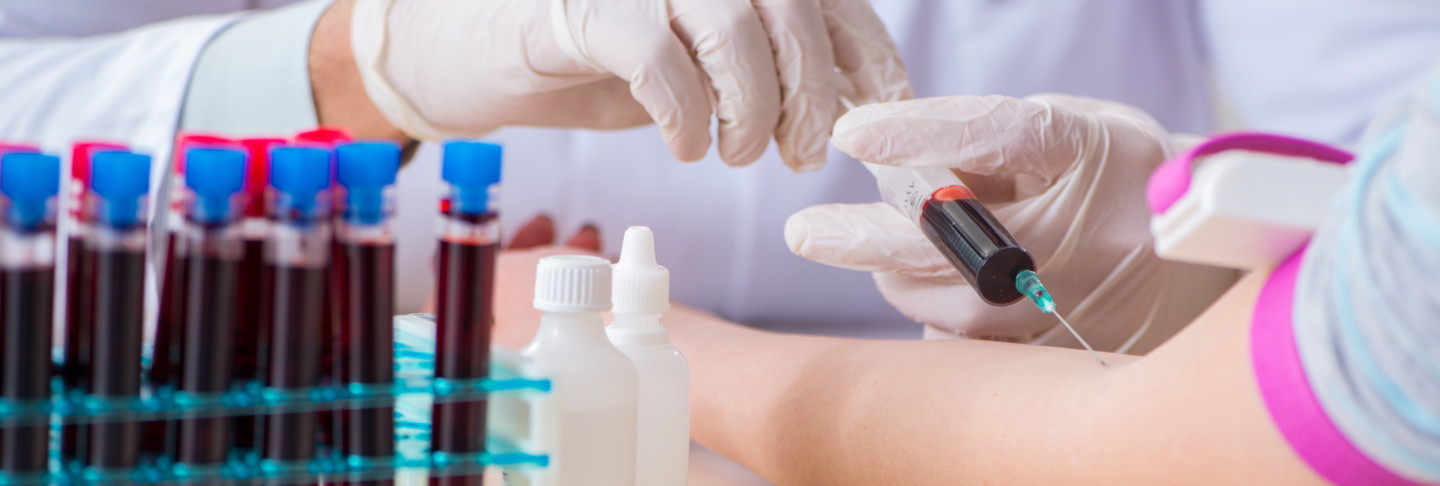
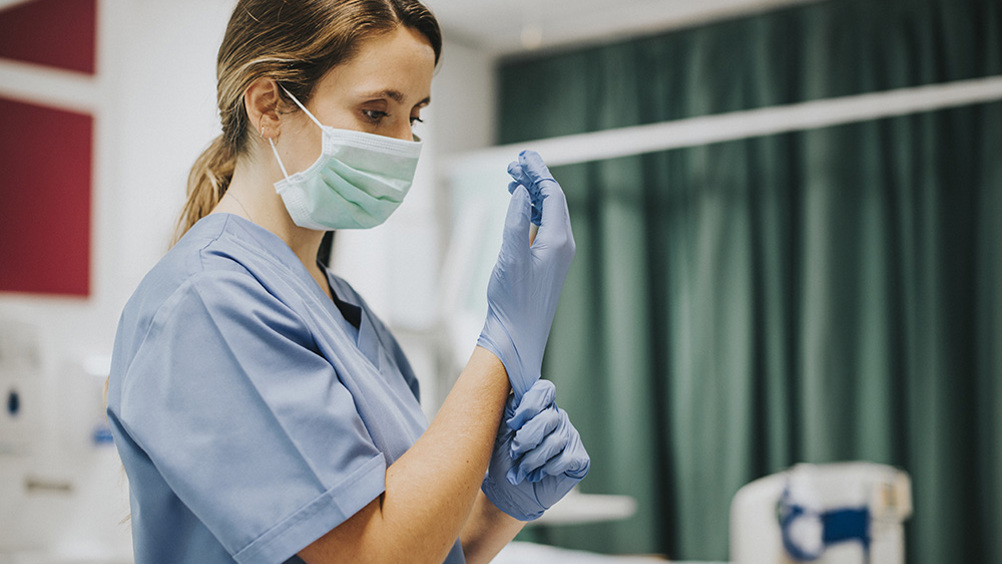
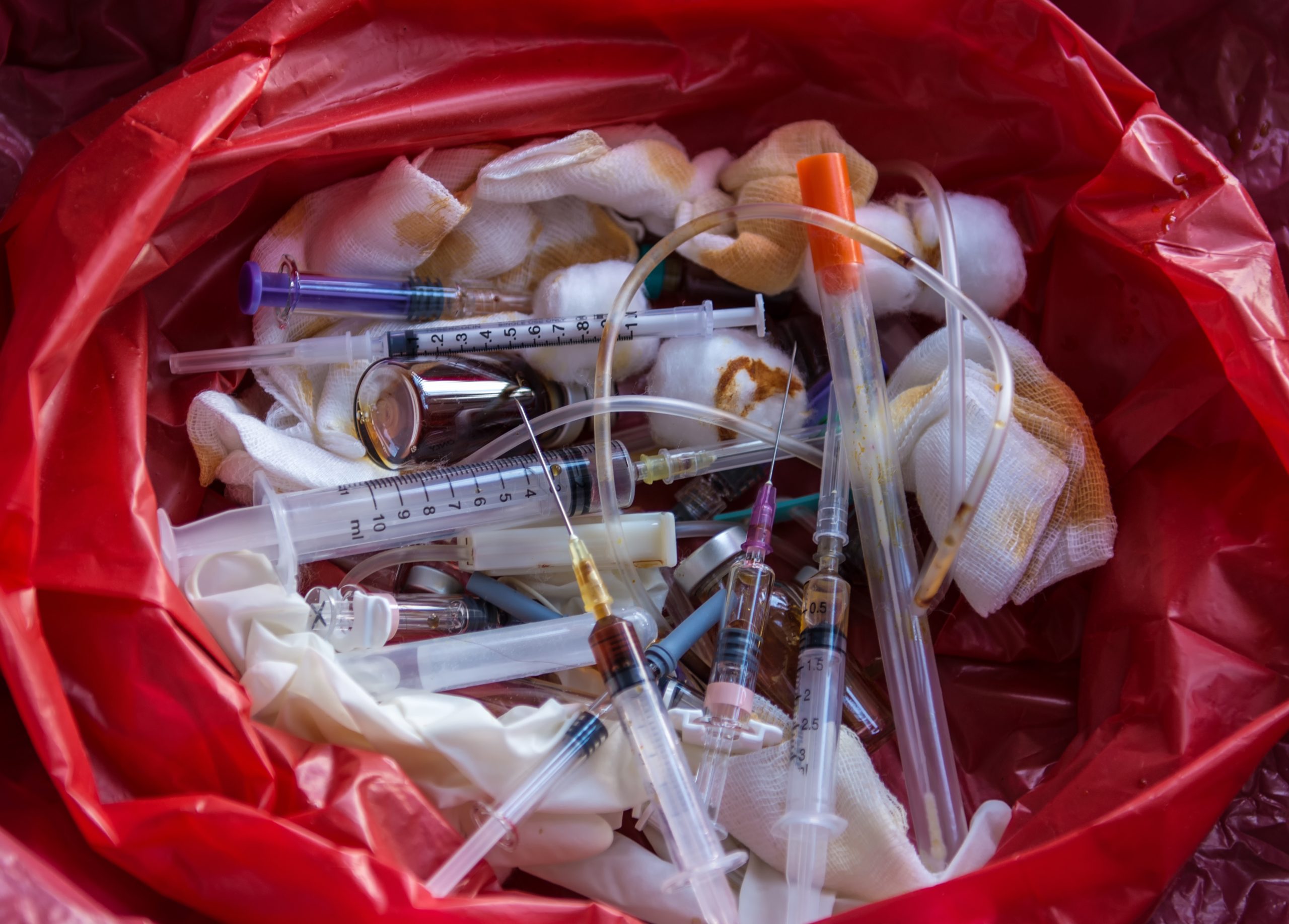
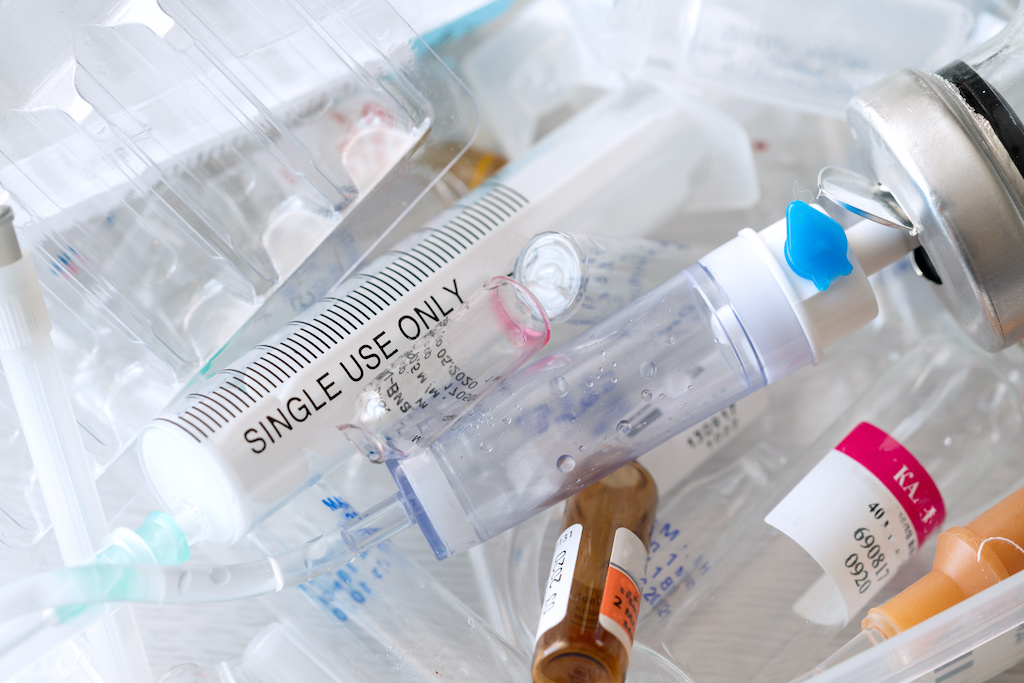
Healthcare facilities produce large amounts of plastic waste due to the need for sterility, patient safety, contamination control, and infection prevention. Items like syringes, tubing, IV bags, medication packaging, specimen cups, sharps containers, gloves, gowns, masks, and single-use instruments are essential in patient care. Yet once used, they often end up in waste streams that ultimately contribute to the global plastic burden.
Healthcare waste is not limited to clinical supplies. Packaging materials, storage containers, food service plastics, disposable office supplies, and operational waste add to the volume. With plastic use growing across the healthcare sector, responsible waste management becomes essential. The challenge is not to eliminate plastics, which protect patients and prevent infections, but to reduce unnecessary plastics and adopt more sustainable alternatives whenever possible.
Healthcare organizations have a unique opportunity to lead this change. Their role is closely tied to public health, community safety, and environmental stewardship. When healthcare facilities take action to reduce plastic waste, they demonstrate their commitment to protecting human life beyond clinical settings. Sustainability becomes part of their mission.
Small Changes That Create Big Impacts
Ocean pollution may seem like a global crisis that requires large-scale solutions, but meaningful improvement often begins with small, consistent changes. When healthcare facilities take incremental steps to curb plastic use, the impact multiplies across the organization and influences future practices.
One of the most effective ways to reduce plastic waste is through robust recycling programs. Many organizations still lack clear recycling pathways or depend on inconsistent waste segregation practices. Establishing strong recycling systems ensures that recyclable materials do not end up in general waste streams. This prevents unnecessary plastics from reaching landfills and waterways.
Another impactful change involves evaluating which items can be replaced with reusable alternatives. For example, reusable containers for medical waste, sharps disposal, and internal transport reduce the amount of single-use plastic generated each day. When healthcare organizations shift from disposable containers to reusable models, they can eliminate thousands of pounds of plastic waste over time.
Training plays a key role in making these changes successful. Staff must understand how to segregate recyclable materials correctly, utilize reusable systems, and recognize the impact of their daily actions on environmental outcomes. With clear communication, accessible signage, and consistent reminders, sustainability becomes an integrated part of daily operations.
Equipment choices also influence plastic consumption. Some facilities are now transitioning to more environmentally friendly materials or choosing suppliers that emphasize sustainability. Reviewing procurement practices, analyzing supply chains, and selecting alternative products can significantly reduce the environmental footprint of healthcare operations.
Secure Waste works closely with healthcare organizations to identify small, practical steps that lead to significant long-term progress. These recommendations consider the unique needs of each facility, ensuring that environmental improvements do not compromise clinical safety or operational efficiency.
The Role of Innovation and Reusable Systems
Sustainability in healthcare is driven not only by policy changes but also by industry innovation. Reusable systems have emerged as one of the most powerful tools for reducing plastic waste. Secure Waste has introduced reusable sharps containers designed to replace disposable models that often end up in landfills or incineration sites.
These reusable containers are designed to withstand repeated sanitization cycles, ensuring they are safe, durable, and dependable. Over time, they significantly reduce the number of plastic containers produced and discarded. Through such innovations, the equivalent of more than one billion plastic water bottles has been prevented from entering the environment. This illustrates how a single operational decision can have far-reaching benefits.
Healthcare organizations can expand these initiatives by exploring reusable surgical supplies, recyclable packaging, and alternative materials for everyday items. While not all plastic products can be replaced, strategic innovations help lower overall waste volume and reduce dependency on single-use materials. With constant advancements in product design, analytics, and waste treatment technologies, the potential for sustainable change continues to grow.
Working Together for a Cleaner Ocean
The challenge of ocean plastic pollution requires a collective commitment. Governments, industries, communities, and individuals all play a role in reducing waste and creating a healthier environment. Healthcare organizations, in particular, are well-positioned to drive meaningful change because their operations touch both public health and environmental impact.
When facilities adopt sustainable waste practices, they protect ecosystems and reinforce a culture of environmental responsibility. Their actions influence staff, patients, vendors, and partner organizations. These efforts set an example and demonstrate leadership in the fight against pollution.
Secure Waste supports this vision by offering solutions that align sustainability with practical operational needs. Through advanced reusable systems, recycling programs, training support, and environmentally conscious waste management strategies, Secure Waste guides healthcare organizations toward measurable improvements. Each step, no matter how small, contributes to cleaner oceans and a safer environment for future generations.
Conclusion
Plastic waste continues to pose a serious threat to oceans, wildlife, and global health. Healthcare organizations play a significant role in this issue, but also hold the power to make a real difference. By embracing more substantial recycling efforts, adopting reusable systems, making informed procurement decisions, and investing in sustainable waste management practices, facilities can dramatically reduce their environmental footprint.
Secure Waste is dedicated to supporting healthcare organizations in enhancing their sustainability strategies and preserving the environment. Through innovative programs, reusable sharps containers, and long-term environmental partnerships, Secure Waste is working to prevent harmful plastics from entering the ocean and preserve marine ecosystems for future generations.
A cleaner future starts with the choices made today. With collaboration, commitment, and responsible systems, healthcare organizations can lead the charge in protecting the world’s oceans—one sustainable step at a time.
Expert Medical Waste Management: With over 25 years of industry experience, Secure Waste is a trusted local leader in hazardous and biohazardous waste disposal across Maryland, Virginia, and Washington, D.C. Specializing in medical waste management, sharps needle disposal, and biohazard waste removal, the company ensures full compliance with federal, state, and local regulations while prioritizing environmental sustainability.
The company also offers additional services, including secure document shredding and sharps container sales, providing comprehensive solutions for healthcare facilities and businesses. Our cost-effective services help clients maintain regulatory compliance without unexpected costs.
With a commitment to customer satisfaction, Secure Waste offers tailored waste management plans that align with industry best practices. Their team of experts provides reliable, timely, and compliant services, making them the preferred choice for medical waste disposal. For a free waste quote or more information, visit www.securewaste.net