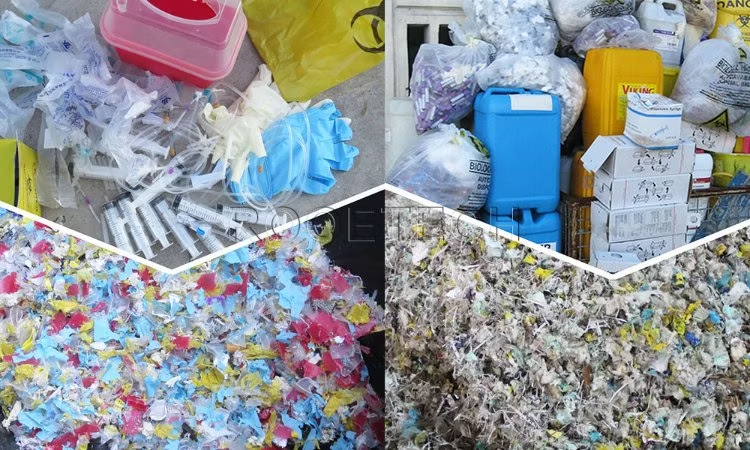
Where Does Your Medical Waste Go After It Has Been Treated And Is No Longer A Health Or Environmental Hazard?
Managing Medical Waste Disposal: An In-Depth Overview From Secure Waste
This is an excellent question regarding the handling of medical waste and sharps after treatment. We often get questions about this topic. In our previous article, we discussed how Biohazard waste is managed from your healthcare facility to the treatment facility, covering the initial stages of waste disposal. Now, let’s take this a step further to clarify the complete process and provide a more comprehensive understanding of what happens to this waste after it leaves the treatment facility.
Medical waste and sharps must be collected, treated, and disposed of in accordance with strict regulations to ensure safety and compliance. Once collected, these materials are typically transported in specially designed, leak-proof containers that minimize the risk of exposure to healthcare workers and the general public. At the treatment facility, the waste undergoes processes such as autoclaving, incineration, or chemical treatment, each aimed at rendering the waste non-hazardous and safe for disposal.
Following treatment, the processed waste is carefully monitored. It can be disposed of in landfills designed to accommodate non-hazardous materials or may be repurposed, depending on the type of waste and local regulations. Understanding this entire process underscores the importance of responsible medical waste management in protecting both public health and the environment.
After undergoing treatment to eliminate its infectious potential, medical waste requires careful and responsible disposal to ensure safety and compliance with environmental regulations. The approach to disposal typically varies based on the nature of the waste and the type of treatment it has received. Generally, treated medical waste is disposed of in either a sanitary landfill or a waste-to-energy (WTE) facility. In some cases, particularly for hazardous or chemical waste, specialized methods such as incineration are employed, adhering to rigorous guidelines, including those outlined in the Resource Conservation and Recovery Act (RCRA).
Prominent Disposal Methods
1. Sanitary Landfills: Following sterilization—predominantly through processes like autoclaving, which utilizes high-pressure steam to eradicate pathogens—medical waste is rendered safe and ready for disposal. At this stage, the waste is integrated into the standard solid waste stream and transported to sanitary landfills, which are meticulously designed to prevent any interaction between the waste and the surrounding environment, thereby safeguarding public health.
- Waste-to-Energy (WTE) Facilities: Certain categories of treated medical waste are suited for processing at WTE facilities, where they are subjected to high-temperature combustion. This process not only significantly reduces the volume of waste but also harnesses the energy produced to generate electricity. WTE facilities stand out as an innovative and sustainable waste disposal option, transforming potential waste into an energy resource, thereby reducing reliance on landfills.
- Incineration: Incineration is reserved explicitly for specific waste streams deemed highly hazardous, such as chemotherapeutic agent remnants and other toxic materials. This method employs high-temperature combustion to effectively neutralize harmful components, ensuring that they pose no risk of environmental contamination. The remaining ash, significantly reduced in volume, can be disposed of safely, reflecting the role of incineration as a critical method in hazardous waste management.
Key Considerations in Medical Waste Disposal
- Regulatory Framework: The disposal of medical waste is subject to a complex network of state and federal regulations, which vary widely across different jurisdictions. Some states, for instance, require that anatomical waste be made unrecognizable, often achieved through grinding or shredding, to eliminate any potential public health risks.
- Hazardous Waste Management: Materials classified as hazardous present heightened risks and necessitate meticulous management practices. Regulations concerning hazardous waste are significantly stricter than those for standard solid waste, involving specific treatment protocols and disposal strategies designed to minimize threats to both human health and environmental integrity.
- Essential Treatment Methods: Treatment processes such as autoclaving are pivotal in ensuring that medical waste is rendered sterile and non-infectious. Not only do these methods protect public health, but they also meet stringent regulatory standards, advocating for responsible disposal practices. Conversely, incineration serves as an ultimate solution to obliterate particularly harmful materials, eliminating any potential dangers.
In summary, the disposal of medical waste is a vital aspect of healthcare waste management, aiming to strike a balance between public health priorities and robust environmental protections. Through thorough treatment and precise disposal methods, the healthcare sector demonstrates a commitment to safeguarding both human health and the environment as it navigates the complexities of waste management.
Expert Medical Waste Management: With over 25 years of industry experience, Secure Waste is a trusted local leader in hazardous and biohazardous waste disposal across Maryland, Virginia, and Washington, D.C. Specializing in medical waste management, sharps needle disposal, and biohazard waste removal, the company ensures full compliance with federal, state, and local regulations while prioritizing environmental sustainability.
The company also offers additional services, including secure document shredding and sharps container sales, providing comprehensive solutions for healthcare facilities and businesses. Our cost-effective services help clients maintain regulatory compliance without unexpected costs.
With a commitment to customer satisfaction, Secure Waste offers tailored waste management plans that align with industry best practices. Their team of experts provides reliable, timely, and compliant services, making them the preferred choice for medical waste disposal. For a free waste quote or more information, visit www.securewaste.net