
How to Establish Your Healthcare Organization as a Community Leader During a Crisis and Beyond
Secure Waste explains that in periods of crisis, healthcare systems are tested more than ever. They test trust, communication, and the ability of local institutions to step forward when communities feel uncertain or overwhelmed.
Over the past several years, many people have faced compounded challenges related to health, employment, emotional well-being, and access to essential services. During these moments, community-based healthcare organizations are uniquely positioned to provide stability, guidance, and leadership beyond direct clinical care.
Neighborhood clinics, retail pharmacies, outpatient centers, and other healthcare organizations are often the most accessible and familiar points of contact for individuals seeking help.
By addressing practical, everyday risks that affect safety and public health, these organizations can strengthen their role as community anchors. Establishing leadership during a crisis does not require grand gestures. It requires consistent action, education, and systems that reduce harm while building confidence and trust.
Welcome to Secure Waste, a premier leader in healthcare waste management, specializing in the meticulous and compliant disposal of biohazardous materials. With years of dedicated experience, we proudly serve the regions of Maryland, Virginia, and Washington D.C. by providing comprehensive solutions designed to ensure the safe and responsible handling of healthcare waste, including sharps, pharmaceuticals, and infectious substances.
At Secure Waste, we understand the critical importance of maintaining the safety and health of our communities. Our team of trained professionals employs state-of-the-art technology and follows stringent regulatory guidelines to manage waste at every stage, from collection to disposal.
Join us as we explore innovative strategies and best practices for navigating healthcare crises, enhancing operational efficiency, and minimizing environmental impact. Together, we can promote sustainability and ensure the well-being of our communities through safe waste management practices.
Supporting Safer Medication Disposal in the Community
One of the most impactful ways healthcare organizations can lead is by addressing the risks associated with unused and expired medications. The opioid epidemic continues to affect communities nationwide, and periods of crisis often intensify substance misuse, addiction, and overdose risk.
Emotional stress, isolation, injury, and limited access to support services all contribute to increased vulnerability.
Prescription pain medications are a particular concern because they are widely used and frequently left unused. Many patients prescribed opioids for short-term pain management end up with leftover pills that remain stored in medicine cabinets or drawers.
These medications can be accessed by others in the household, intentionally or unintentionally, increasing the risk of misuse and diversion. The longer unused medications remain available, the greater the likelihood they will be used for non-medical purposes.
Improper disposal further compounds the problem. Many individuals are unsure how to dispose of medications safely and may throw them in household trash or flush them down drains. These practices can introduce pharmaceutical compounds into landfills and waterways, creating environmental risks alongside public health concerns. Community healthcare organizations can play a pivotal role by offering clear, accessible disposal options and education.
Providing medication take-back solutions empowers patients to act responsibly. Mail-back envelopes, for example, allow individuals to securely return unused medications for proper destruction without needing to travel or navigate complex instructions.
Collection kiosks placed in visible, convenient locations offer another safe and anonymous disposal option. When healthcare organizations integrate these solutions into routine patient interactions, they normalize safe disposal and reduce the presence of potentially harmful drugs in the community.
Promoting Safe Sharps Disposal for At-Home Care
As more patients manage chronic conditions at home, the use of injectable medications has increased. Individuals who require insulin, biologics, or other injectable therapies must routinely dispose of needles, syringes, and lancets.
Without proper disposal systems, these sharps pose serious risks to patients, family members, sanitation workers, and others who may come into contact with household waste.
Discarding sharps in regular trash can result in accidental needlestick injuries, which carry the risk of infection and emotional distress. These injuries may occur when someone takes out the garbage, sorts recycling, or handles waste at downstream facilities.
Environmental concerns also arise when sharps enter landfills or uncontrolled waste streams.
Healthcare organizations can reduce these risks by proactively providing sharps disposal solutions to patients. Puncture-resistant containers designed for home use allow individuals to store used sharps until they are disposed of safely. When paired with prepaid return options, these systems remove uncertainty and inconvenience, making it easier for patients to follow best practices.
Education is equally important. Clear guidance on how to use disposal containers, when to return them, and why proper disposal matters reinforces safe behavior. By supporting sharps safety beyond clinical settings, healthcare organizations demonstrate a commitment to protecting not only patients but the broader community and environment.
Managing Increased Medical Waste During Public Health Responses
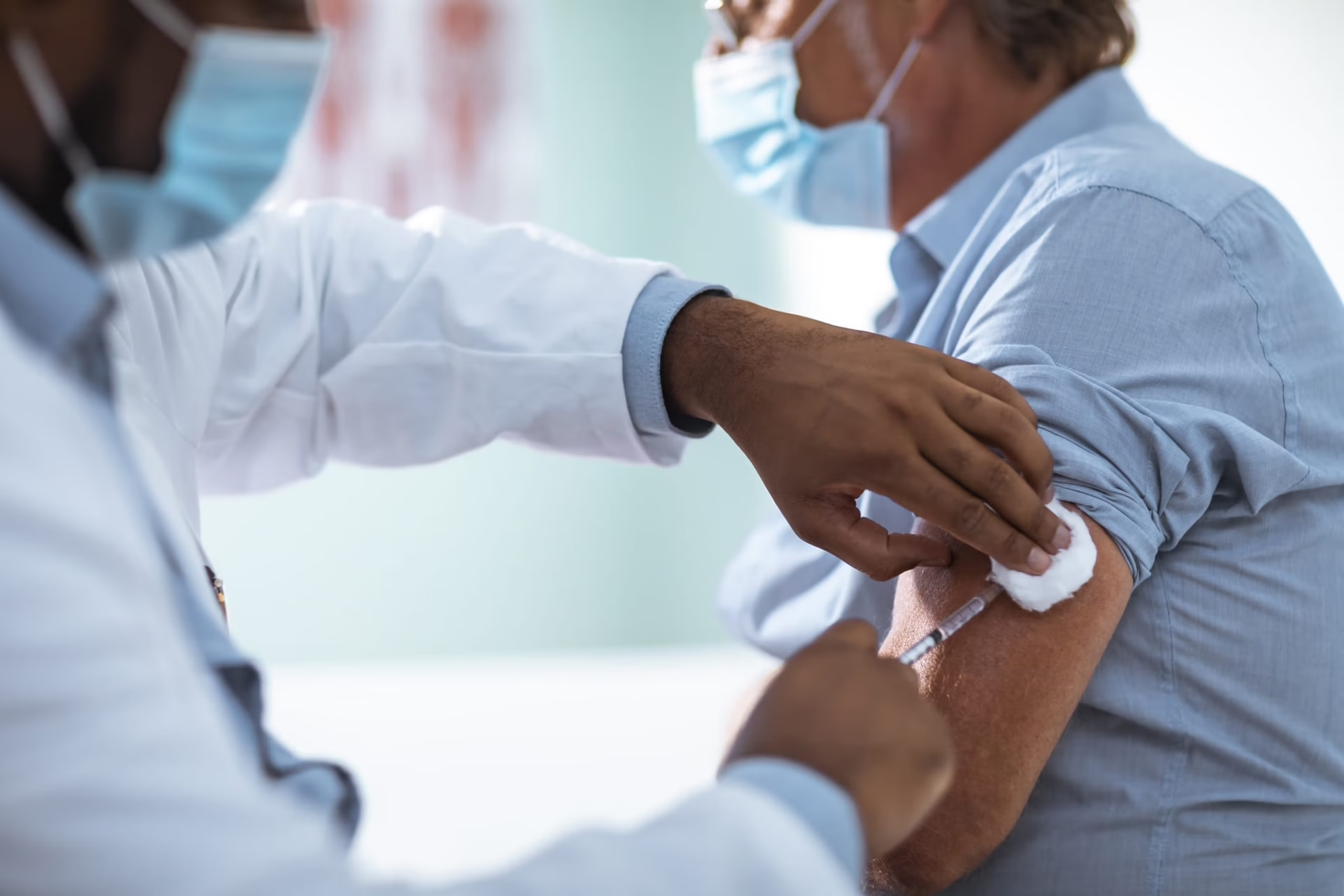
Crises such as pandemics introduce new operational demands for healthcare organizations, including the rapid expansion of services like testing and vaccination. These activities generate additional medical waste, particularly sharps and contaminated materials, that must be managed safely and efficiently.
Vaccination efforts, for example, require careful planning around waste containment. Increased volumes of syringes, needles, vials, and packaging materials necessitate adequate container supply and strategic placement.
Temporary or pop-up clinics introduce additional complexity, as waste management systems must be established quickly in nontraditional settings.
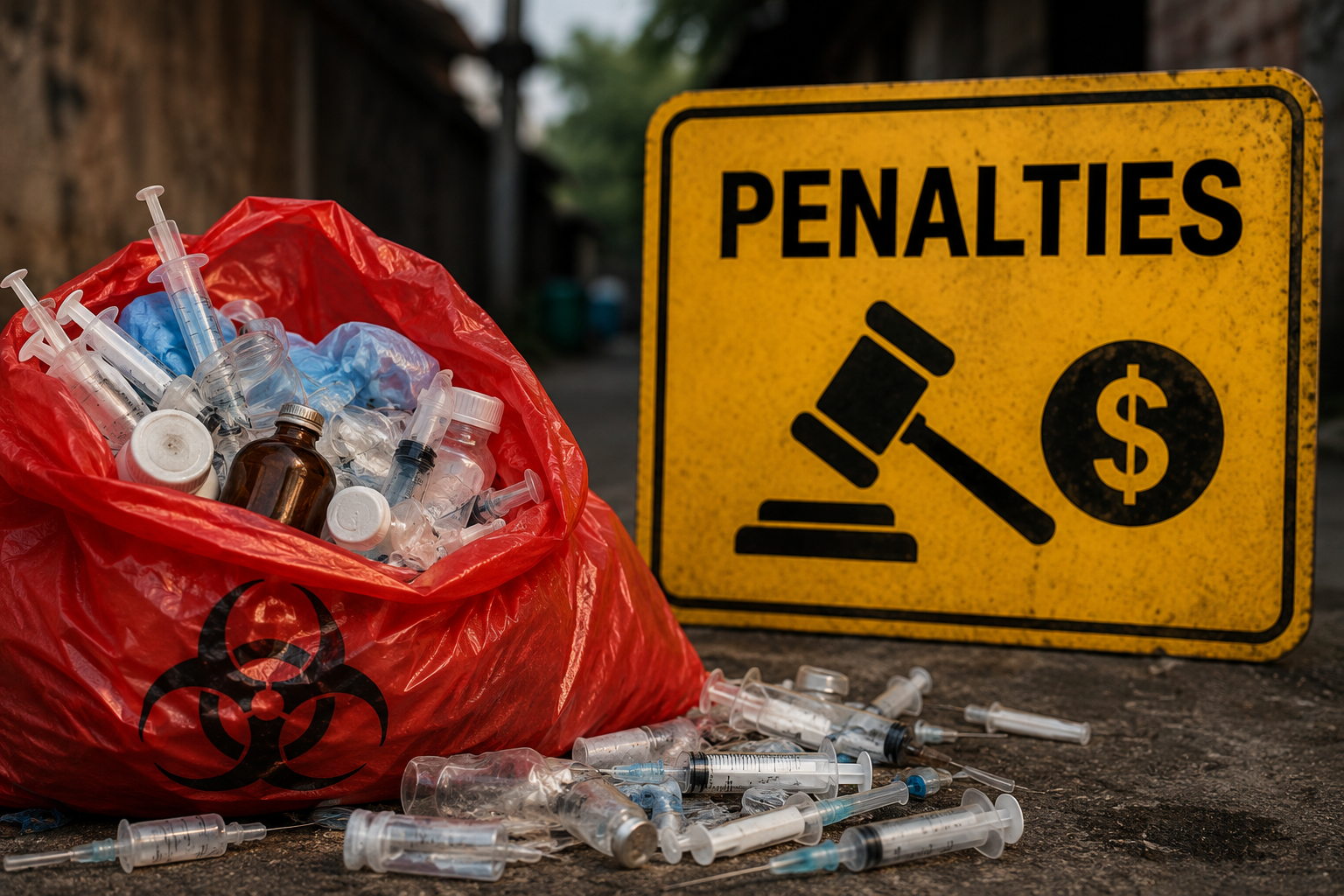
Proper planning helps prevent needlestick injuries, overflow, and accidental exposure. Ensuring the correct container types are available, understanding manufacturer disposal guidance, and training staff on proper segregation all contribute to safer operations.
When healthcare organizations manage these details effectively, they protect staff, patients, and the surrounding community while reinforcing confidence in public health initiatives.
Building Trust Through Visible Leadership
Community leadership during a crisis is not solely about managing risk. It is also about visibility, communication, and trust. When healthcare organizations take proactive steps to address issues such as medication disposal, sharps safety, and waste management, they signal reliability and care.
These actions show that the organization understands the everyday challenges faced by community members and is willing to help solve them.
Educational outreach further strengthens this role. Sharing clear information through signage, patient conversations, and digital channels helps demystify complex topics and empowers individuals to make safer choices. Over time, consistent messaging and accessible resources position healthcare organizations as trusted sources of guidance.
Leadership established during a crisis does not end when the immediate threat subsides. The systems and relationships built during challenging times often form the foundation for long-term community engagement. Organizations that invest in safety, education, and environmental responsibility continue to deliver value long after the crisis has passed.
A Long-Term Commitment to Community Well-Being
Healthcare organizations have an opportunity to redefine their role within the communities they serve. By extending their focus beyond treatment to include prevention, education, and environmental stewardship, they contribute to healthier, safer neighborhoods.
Supporting proper drug disposal, sharps management, and responsible medical waste practices are tangible ways to lead with impact.
Authentic community leadership is built through sustained effort, practical solutions, and a willingness to meet people where they are. In times of crisis and beyond, healthcare organizations that embrace this approach strengthen public trust, reduce risk, and create lasting positive change.
Expert Medical Waste Management: With over 25 years of industry experience, Secure Waste is a trusted local leader in hazardous and biohazardous waste disposal across Maryland, Virginia, and Washington, D.C. Specializing in medical waste management, sharps needle disposal, and biohazard waste removal, the company ensures full compliance with federal, state, and local regulations while prioritizing environmental sustainability.
The company also offers additional services, including secure document shredding and sharps container sales, providing comprehensive solutions for healthcare facilities and businesses. Our cost-effective services help clients maintain regulatory compliance without unexpected costs.
With a commitment to customer satisfaction, Secure Waste offers tailored waste management plans that align with industry best practices. Their team of experts provides reliable, timely, and compliant services, making them the preferred choice for medical waste disposal. For a free waste quote or more information, visit www.securewaste.net