
Understanding and Preventing the Most Common OSHA Violations in Healthcare
Keeping healthcare workers safe is not optional—it is a legal, operational, and moral responsibility. Every clinic, hospital, surgery center, dental office, and long-term care facility depends on a safe and compliant environment to protect staff, patients, and the organization’s reputation. Yet OSHA compliance remains one of the most commonly overlooked areas of healthcare operations. Because of the complexity of regulations, the intensity of patient care, and the fast-paced nature of clinical work, many organizations unintentionally expose themselves to avoidable violations.
These violations don’t just trigger fines or corrective actions. They increase the risk of staff injuries, biohazard exposures, sharps-related incidents, and chemical hazards that can severely harm the workforce. Understanding these risks—and knowing how to prevent them—is the foundation of a strong safety program.
This guide breaks down the three most common OSHA violations in the healthcare industry. It demonstrates how partnering with a trusted waste management and compliance expert, such as Secure Waste, can help organizations stay compliant, reduce risk, and enhance overall workplace safety.
The Real Impact of OSHA Violations in Healthcare
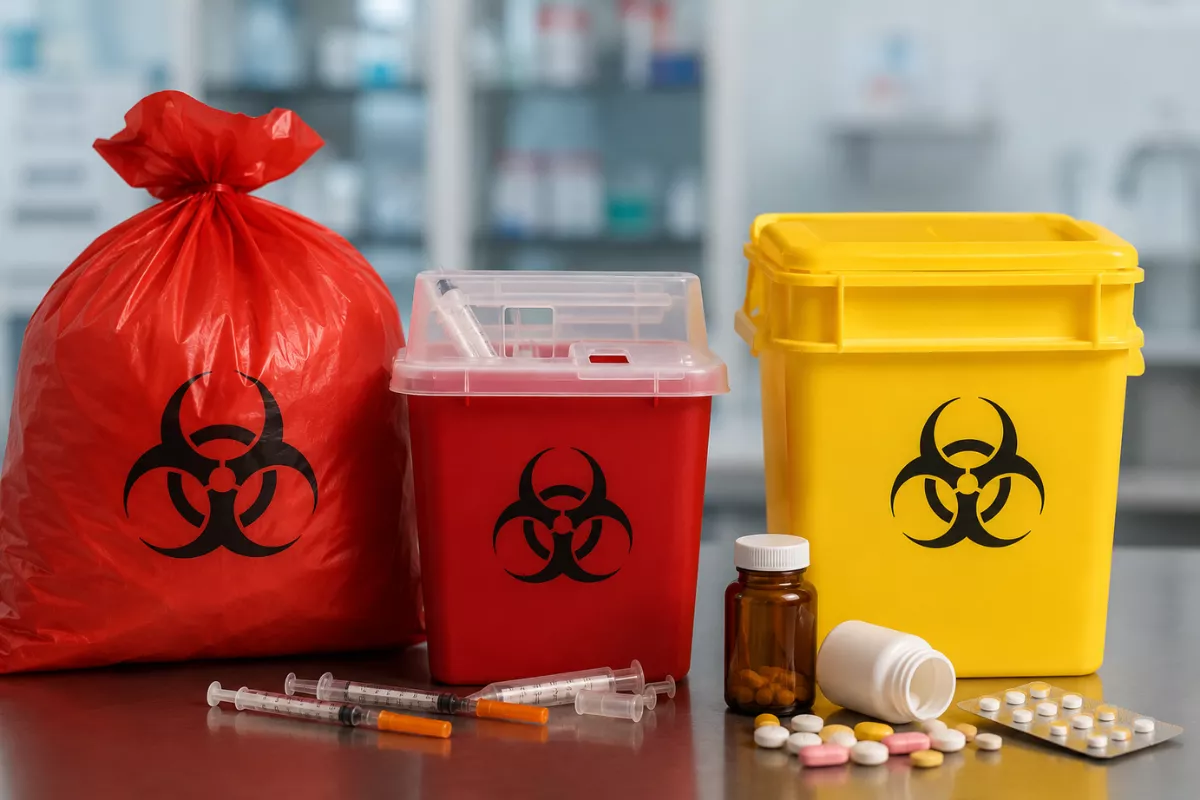
Healthcare environments contain a unique mix of hazards: needles, bloodborne pathogens, hazardous chemicals, pharmaceuticals, controlled substances, and heavy or complex equipment. OSHA regulations exist to protect staff from these dangers, but violations still occur because:
- Staff are not adequately trained
- Safety policies are outdated or incomplete
- Hazard communication procedures are unclear
- Sharps disposal systems are inconsistent
- Bloodborne pathogen protocols are not reviewed annually
- Federal and state rules differ, and organizations overlook one or the other
These gaps can lead to significant consequences, including injuries, exposure incidents, compliance penalties, and a loss of trust in leadership.
To avoid these problems, understanding the most frequent OSHA compliance failures is essential.
1. Outdated or Incomplete Hazard Communication Program (HazCom)
Hazard Communication (HazCom) is consistently one of the most cited OSHA violations across the healthcare field. The purpose of HazCom is straightforward: to ensure that staff fully understand the chemical hazards they may encounter while performing their jobs.
A compliant HazCom program must include:
• Up-to-date chemical inventory
Every chemical—cleaners, disinfectants, sterilants, lab reagents, pharmaceuticals—must be accounted for. Many facilities skip updates, leaving old products on lists or missing newly introduced ones.
• Proper labeling
Improper or missing labels increase the likelihood of chemical misuse or accidental exposure. OSHA mandates clear, standardized labeling so that staff instantly know what they’re handling.
• Current Safety Data Sheets (SDS)
Every chemical must have an SDS readily accessible at all times. Many facilities store SDS in outdated binders, fail to update them, or don’t ensure that staff know where to find them.
• Annual and ongoing training
Staff must be trained to understand:
- Hazard classifications
- Safe handling procedures
- Emergency response steps
- Spill management protocols
Training must happen at onboarding AND annually.
Why does this violation happen so often?
Healthcare organizations tend to focus on patient care first—and while that is essential, it often leaves compliance tools, documentation, and training behind. Over time, these gaps expand until OSHA citations appear.
How Secure Waste helps
Secure Waste provides:
- Updated HazCom templates
- SDS management systems
- Staff training modules
- Custom compliance audits
- Annual refresher programs
With expert guidance, facilities maintain an accurate, organized, and compliant communication program without overwhelming internal staff.
2. Missing or Insufficient Bloodborne Pathogens (BBP) Exposure Control Plan
Healthcare professionals are routinely exposed to blood and bodily fluids, making OSHA’s Bloodborne Pathogens Standard a core compliance requirement.
A compliant BBP Exposure Control Plan must outline:
• Worker exposure risks
Sharps injuries, spills, splash risks, contaminated surfaces, and surgical procedures all contribute to potential exposure.
• Prevention strategies
This includes PPE requirements, engineering controls (such as sharps containers), safe disposal practices, and infection control techniques.
• Exposure response procedures
Staff must know precisely what to do in the event of a needlestick, spill, or other incident.
• Hepatitis B vaccination information
OSHA requires employers to offer the vaccine series to at-risk staff at no cost.
• Annual review and updates
Most violations occur because facilities fail to review their plan or neglect to document annual updates.
Why is this violation severe?
A weak BBP plan directly endangers healthcare workers. Needlestick injuries and fluid exposure can lead to transmission of:
- Hepatitis B
- Hepatitis C
- HIV
- Other bloodborne diseases
These incidents carry enormous emotional, medical, and legal consequences.
How Secure Waste strengthens BBP compliance
Secure Waste supports facilities with:
- Updated BBP plan templates
- Sharps disposal systems
- Compliance-focused staff training
- Exposure-control audits
- Waste segregation guidance
- On-site assessments to eliminate preventable risks
By tightening equipment, training, and documentation, organizations significantly reduce the chance of OSHA violations and staff injuries.
3. Overlooking State-Specific OSHA Requirements
While federal OSHA regulations apply nationally, many states operate their own OSHA-approved safety programs. These programs often introduce:
- Stricter rules
- Additional requirements
- State-specific documentation standards
- Expanded training obligations
Many healthcare facilities assume federal compliance is enough—but this assumption leads to citations, especially in states with robust enforcement programs.
Examples of overlooked state requirements
- Additional recordkeeping
- Expanded PPE rules
- Unique sharps disposal protocols
- Chemical storage regulations
- Local environmental health requirements
Why facilities struggle with this
Healthcare providers operate under pressure. Compliance officers are often stretched across multiple departments, and regulations are subject to frequent changes. Without a dedicated expert tracking these changes, it’s easy to fall behind.
How Secure Waste ensures full compliance
Secure Waste stays updated with both federal and state regulatory requirements, helping clients avoid accidental violations by:
- Reviewing state-specific OSH regulations
- Tailoring safety plans to local rules
- Offering state-compliant training modules
- Conducting audits based on local enforcement patterns
This proactive approach eliminates the guesswork and protects facilities from avoidable citations.
How Partnering With Secure Waste Eliminates OSHA Risks
Compliance is not a one-time task—it’s an ongoing system of training, documentation, updated equipment, and regulatory awareness. Most healthcare organizations lack the time and workforce to maintain this alone.
Secure Waste helps by offering:
• Expert-designed compliance programs
HazCom, BBP, emergency preparedness, waste handling, and more.
• Online and in-person training modules
Easy-to-understand, accessible anytime, and OSHA-aligned.
• Sharps and medical waste solutions
Secure, puncture-resistant containers and safe disposal systems are essential.
• Facility audits and custom safety plans
Identifying unseen risks, workflow hazards, and compliance gaps.
• Documentation and policy support
Ensuring that written plans meet OSHA, state, and industry expectations.
• Long-term compliance monitoring
Regulations change, Secure Waste keeps facilities updated automatically.
With the right partner, hospitals and clinics can transform safety from a liability into a strength.
Final Thoughts: Protecting Your Workforce Starts With Compliance
OSHA violations in healthcare are common but they are also predictable and preventable. By understanding the root causes of non-compliance and establishing strong systems for training, documentation, and waste handling, healthcare organizations can create safer environments for both staff and patients.
Secure Waste’s experience, tools, and regulatory expertise provide facilities with the support needed to maintain compliance with confidence, not panic.
If your organization wants to strengthen safety programs, reduce risk, and ensure OSHA compliance, Secure Waste is ready to help.
Expert Medical Waste Management: With over 25 years of industry experience, Secure Waste is a trusted local leader in hazardous and biohazardous waste disposal across Maryland, Virginia, and Washington, D.C. Specializing in medical waste management, sharps needle disposal, and biohazard waste removal, the company ensures full compliance with federal, state, and local regulations while prioritizing environmental sustainability.
The company also offers additional services, including secure document shredding and sharps container sales, providing comprehensive solutions for healthcare facilities and businesses. Our cost-effective services help clients maintain regulatory compliance without unexpected costs.
With a commitment to customer satisfaction, Secure Waste offers tailored waste management plans that align with industry best practices. Their team of experts provides reliable, timely, and compliant services, making them the preferred choice for medical waste disposal. For a free waste quote or more information, visit www.securewaste.net