Building a Reliable Sharps Disposal Program in Healthcare: Four Essential Steps
The Importance of Proper Sharps Disposal in Healthcare
Sharps disposal is one of the most essential responsibilities in any healthcare setting. Hospitals, outpatient clinics, surgery centers, dental offices, laboratories, and long-term care facilities rely on efficient sharps management to protect their teams and maintain regulatory compliance. Each used needle, scalpel blade, or lancet has the potential to transmit bloodborne pathogens such as HIV, hepatitis B, or hepatitis C when mishandled. Even a single needlestick injury can lead to costly medical testing, emotional stress, and serious health risks.
A reliable sharps disposal program minimizes this exposure by ensuring that all sharps waste is collected, transported, treated, and documented correctly in accordance with strict federal and state regulations. With thousands of sharps being used daily across multiple departments, leaders must implement systems that reduce human error, streamline workflows, and keep containers accessible at all times.
Secure Waste partners with healthcare organizations to design structured sharps programs that reinforce safety, simplify compliance, and support long-term operational efficiency.
Step One: Understanding OSHA and State Requirements
Before selecting equipment or placing containers, facilities must first understand the regulatory framework governing the disposal of sharps.
Federal Standards (OSHA Bloodborne Pathogens Standard)
OSHA’s Bloodborne Pathogens Standard requires employers to protect workers who may come into contact with blood or potentially infectious materials. Key sharps-related components include:
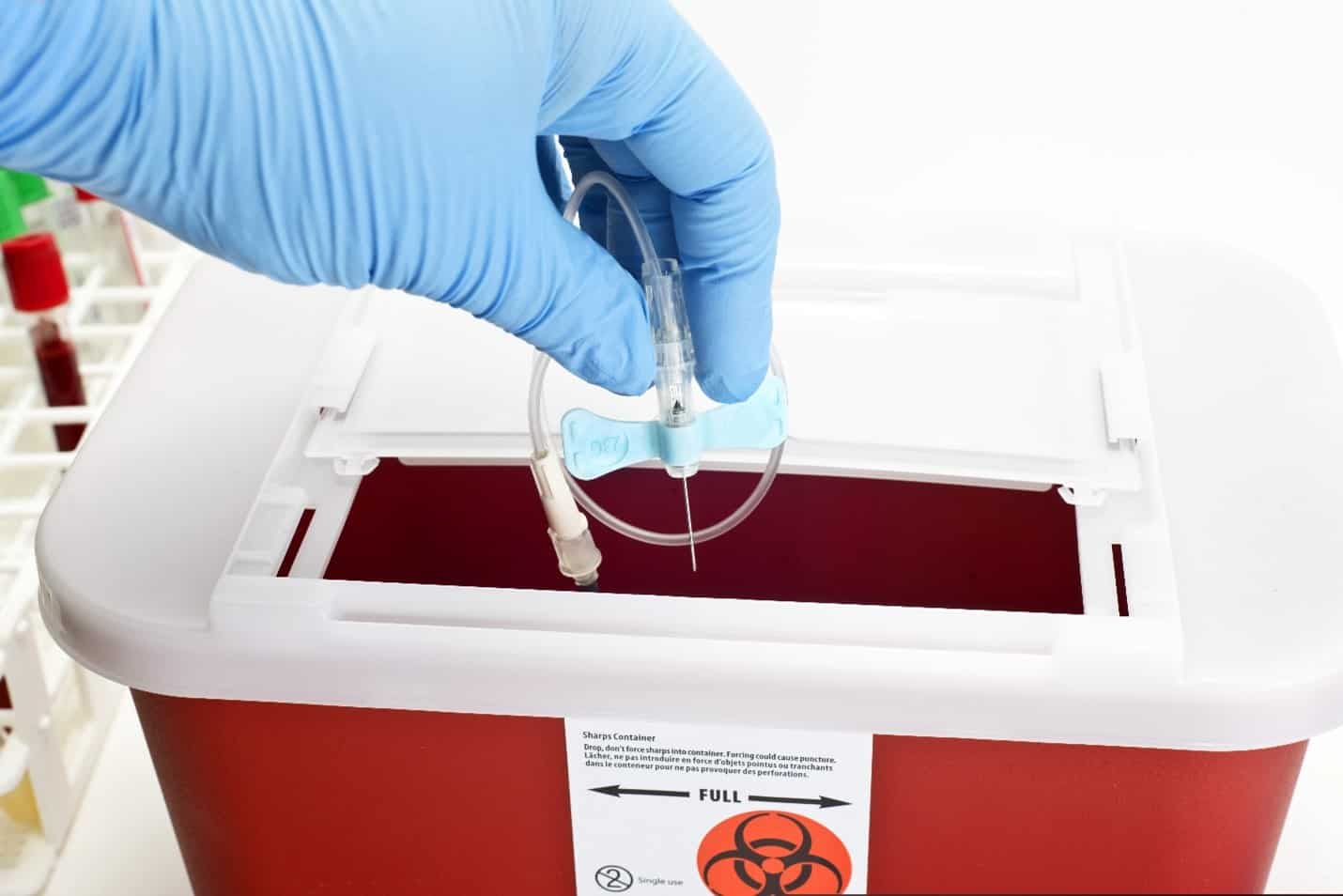
- Using puncture-resistant, leakproof sharps containers
- Ensuring containers are labeled with the biohazard symbol or colored red
- Minimizing hand contact during disposal
- Placing containers at the point of use
- Maintaining secure lids and preventing overfilling
- Providing employee training and annual program reviews
Failure to comply can result in significant fines, corrective actions, and risks to staff safety.
State-Regulated Medical Waste Requirements
Each state has its own rules governing:
- Container standards
- Storage limits
- Transportation requirements
- Treatment methods (incineration, autoclave, chemical treatment, etc.)
- Documentation, recordkeeping, and manifesting
Some states mandate specific container types or have stricter placement and labeling requirements than OSHA. Healthcare organizations must therefore understand both regulatory layers to prevent violations during audits or inspections.
Mastering these regulations is the foundation of a safe sharps disposal program—and Secure Waste helps facilities efficiently navigate these rules.
Step Two: Choosing the Right Sharps Containers
Container selection has a direct impact on safety, workflow, and compliance. Not all sharps containers are created equal, and mismatched sizing or poor quality can create unnecessary risks.
Required Container Features
All compliant sharps containers must be:
- Closable with a secure lid
- Puncture resistant to prevent needle penetration
- Leakproof on sides and bottom
- Properly labeled with a biohazard symbol or red coloring
- Rigid and durable to withstand busy clinical use
Facilities should also assess volume patterns. High-volume areas, such as emergency departments or phlebotomy labs, benefit from larger, more accessible containers, while smaller patient rooms may require compact, wall-mounted units.
Reusable vs. Disposable Containers
Disposable containers
- Single-use
- Convenient and easy to replace
- Ideal for smaller facilities or low-volume areas
Reusable containers
- Sanitized and processed at licensed facilities
- Reduce plastic waste
- Lower long-term costs
- Support sustainability goals
Secure Waste works closely with facilities to evaluate patient flow, procedure types, staff behavior, and budget, determining which container system—disposable, reusable, or hybrid—best suits their operational needs.
Step Three: Strategically Placing Sharps Containers
Even the best container is ineffective if placed poorly. Proper placement ensures that clinicians can discard sharps immediately after use, thereby reducing the risk of injury or contamination.
Key Placement Guidelines
Sharps containers should be installed:
- At the point of use—wherever sharps are generated
- Within arm’s reach, reducing the need to carry sharps
- At a safe height, typically between 52–56 inches from the floor for ergonomic access
- In every room or workstation where sharps procedures occur
Common placement areas include:
- Patient exam rooms
- Operating rooms and procedure suites
- Medication preparation areas
- Laboratories and phlebotomy stations
- Emergency departments
- Dialysis units
- Pharmacies
- Long-term care medication carts
Observing staff workflow during peak hours reveals naturally efficient placement points. If containers are too far away or inconveniently located, staff may delay disposal or place sharps in makeshift locations, significantly increasing the risk.
Secure Waste conducts on-site placement audits to determine the optimal locations for containers, enhancing compliance and efficiency.
Step Four: Proper Installation and Routine Maintenance
Correct installation ensures containers remain secure, upright, and stable throughout use. Container failures—such as tipping, opening unexpectedly, or overfilling—are among the most common causes of sharps injuries.
Best Practices for Installation
- Mount containers using approved brackets or wall mounts
- Use locking mechanisms to prevent unauthorized access
- Ensure containers stay upright at all times
- Position containers away from public or patient access points
Routine Maintenance and Exchange Programs
Sharps containers should never be filled past the recommended line. Overfilled containers increase the risk of:
- Protruding needles
- Lid malfunctions
- Accidental needlesticks
- Spills during transport
A structured maintenance schedule eliminates these hazards. Many healthcare organizations rely on container exchange programs where a certified medical waste partner removes full containers, installs fresh replacements, and ensures proper documentation.
Secure Waste offers comprehensive sharps management solutions that encompass scheduling, container replacement, regulatory documentation, and complete compliance oversight—reducing administrative burdens and eliminating guesswork for facility teams.
Conclusion
Building a reliable sharps disposal program is not optional—it is a critical requirement for protecting staff, patients, and the entire healthcare environment. When healthcare organizations fully understand regulatory expectations, choose compliant containers, place them strategically, and maintain them consistently, they significantly reduce needlestick risks and strengthen compliance.
Secure Waste serves as a trusted partner to hospitals, clinics, and long-term care facilities by delivering compliant sharps disposal services, expert guidance, and customizable container systems. With the right processes in place, facilities can operate confidently, knowing their sharps disposal program is safe, efficient, and fully compliant with all relevant regulations.
You can learn more about compliant sharps disposal and regulatory support at SecureWaste.net.
Expert Medical Waste Management: With over 25 years of industry experience, Secure Waste is a trusted local leader in hazardous and biohazardous waste disposal across Maryland, Virginia, and Washington, D.C. Specializing in medical waste management, sharps needle disposal, and biohazard waste removal, the company ensures full compliance with federal, state, and local regulations while prioritizing environmental sustainability.
The company also offers additional services, including secure document shredding and sharps container sales, providing comprehensive solutions for healthcare facilities and businesses. Our cost-effective services help clients maintain regulatory compliance without unexpected costs.
With a commitment to customer satisfaction, Secure Waste offers tailored waste management plans that align with industry best practices. Their team of experts provides reliable, timely, and compliant services, making them the preferred choice for medical waste disposal. For a free waste quote or more information, visit www.securewaste.net