Medical facilities handle countless patient documents every day, including medical charts, billing forms, treatment records, and other paperwork containing protected health information (PHI). Once these records are no longer needed, they cannot simply be treated like ordinary waste because the information they contain remains sensitive. A discarded document can still expose patient names, medical details, insurance information, or other identifying data if it falls into the wrong hands. For this reason, the way a medical facility handles records at the end of its retention period is an important part of protecting patient privacy.
So, what does proper document destruction actually require? Let’s look at the safeguards and practices medical facilities need to follow.
HIPAA Document Destruction: Overview
HIPAA-compliant document destruction protects patient information through secure handling, controlled access, appropriate destruction methods, and proper documentation. Medical facilities should identify records containing PHI, follow retention requirements, use secure collection containers, and select suitable on-site or off-site destruction options. Choosing an experienced provider, verifying compliance practices, and maintaining destruction records further strengthens privacy safeguards while supporting an organized, reliable, and accountable medical record disposal process.
What Are the HIPAA Requirements for Medical Document Destruction?
When you’re responsible for patient records, you need to make sure sensitive information stays protected even after a document is no longer needed. According to guidance from the U.S. Department of Health and Human Services (HHS), covered entities must use appropriate administrative, technical, and physical safeguards when disposing of PHI.
- Establish Clear Disposal Procedures: Healthcare facilities should have documented procedures for determining when PHI can be discarded and how it should be handled before destruction. Clear procedures help ensure employees consistently follow appropriate safeguards instead of disposing of sensitive records through ordinary waste streams.
- Restrict Access to Records Awaiting Destruction: Medical documents should remain protected while they are waiting to be destroyed. Facilities should use secure containers or designated storage areas that prevent unauthorized employees, visitors, patients, or other individuals from accessing the information.
- Use a Method That Prevents Reconstruction: HIPAA requires covered entities to dispose of PHI in a way that makes it unreadable, indecipherable, and otherwise impossible to reconstruct. Simply tearing a document into a few pieces may not provide adequate protection if the information can still be recovered.
- Keep PHI Out of Publicly Accessible Trash: HHS states that covered entities should not place PHI in publicly accessible trash receptacles unless appropriate safeguards are in place. Leaving patient records in open trash or recycling bins can expose sensitive information to unauthorized individuals.
- Apply Administrative, Technical, and Physical Safeguards: Disposal practices should address the different ways PHI can be exposed. This includes establishing appropriate policies, controlling access to records, and using secure physical or technical methods that protect information throughout the disposal process.
What Steps Are Required for HIPAA-Compliant Document Destruction in a Medical Facility?
Proper document destruction requires a controlled process that protects patient information from the moment records are identified through final disposal and documentation; here it comes.
Identify and Separate Documents Containing PHI
Start by following your facility’s document retention schedule to determine which records are eligible for destruction. Review and identify documents containing PHI, then separate them from ordinary waste. Keeping confidential records in designated containers helps prevent accidental disposal and ensures sensitive information enters the secure destruction process.
Use Secure Collection and Storage Methods
Place documents awaiting destruction in locked shredding containers located in restricted-access areas. Only authorized employees should handle these records, reducing opportunities for unauthorized exposure. Maintain chain-of-custody documentation when records move between departments, storage areas, or vendors, providing accountability throughout the handling process.
Choose an Approved Destruction Method
Choose a destruction method that makes PHI unreadable and prevents reconstruction, such as cross-cut shredding or pulverization. When handling documents alongside other healthcare waste, facilities should also consider OSHA hazard communication requirements for healthcare to help employees understand potential hazards and appropriate handling procedures. After destruction, materials may be securely recycled when appropriate. Your facility can choose on-site shredding for direct oversight or off-site services when transportation and security procedures adequately protect the records.
Maintain Documentation and Certificates of Destruction
Keep clear destruction records showing when the documents were destroyed, which method was used, and which vendor performed the service when applicable. Retain certificates of destruction and related documentation according to your facility’s policies. These records provide an audit trail demonstrating that your destruction process was properly completed.
Let Secure Waste help you protect patient information with reliable,
HIPAA-compliant document destruction solutions.
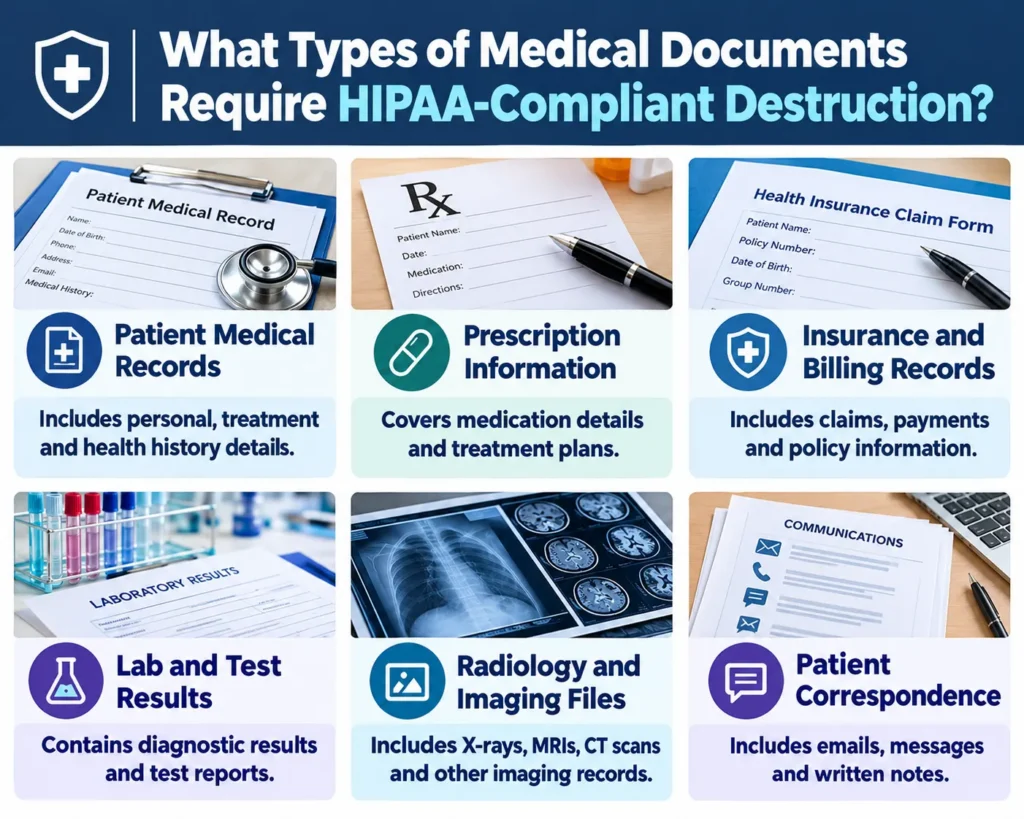
Which Medical Documents Require HIPAA-Compliant Destruction?
Medical documents containing protected health information (PHI) should be destroyed securely when they are no longer needed. This includes patient medical records, treatment notes, prescription records, laboratory and imaging reports, billing and insurance documents, consent forms, and appointment information. Even seemingly routine paperwork can contain names, addresses, dates of birth, or other identifying details that require protection. As a healthcare provider, ensuring these records are properly destroyed helps prevent unauthorized access, protects patient privacy, and supports compliance with HIPAA requirements.
How Should Medical Facilities Choose a HIPAA-Compliant Document Destruction Provider?
Choosing the right provider helps your facility protect patient information, meet disposal responsibilities, and maintain secure records throughout the destruction process; here’s what to consider.
Verify HIPAA Compliance and Industry Certifications
Before choosing a provider, confirm that it follows HIPAA requirements and maintains appropriate security practices. Review relevant certifications, policies, employee training, and documentation procedures to ensure your patient records remain protected during collection, transportation, destruction, and final disposal. When a third-party provider handles PHI, HHS guidance on business associate arrangements can also help facilities understand the importance of appropriate contractual safeguards and responsibilities.
Look for Healthcare-Specific Experience
Choose a provider experienced in serving medical facilities and handling documents containing PHI. Healthcare-specific experience means the provider understands secure collection, restricted access, chain-of-custody procedures, and documentation requirements, helping your facility reduce risks associated with improper document handling and destruction.
Compare On-Site vs Off-Site Medical Document Shredding
Understanding how on-site and off-site medical document shredding differ helps facilities choose the right method for secure, compliant information disposal.
| On-Site Shredding | Off-Site Shredding |
|---|---|
| Destroyed at Your Facility: Documents containing PHI are shredded directly at your medical facility, reducing the time sensitive records remain outside your control. |
Securely Transported: Documents are collected and transported to a secure destruction facility, making proper handling and chain-of-custody procedures especially important. |
| Immediate Verification: Your staff can observe the shredding process and receive confirmation that the documents have been destroyed. |
Cost-Effective Option: Off-site shredding can be a practical choice when your facility has large quantities of records requiring routine destruction. |
| Maximum Visibility: You have greater visibility over the entire destruction process, which can provide additional confidence when handling highly sensitive patient information. |
Suitable for Large Volumes: Large volumes of medical records can be efficiently processed at a dedicated destruction facility equipped to handle high-capacity shredding. |
| Less Transportation Risk: Records do not need to leave your facility before destruction, limiting exposure during transportation. |
Requires Secure Handling: Your provider should use secure containers, authorized transportation, documented chain of custody, and controlled access throughout the process. |
Conclusion
Proper HIPAA-compliant document destruction is essential for protecting patient information and avoiding unnecessary compliance risks. With Secure Waste, your facility can take a more reliable approach to securely handling and destroying sensitive medical records. Our professional document destruction solutions help support secure, organized, and compliant operations, giving you greater confidence that your patients’ information remains protected throughout the destruction process.
Put a secure document destruction process in place today, because protecting patient information shouldn’t be left to chance.
FAQs About HIPAA-Compliant Document Destruction in Medical Facilities
1. What makes document destruction HIPAA compliant?
HIPAA-compliant destruction ensures protected health information is disposed of using safeguards that prevent unauthorized access, reading, or reconstruction of the information.
2. Does HIPAA specify a particular type of shredder for medical documents?
HIPAA does not require a specific shredder. The chosen destruction method should make protected health information unreadable and prevent practical reconstruction.
3. Can HIPAA-compliant document destruction include electronic records?
Yes. Electronic media containing PHI can require secure disposal or sanitization methods that prevent the information from being accessed or recovered.
4. Does HIPAA require written policies for disposing of medical records?
HIPAA requires appropriate disposal safeguards, while documented policies help facilities consistently implement those safeguards and demonstrate how protected health information is handled.
5. What is the difference between document disposal and document destruction?
Disposal refers broadly to getting rid of PHI, while destruction involves rendering information unreadable, indecipherable, and otherwise unable to be reconstructed.
Expert Medical Waste Management: With over 25 years of industry experience, Secure Waste is a trusted local leader in hazardous and biohazardous waste disposal across Maryland, Virginia, and Washington, D.C. Specializing in medical waste management, sharps needle disposal, and biohazard waste removal, the company ensures full compliance with federal, state, and local regulations while prioritizing environmental sustainability.
The company also offers additional services, including secure document shredding and sharps container sales, providing comprehensive solutions for healthcare facilities and businesses. Our cost-effective services help clients maintain regulatory compliance without unexpected costs.
With a commitment to customer satisfaction, Secure Waste offers tailored waste management plans that align with industry best practices. Their team of experts provides reliable, timely, and compliant services, making them the preferred choice for medical waste disposal. For a free waste quote or more information, visit www.securewaste.net